A weary traveler finally checks into a premium luxury suite after a grueling twelve-hour flight. They drop their luggage, expecting absolute tranquility. Instead, they are greeted by the rhythmic, maddening drip of a leaky bathroom faucet. Perhaps the wardrobe door stubbornly refuses to latch. In the hospitality business, minor mechanical failures trigger devastating online reviews. High guest turnover guarantees constant wear and tear on room assets. While property management software is excellent at logging these complaints, a digital ticket cannot turn a wrench. Immediate physical repairs require hands-on action.
This is where the unsung hero of hotel operations steps in: the manual instrument. Supplying your maintenance staff with the precise gear they need is the most effective strategy to resolve guest complaints instantly. It preserves the long-term value of your property. In this comprehensive guide, we will explore exactly how these fundamental instruments are utilized in daily operations. We will break down the critical differences between equipment grades and show how upgrading your inventory drastically streamlines your facility's maintenance workflow.
Key Takeaways
Quick Resolutions: The appropriate manual equipment enables maintenance staff to execute rapid, on-the-spot repairs. This significantly reduces room downtime and safeguards the overall guest experience.
Preventive Power: Implementing routine maintenance protocols prevents minor wear and tear from escalating into expensive, full-scale room renovations.
Task-Specific Equipment: Different operational zones demand distinct equipment tiers. These range from lightweight kits for in-room cosmetic touch-ups to heavy-duty gear for the central engineering bay.
Strategic Investment: Standardizing your technical team's equipment optimizes staff productivity. It minimizes replacement costs for lost items and enforces strict workplace safety standards.
The Role of the Hand Tool in the Hospitality Industry
In the luxury accommodation space, the ultimate goal of facility maintenance is absolute invisibility. Guests should never see, hear, or be inconvenienced by structural upkeep. Unlike the disruptive roar of power drills or circular saws, standard manual instruments allow technicians to operate like ghosts. A simple multi-bit screwdriver or an adjustable wrench enables staff to rectify mechanical failures in mere minutes without disturbing neighboring suites.
Operations generally split into two distinct categories. Reactive maintenance occurs when a component breaks and triggers a guest complaint. Realigning a jammed sliding door track immediately after a call to the front desk is a classic example. In contrast, preventive maintenance involves scheduled inspections designed to identify vulnerabilities before they fail. Tightening loose cabinet hinges or adjusting water pressure valves during a routine room turnover exemplifies this proactive approach. Facility upkeep requires cross-departmental coordination. Housekeeping staff are the frontline observers. When they spot a wobbly chair, a quick dispatch protocol brings a technician to resolve the issue before the next check-in.
Industry Trends: The Gap Between Smart Sensors and Physical Repairs
Looking at recent shifts in hospitality facility management, there is a massive industry-wide movement toward predictive maintenance. This shift is heavily driven by the Internet of Things and smart room sensors. Modern hotels deploy digital algorithms that excel at predicting when an HVAC valve might fail or a smart lock will jam.
However, industry analysts consistently highlight a critical operational bottleneck. The physical execution of that repair still relies entirely on human intervention. Digital property management systems detect anomalies instantly, but the efficiency of a multimillion-dollar digital ecosystem falls completely flat if the technician dispatched to the floor lacks the proper manual equipment to execute the fix. The trend is clear: hotels must match their high-tech software investments with equally robust, professional-grade physical hardware for their maintenance teams.
Common Hotel Room Repairs and the Hand Tools Required
Guest rooms are deceptively complex micro-environments. They contain intricate plumbing, sensitive electrical wiring, and heavy structural components. Technicians must be prepared to handle a vast array of daily anomalies.
Bathroom and Plumbing Fixes
Plumbing defects are notoriously the most frequently reported guest grievances. Tasks such as replacing degraded toilet flappers, tightening loose showerheads, and clearing minor sink blockages require extreme precision. One slip can damage expensive porcelain or chrome. Technicians rely heavily on adjustable wrenches to fit various pipe fittings. Basin wrenches are used to maneuver within the cramped, dark spaces behind bathroom vanities. Specifically, slip-joint pliers are indispensable for gripping stubborn, calcified plumbing fixtures without scratching the polished finish.
Electrical and Lighting Adjustments
When dealing with electrical components, occupational safety overshadows all other concerns. Standard daily tasks include replacing faulty dimmer switches, securing loose wall outlets pulled out by vacuum cleaners, and adjusting heavy TV wall mounts. Technicians must utilize insulated screwdrivers to protect themselves against accidental electrical shocks. Wire strippers and needle-nose pliers are deployed to manipulate copper wiring safely. This ensures that all hidden connections strictly adhere to commercial building safety codes.
Furniture, Doors, and Fixture Repairs
Because of relentless usage, furniture and room fixtures degrade at an accelerated pace. Technicians frequently find themselves stabilizing wobbly desk chairs, silencing squeaky wardrobe hinges, and repairing derailed sliding closet tracks. Hex keys, commonly known as Allen wrenches, are absolutely critical for modern modular furniture assembly. Meanwhile, rubber mallets allow staff to tap structural joints firmly into place without leaving unsightly impact dents on expensive mahogany finishes.
Cosmetic Touch-Ups and HVAC
Beyond structural integrity, maintaining the pristine visual appeal and air quality of a room is paramount. Maintenance workers use specialized putty knives to gently scrape away yellowing silicone sealant around bathtubs. They also patch small drywall dents caused by careless luggage handling. Utility knives cleanly slice through new weatherstripping to block drafts. Tape measures guarantee the perfectly symmetrical alignment of newly hung artwork. Furthermore, safely accessing and cleaning dusty HVAC filters requires standard screwdrivers to gently pry off ventilation panels without scratching the surrounding wallpaper.
Why Every Technician Needs a Professional Hand Tool Kit
Transitioning from a chaotic, disorganized collection of mismatched tools to a standardized equipment strategy is a transformative operational upgrade. Equipping your staff with a comprehensive professional hand tool kit directly influences labor efficiency, morale, and long-term operating expenditures.
In a sprawling multi-story hotel, travel time is the enemy of efficiency. If a technician arrives at a suite to fix a loose cabinet but realizes they brought the wrong screwdriver bit, returning to the basement workshop effectively doubles the labor cost for a five-minute task. A pre-assembled, structured kit ensures the technician has every fundamental item needed for the vast majority of standard room repairs consolidated into a single trip.
Commercial environments impose brutal demands on equipment. Tools used daily in hospitality are constantly exposed to moisture, mechanical stress, and rough handling. Professional-grade materials, such as heat-treated Chrome Vanadium steel, resist rust and physical deformation far better than cheap consumer-grade alternatives. While the initial procurement cost may be slightly higher, the drastically extended lifespan yields a vastly superior return on investment. Standardizing these sets across the workforce simplifies inventory tracking and ensures consistent repair quality.
Strategic Equipment Tiering: Matching the Tool to the Task
Procurement managers must recognize that not all maintenance tasks require the same caliber of equipment. Stratifying your tool inventory based on specific operational applications ensures you are not over-equipping your floor runners or under-equipping your master technicians.
When to Use Lightweight Floor Kits
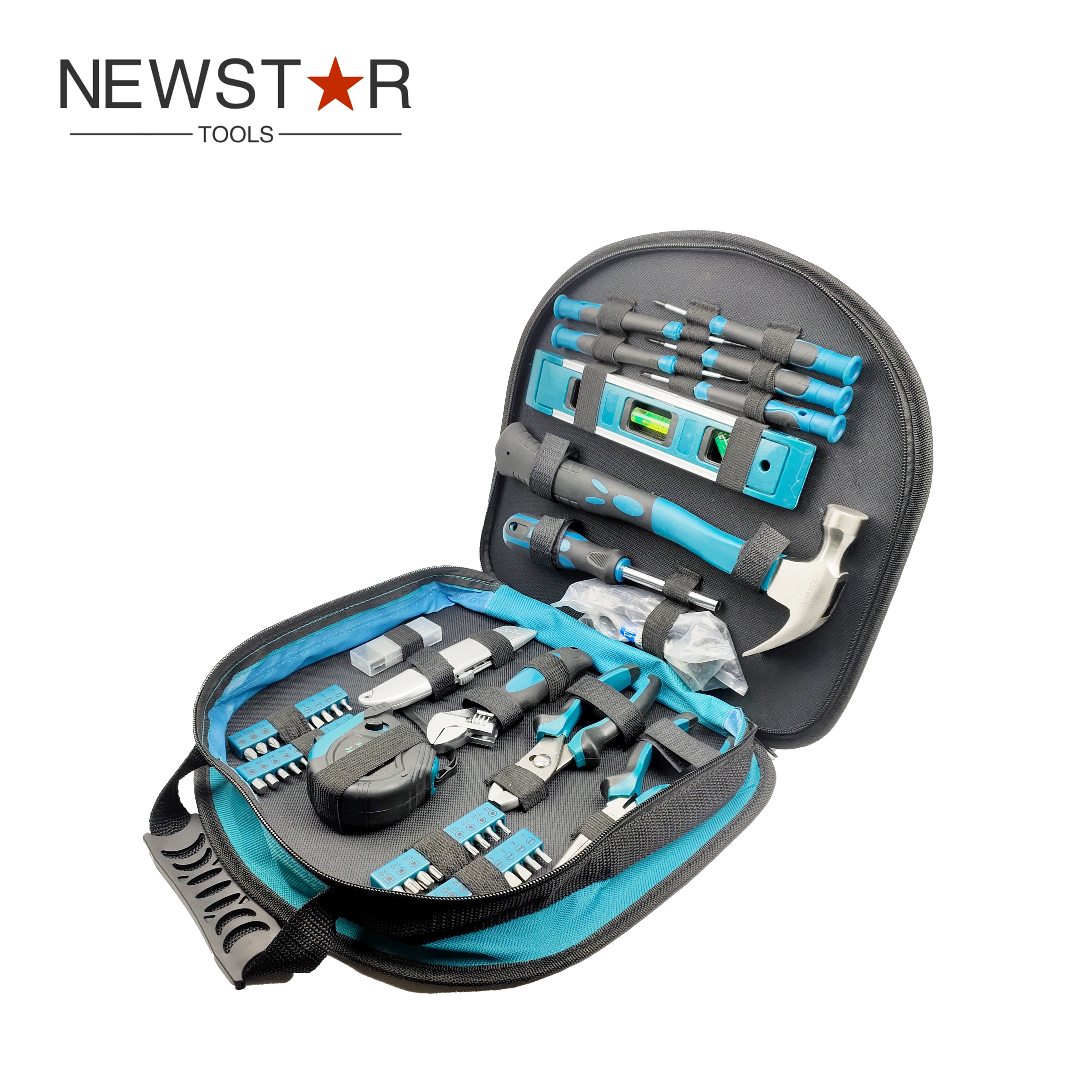
Lightweight, highly versatile sets are categorized under basic maintenance classifications. For rapid-response hotel operations, supplying staff with reliable home repair hand tools is highly practical. A targeted 25-piece kit typically includes essentials like a multi-bit screwdriver, a claw hammer, utility knives, and basic pliers featuring ergonomic thermoplastic rubber grips.
These are specifically designed for quick, minimally invasive tasks. This includes hanging displaced artwork, tightening loose cabinet knobs, or making low-torque adjustments. Because of their portability, these kits are perfect for shift technicians who need to move swiftly from floor to floor. They address minor aesthetic anomalies silently before a new guest arrives.
When to Deploy Heavy-Duty Gear
In stark contrast, the structural backbone of a hotel demands heavy-duty, specialized equipment. Boiler rooms, commercial laundry facilities, central HVAC chillers, and main water supply lines are unforgiving environments. This is the domain where robust workshop hand tools become absolutely indispensable.
These comprehensive setups, often configured as 177-piece trolley systems, feature large socket sets, heavy-duty pipe wrenches, and torque wrenches. They are engineered to withstand extreme mechanical stress. Such equipment is essential for the chief engineer's primary workspace, where complex fabrications and major plumbing overhauls take place.
Core Comparison: Floor Kits vs. Engineering Trolleys
To optimize your facility's budget, understanding the distinct applications of different tool grades is crucial. Below is a breakdown of how to deploy equipment across your property.
Equipment Tier
Ideal Application
Key Specifications & Components
Mobility Level
Basic Floor Kit
In-room cosmetic fixes, minor plumbing, furniture tightening.
Approx. 25 pieces. Includes multi-bit screwdrivers, slip-joint pliers, hex keys. TPR grips for comfort.
High. Easily carried in a small bag by rapid-response staff.
Professional Trolley
Central HVAC repair, boiler maintenance, deep plumbing overhauls.
170+ pieces. Chrome Vanadium steel. Includes heavy socket sets, torque wrenches, foam shadow boards.
Low. Rolling mobile workstation designed for major project sites.
Integrating Hand Tools into Your Preventive Maintenance Checklist
Top-tier hotel management software relies on meticulous digital scheduling. However, the physical execution of those schedules relies entirely on manual labor. Integrating specific tool usage into your Standard Operating Procedures ensures that room inspections are active and thorough, rather than purely visual glances.
Consider a standardized active room inspection routine. A visual check might note that a door appears fine, but an active inspection uses a tool to verify mechanical integrity. First, a technician uses a multi-bit screwdriver to test the torque on all door hinges and safety locks. Tightening screws by just a fraction of a millimeter prevents future misalignment. Next, they utilize slip-joint pliers to gently test the security of bathroom taps, addressing micro-leaks early to prevent devastating water damage to the subflooring. Finally, hex keys are employed to test the tension on bed frames. Stabilizing furniture proactively eliminates the risk of guest injury and significantly extends the asset's lifecycle.
Organizing and Transporting Tools: The Mobile Workshop
The logistical nightmare of moving heavy equipment across sprawling properties cannot be overstated. In massive luxury resorts or towering urban high-rises, a technician simply cannot carry a hundred pounds of gear by hand from the basement to the penthouse.
To solve this mobility crisis, facility managers utilize rolling trolley systems. A multi-drawer trolley acts as a mobile workstation. It empowers technicians to bring a comprehensive suite of tools directly to a major repair site. Proper storage solutions built directly into these trolleys, such as custom foam inserts and shadow boards, provide immediate visual cues if an item is missing at the end of a shift. Strict inventory management prevents equipment from being accidentally left behind in guest suites. This avoids frustrating replacement costs and eliminates severe safety hazards.
How to Choose the Right Gear for Your Maintenance Team
Selecting the appropriate hardware for a hospitality maintenance team requires a systematic evaluation of your property's unique needs, ergonomic factors, and long-term supplier reliability.
First, assess your property's size and scope. A boutique hotel may operate flawlessly with a few compact, versatile bags assigned to a small, agile team. Conversely, a 500-room resort with extensive back-of-house infrastructure requires a hybrid approach. You need lightweight kits for floor runners and comprehensive rolling trolleys for the central engineering bay.
Ergonomics and occupational safety should never be compromised. Maintenance staff perform repetitive, physically demanding motions daily. Procurement officers must prioritize tools featuring ergonomic, non-slip grips made from thermoplastic rubber. These designs drastically reduce muscle fatigue and ensure secure handling even when a technician's hands are coated in plumbing lubricants.
Finally, evaluate the construction material. Look for manufacturing specifications indicating heat-treated Chrome Vanadium steel over standard carbon steel for superior rust resistance. Partnering with reliable suppliers provides the most secure, long-term investment for your hotel's maintenance budget.
Conclusion
Hotel software seamlessly manages the workflow, but physical instruments execute the actual labor. From silencing a dripping faucet to securing a wobbly bed frame, reliable hardware is the invisible backbone of guest satisfaction. Cutting corners on your maintenance equipment inevitably leads to inefficient staff, delayed response times, and subpar repairs that guests will notice. Audit your current maintenance inventory today. Upgrade your gear to professional standards to ensure your property remains pristine, silent, and flawlessly functional. For procurement managers looking to standardize their facility's equipment with high-grade, durable solutions, explore the comprehensive commercial collections at Newstar Hardware to find the exact kits tailored to your operational demands.
FAQ
What is the most commonly used hand tool in hotel maintenance?
The multi-bit screwdriver is arguably the most frequently utilized instrument in a hotel technician's arsenal. Guest rooms are filled with hardware that loosens over time due to constant use. A high-quality multi-bit screwdriver is essential for adjusting sagging door hinges, securing loose electrical faceplates, tightening wobbly furniture joints, and accessing HVAC control panels for routine filter changes.
Should hotels provide tools, or should maintenance staff bring their own?
Hotels should absolutely provide standardized, professional-grade kits for all their maintenance staff. Relying on employees to bring their own equipment introduces significant quality control inconsistencies and liability risks. Standardized, hotel-provided kits ensure that all repairs are executed using safe, commercial-grade, and properly insulated equipment. This protects both the employee from injury and the hotel from potential legal liabilities.
How do hand tools reduce hotel room downtime?
Having the correct, task-specific tool immediately available eliminates the need for a technician to return to the central workshop to fetch the right gear. A well-organized, portable kit allows staff to diagnose and execute a repair on the spot in a single visit. This rapid resolution turns a room back over to the front desk for check-in much faster, directly protecting the hotel's daily revenue.
What safety standards should hotel maintenance tools meet?
Tools used in commercial hospitality environments must prioritize electrical safety and ergonomic support. Screwdrivers and pliers used near electrical outlets should feature proper voltage insulation to prevent shocks. Additionally, hand tools should incorporate non-slip, thermoplastic rubber grips to prevent accidental drops when working in wet environments, such as during bathroom plumbing repairs.
How often should hotel rooms undergo preventive maintenance?
Industry best practices strongly suggest that commercial hotels should aim for a deep, documented preventive maintenance check every 3 to 6 months per guest room. During this scheduled downtime, technicians utilize various basic tools to systematically tighten, adjust, lubricate, and fix minor wear and tear. This ensures the room remains in pristine condition before these minor issues can negatively impact a guest's stay.
What is the difference between a standard tool kit and a workshop tool trolley?
The primary differences lie in capacity, mobility, and application. A standard kit is highly portable, usually containing 20 to 50 essential pieces, making it ideal for quick, in-room cosmetic or minor mechanical fixes. In contrast, a workshop trolley is a rolling mobile workstation containing hundreds of pieces, including heavy-duty equipment. Trolleys are explicitly designed for complex, back-of-house engineering tasks, plumbing overhauls, or major mechanical repairs where high torque and specialized instruments are required.