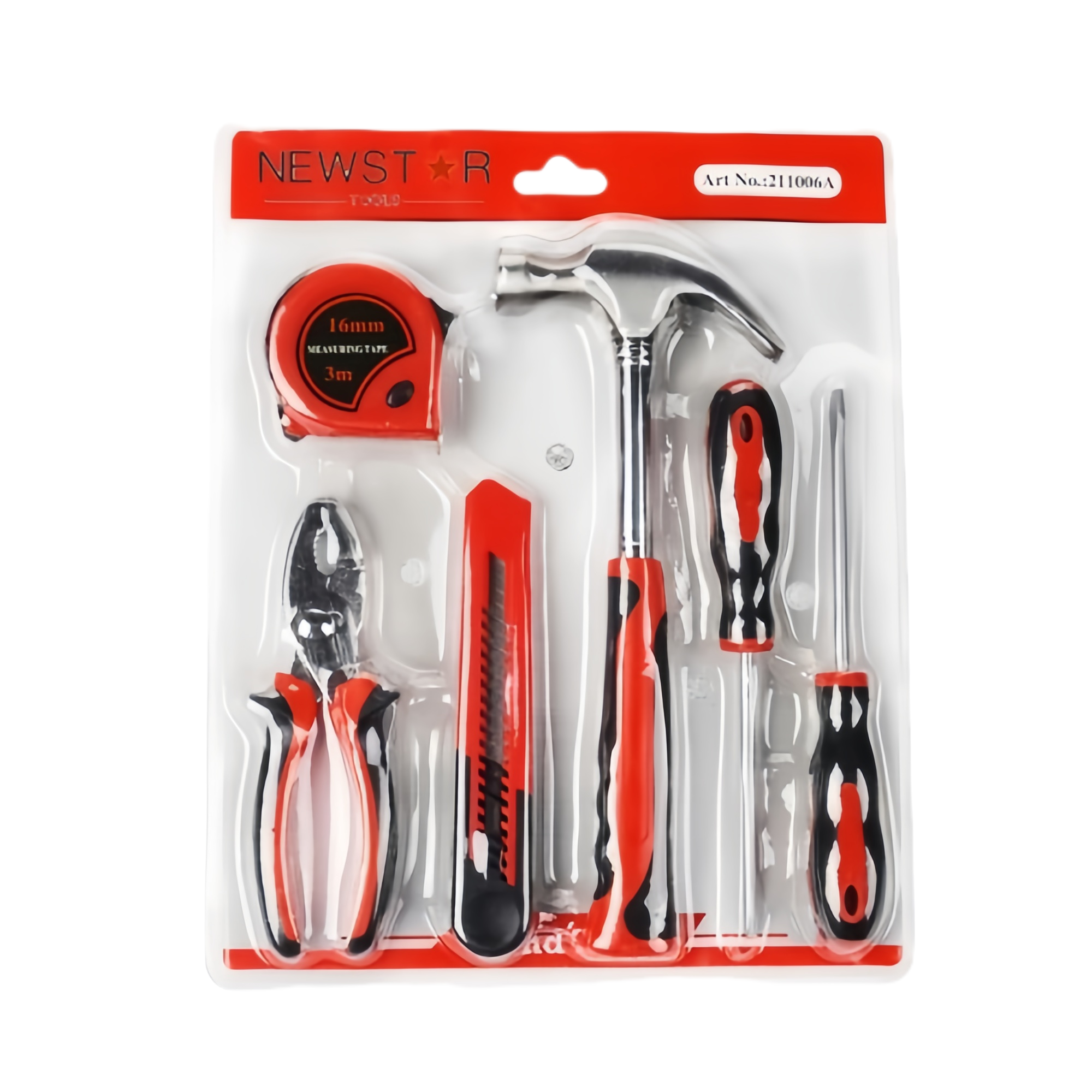
Purchasing a high-quality tool collection is a baseline investment. The actual lifecycle and safety of that equipment depend entirely on how it is stored. Improperly stored tools lead to accelerated degradation, frequent replacement costs, and severe safety liabilities in residential environments. Children and pets face high risks when sharp or heavy objects sit unsecured in garages, basements, or utility closets. Rust, calibration loss, and mechanical binding result directly from poor environmental controls and disorganized storage habits. Selecting the right equipment requires evaluating the storage infrastructure it comes with right out of the box. You cannot separate the quality of the tools from the quality of the case that protects them. This guide breaks down the criteria for assessing built-in storage solutions. We outline the technical requirements for safely organizing and maintaining your tools long-term.
Prioritize Integrated Storage: When evaluating a basic household tool set, the quality of the included hard case or bag is a primary indicator of long-term tool retention and safety.
Mitigate Environmental Risks: Moisture, dust accumulation, and temperature fluctuations are the primary catalysts for tool degradation; climate-controlled, dry storage is non-negotiable.
Implement Access Control: Safe storage requires lockable cabinets or high-shelf placement to prevent unauthorized access and accidental injury.
Maintain Visual Inventory: Utilizing shadow boards, systematic labeling, or molded cases ensures immediate identification of missing tools, reducing the risk of hazardous items being left in living spaces.
The True Cost of Improper Tool Management
Failing to establish a strict storage protocol carries heavy consequences. The risks extend far beyond the frustration of a missing screwdriver. At home, the way you manage your hardware directly impacts the physical safety of your family and the functional lifespan of the equipment itself.
Safety Liabilities in Residential Spaces
Leaving sharp, heavy, or small components accessible creates immediate hazards. Utility knives, chisels, and awls left loose on workbenches or shoved into low drawers invite severe lacerations. Heavy items like claw hammers or pipe wrenches pose crushing risks if knocked off unstable shelving. In professional environments, strict workplace safety standards mandate that every piece of equipment is secured and accounted for at the end of a shift. Applying this same rigorous compliance measure to your home is mandatory. A loose tool is a dangerous tool. Securing a Household Tool Set behind locked doors or in elevated, latched containers mitigates the risk of accidental injury. Curious children often view brightly colored handles as toys, making access control a top priority.
Equipment Degradation
Tools are primarily manufactured from high-carbon steel, alloy steel, or chrome vanadium. While these materials offer exceptional strength and durability, they are highly susceptible to environmental degradation. When exposed to ambient humidity and dust in unconditioned spaces like basements or garages, carbon steel undergoes a rapid chemical process of oxidation. Moisture in the air reacts with the iron in the steel, creating iron oxide, commonly known as rust.
Surface rust forms quickly but can often be scrubbed away with steel wool. However, if left unchecked, it progresses into pitting corrosion. Pitting eats microscopic holes into the steel, permanently compromising the structural integrity of the tool. A pitted wrench is far more likely to snap under heavy torque, turning a simple repair job into a dangerous situation. Dust accumulation exacerbates this issue by trapping moisture directly against the metal surface. This creates a micro-environment that accelerates the rusting process.
The "Replacement Cycle" Trap
Disorganized storage creates a financial drain known as the replacement cycle trap. The standard household junk drawer is the primary culprit. When screwdrivers, hex keys, and tape measures are thrown together haphazardly, small components inevitably migrate to the bottom or get lost entirely. Tool-on-tool impact dulls precision edges and chips hardened tips. When you cannot find the specific 10mm socket or Phillips head bit you need, you are forced into redundant purchases. This constant need to replace lost or damaged items severely diminishes the return on investment of your original purchase. Proper organization stops this cycle. It ensures every piece remains accounted for and in working condition.
Evaluating Storage Features When Buying a Basic Household Tool Set
Tool maintenance starts at the point of purchase. The container that houses your equipment is just as important as the tools themselves. Assessing the built-in storage features ensures you are buying a system designed for longevity and safety.
Integrated Hard Cases vs. Soft Bags
Manufacturers typically package tools in either blow-molded hard cases or canvas soft bags. Each option serves a distinct operational purpose. Understanding their structural differences helps you make an informed decision.
Blow-molded hard cases offer superior impact protection. These cases feature dedicated, friction-fit slots for every individual piece. This design provides an immediate visual inventory. If a slot is empty, you instantly know a tool is missing. The rigid plastic shell protects the contents from crush damage if heavy items are dropped on top of it. High-quality hard cases feature continuous metal hinge pins rather than cheap plastic living hinges that snap after a few months of use. Some premium cases even include rubber O-ring seals around the perimeter of the lid, providing a watertight barrier against flood damage or extreme humidity. The primary trade-off is bulkiness. Hard cases consume more shelf space and cannot be compressed.
Soft bags provide flexibility and space-saving benefits. Constructed from heavy-duty canvas or nylon, these bags can be squeezed into tight utility closets or vehicle trunks. However, they lack structural protection. Throwing tools into a single main compartment increases the risk of tool-on-tool damage. Precision edges can chip, and heavy hammers can dent softer aluminum or plastic handles during transit. Soft bags also make visual inventory impossible. You have to dig through the contents to find what you need.
Assessing the Portable Home Tool Kit
If your maintenance tasks require moving equipment across the property, portability becomes a critical metric. A portable home tool kit must be evaluated on its structural integrity during transport. Inspect the latch durability. Cheap plastic latches snap under the weight of a fully loaded kit, causing the case to burst open and spill heavy metal components onto your feet. Look for metal clasps or reinforced, heavy-duty plastic hinges. Handle ergonomics also matter. A handle that digs into your palm or flexes under load makes transport hazardous. Finally, consider weight distribution. A well-designed case balances the heavy hammers and wrenches near the hinges or the bottom, preventing the case from swinging wildly while you carry it.
Built-in Access Control
For households with children, access control is a non-negotiable feature. Review tool sets that offer padlock-compatible cases or integrated locking mechanisms. Even a simple hole drilled through the primary latch allows you to attach a small brass padlock. This baseline requirement transforms a potentially dangerous collection of sharp metal into a secure, child-proof container. If a case cannot be locked, it must be stored in a cabinet or room that can be.
Core Principles for Safely Storing a Basic Household Hand Tool Set
Once the equipment is in your home, establishing strict storage protocols prevents damage and ensures operational readiness. Safe storage relies on structural organization and environmental mitigation.
Adhering to Manufacturer Specifications
The most overlooked step in tool maintenance is reading the manufacturer's instruction manual prior to storage. These documents contain specific guidelines on lubrication, tension release for torque tools, and acceptable temperature ranges. Retain all original safety labels and documentation. They provide the necessary maintenance schedules required to keep the equipment functioning safely over decades of use.
Retaining Original Manufacturer Cases
Do not discard the packaging your equipment arrived in. The manufacturer's original case is often engineered specifically for the exact tolerances, dimensions, and weight of those specific tools. The friction-fit molds prevent shifting during transport, eliminating the friction that wears down protective chrome plating. Until you are ready to invest in a comprehensive, wall-to-wall storage architecture, the original case remains the safest default storage method for any basic household hand tool set.
Vertical Storage vs. Horizontal Stacking
How you arrange your cases on a shelf dictates the structural safety of your storage area. Stacking heavy toolboxes horizontally creates severe hazards. The concentrated weight can crush the bottom cases, warp the plastic, and cause latches to fail. Furthermore, a stack of heavy boxes is inherently unstable, creating a tipping hazard that can result in serious foot or leg injuries.
Vertical storage solutions distribute weight safely. French cleat systems and slatwall panels represent the gold standard for vertical storage. These systems allow you to mount heavy items securely to the wall studs while retaining the flexibility to move hooks and shelves as your collection changes. By keeping heavy items off the floor and securing them vertically, you eliminate trip hazards and improve accessibility. You can slide a single case out without having to unstack fifty pounds of equipment resting on top of it.
Environmental Controls and Mitigation
Controlling the micro-climate around your tools is the only way to stop rust and calibration loss.
Moisture Control: Introduce silica gel desiccants into closed cases. These packets absorb ambient moisture trapped inside the box when you close the lid. For drawer storage, line the bottoms with vapor-inhibiting liners that release anti-corrosive compounds to protect bare metal surfaces.
Temperature Stability: Never store sensitive measuring tools, such as calipers, levels, or torque wrenches, in uninsulated sheds. Extreme thermal expansion and contraction warp metal and permanently destroy the calibration of precision instruments. Keep these items inside the climate-controlled envelope of your home.
Long-Term vs. Active Storage: If you are placing equipment into self-storage or packing away seasonal items, avoid wrapping them in sealed plastic bags, which trap condensation. Instead, utilize breathable dust covers or heavy-duty canvas tarps over larger containers. This prevents particulate buildup while allowing trapped moisture to evaporate naturally.
Advanced Storage Architecture for the Expanding Hand Operated Tool Kit
As your skills progress and your collection grows, standard plastic cases will no longer suffice. Upgrading your storage architecture improves operational efficiency and maintains strict safety standards for a larger inventory.
Lockable Steel Cabinets
Heavy-duty, lockable steel cabinets represent the ultimate upgrade for scaling tool collections. When evaluating cabinets, pay close attention to the steel gauge thickness. A lower gauge number indicates thicker, stronger steel capable of supporting massive weight without buckling. Inspect the lock cylinder quality to ensure it provides genuine security rather than just a deterrent. If you opt for a rolling cabinet, ensure it features heavy-duty polyurethane casters with locking mechanisms. A loaded cabinet rolling down a sloped garage floor is a massive safety hazard. Inside the drawers, use EVA foam liners to prevent tools from sliding and banging together every time you open the drawer. Most importantly, tall stationary steel cabinets must be secured directly to wall studs using heavy-duty lag screws. A fully loaded cabinet carries a massive center of gravity. If a heavy top drawer is opened, the entire unit can tip forward with lethal force if not anchored properly.
Pegboards and Shadow Boarding
Wall-mounted pegboards offer immediate visual access to your most frequently used items. To maximize both efficiency and safety, implement shadow boarding. This involves tracing the outline of each tool onto the board behind its hanging position. Shadow boarding delivers immense operational efficiency. You never have to guess where a tool belongs. More importantly, it provides a critical safety benefit. A missing silhouette immediately alerts you that a potentially dangerous tool, like a framing hammer or a utility knife, is unaccounted for and potentially lying somewhere in the house.
Modular Storage Systems and Systematic Labeling
For users who require scalability, modular storage systems are the industry standard. These interlocking, stackable storage boxes lock together to form a single, rigid column. This allows you to expand your hand operated tool kit infinitely while maintaining a small footprint. Because these containers are opaque, strict systematic labeling is mandatory. Clearly marking the contents of each box prevents hazardous rummaging. Blindly reaching into an unlabelled box filled with loose blades and sharp drill bits is a guaranteed way to sustain a severe cut.
Comparison of Tool Storage Architectures
Storage Type
Primary Advantage
Impact Protection
Visual Inventory
Best Use Case
Blow-Molded Hard Case
Custom fit, high security
Excellent
Immediate (empty slots visible)
Default storage, vehicle transport
Canvas Soft Bag
Lightweight, space-saving
Poor
None (requires digging)
Tight spaces, non-fragile items
Lockable Steel Cabinet
Massive capacity, secure
Excellent
Drawer-dependent
Large, expanding home workshops
Pegboard w/ Shadowing
Fast access, highly visible
N/A (wall mounted)
Excellent (silhouettes)
Frequently used daily hand tools
Implementation Risks: Common Storage Mistakes to Avoid
Even with the best cabinets and cases, poor daily habits will ruin your equipment. Avoiding these common implementation risks ensures your storage strategy actually works.
Storing Tools Dirty or Damp
Never put a tool away immediately after use without inspecting it. Sweat from your hands contains salt and moisture, which etches into steel. Keep a dedicated cleaning station near your storage area. A quick spray of a water-displacing lubricant like WD-40, followed by a wipe-down, removes moisture. For long-term protection, apply a specialized rust inhibitor like Boeshield T-9, which leaves a waxy film that seals out oxygen and moisture. Storing a damp tool in a closed, airtight case is the fastest way to destroy it. The moisture cannot escape, creating a humid micro-climate that accelerates corrosion across every piece of metal in the box.
Rust Prevention Methods for Hand Tools
Prevention Method
Application Frequency
Primary Benefit
Best For
Light Machine Oil Wipe
After every use
Removes sweat and surface moisture
Daily use hand tools
Silica Gel Desiccants
Replace every 3-6 months
Absorbs ambient humidity in closed spaces
Sealed hard cases and toolboxes
Vapor Corrosion Inhibitors (VCI)
Replace annually
Releases protective gas to coat metal
Large steel cabinet drawers
Waxy Rust Inhibitor Spray
Before long-term storage
Creates a thick, impenetrable barrier
Seasonal tools stored in garages
Overloading Drawer Capacities
Every tool chest drawer has a specific weight rating dictated by its ball-bearing slides. Shoving heavy pipe wrenches, massive socket sets, and hammers into a single drawer often exceeds this limit. Overloading causes the ball bearings to deform and the tracks to warp. Eventually, the drawer will bind, refuse to close, or suffer a catastrophic mechanical failure where the slides rip out of the cabinet chassis, dropping heavy steel onto the floor and creating a severe tipping hazard.
Proximity to Corrosive Chemicals
The location of your storage unit matters just as much as the unit itself. Keep hand tools far away from pool chemicals, agricultural fertilizers, muriatic acid, and strong solvents. These chemicals off-gas corrosive vapors even when their containers are tightly capped. If a steel cabinet or a basic household tool set is stored on the same shelf as chlorine tablets, the airborne vapors will aggressively attack the metal, causing deep, structural rust within a matter of weeks.
Conclusion
Safe storage is a critical evaluation metric when purchasing equipment and a continuous maintenance requirement. Buyers must reject tool sets packaged in flimsy, non-securing plastics and prioritize those offering durable, molded, and lockable storage solutions. Take immediate action to secure your equipment:
Conduct a comprehensive audit of all current tool storage locations in your home, gathering loose items from drawers and closets.
Discard compromised, cracked, or broken storage containers that no longer latch securely or protect against moisture.
Read and file all retained manufacturer instructions to ensure you are meeting the specific lubrication and storage requirements for precision items.
Invest in a lockable, climate-appropriate storage solution, whether that is a heavy-duty steel cabinet or a series of rigid, weather-sealed modular boxes.
FAQ
Q: What is the safest way to store a basic household tool set?
A: Keep the tools in their original, blow-molded manufacturer case, store the case horizontally on a sturdy shelf, and ensure the area is dry, temperature-controlled, and inaccessible to children.
Q: How do I prevent my hand operated tool kit from rusting in the garage?
A: Apply a light coat of machine oil after each use, store them in a sealed toolbox, place desiccant packs (silica gel) inside the compartments to absorb ambient moisture, and use dust covers for long-term storage.
Q: Are soft bags or hard cases better for a portable home tool kit?
A: Hard cases offer superior protection, organization, and visual inventory, making them safer. Soft bags are lighter and easier to fit into tight spaces but offer less protection against impacts and moisture.
Q: Why is vertical tool storage recommended?
A: Vertical storage on wall-mounted racks prevents the crushing hazards associated with stacking heavy boxes, keeps tools visible, and removes trip hazards from the floor.
Q: Should I keep the original case and labels for my basic household hand tool set?
A: Yes. Original cases are custom-molded to prevent tools from shifting, rubbing together, or falling out during transport. Retaining labels and manufacturer instructions ensures you follow specific maintenance and storage guidelines.