The modern workshop is often dominated by the noise, dust, and spatial demands of machinery. This overwhelming environment is driving a resurgence in traditional methodologies. Artisans now prioritize precision and environmental control over raw speed. We see a growing desire to reconnect intimately with the material. Constant machine noise disrupts focus and creates daily stress.
Integrating core manual implements is no longer just an aesthetic choice for dedicated professionals and serious hobbyists. It serves as a strategic decision for achieving superior surface finishes, exacting joinery, and long-term ergonomic health. Relying solely on power tools can lead to catastrophic errors on expensive lumber. A split-second router slip can instantly ruin a prized walnut slab.
This guide evaluates the foundational investments required to transition into manual craftsmanship. We will analyze tool quality, acquisition strategies, and the realistic infrastructure needed to maintain them. You will discover how to carefully select essential instruments, balance your budget, and build a highly capable manual workshop from the ground up.
Key Takeaways
Precision woodworking hand tools often yield superior surface finishes compared to mechanized sanding, reducing overall finishing time.
Tool evaluation must prioritize metallurgy (edge retention vs. ease of sharpening) and ergonomic design to mitigate spinal and joint fatigue.
Building a functional kit requires prioritizing high-frequency foundational carpentry tools over specialized novelty items.
The decision between restoring vintage tools and purchasing modern premium models hinges on a strict time-versus-capital ROI analysis.
A reliable, scalable sharpening ecosystem is a mandatory prerequisite for successful traditional woodworking.
The Operational Case for Traditional Woodworking Methods
Heavy reliance on machinery introduces significant operational bottlenecks into daily shop life. Stringent dust collection compliance requirements demand expensive, space-consuming ductwork systems. Ambient noise fatigue damages hearing and sharply reduces sustained mental focus. Furthermore, power routers and table saws carry a high risk of catastrophic errors. One slight miscalculation can destroy hundreds of dollars of premium hardwood.
A successful hybrid or fully manual workshop fundamentally changes this dynamic. This approach drastically minimizes airborne particulates, protecting your respiratory health. It requires a significantly smaller physical footprint, freeing up valuable garage or studio space. Most importantly, manual tools allow for micro-adjustments in complex joinery. Machines simply cannot replicate this nuanced, stroke-by-stroke level of control easily. Working quietly allows you to hear the blade severing the wood fibers, providing immediate tactile feedback.
We must also acknowledge the tangible "craft" premium in today's market. Hand-planed surfaces reflect light differently than sanded ones, leaving a crisp, glassy finish. Hand-cut dovetails often command higher market value in custom furniture commissions. Clients appreciate the visible human element in the joinery. This aesthetic aligns your DIY woodworking passion directly with professional-grade output. Embracing traditional woodworking methods elevates the final product far beyond mass-produced furniture standards.
Core Woodworking Hand Tools: A Buyer’s Shortlist
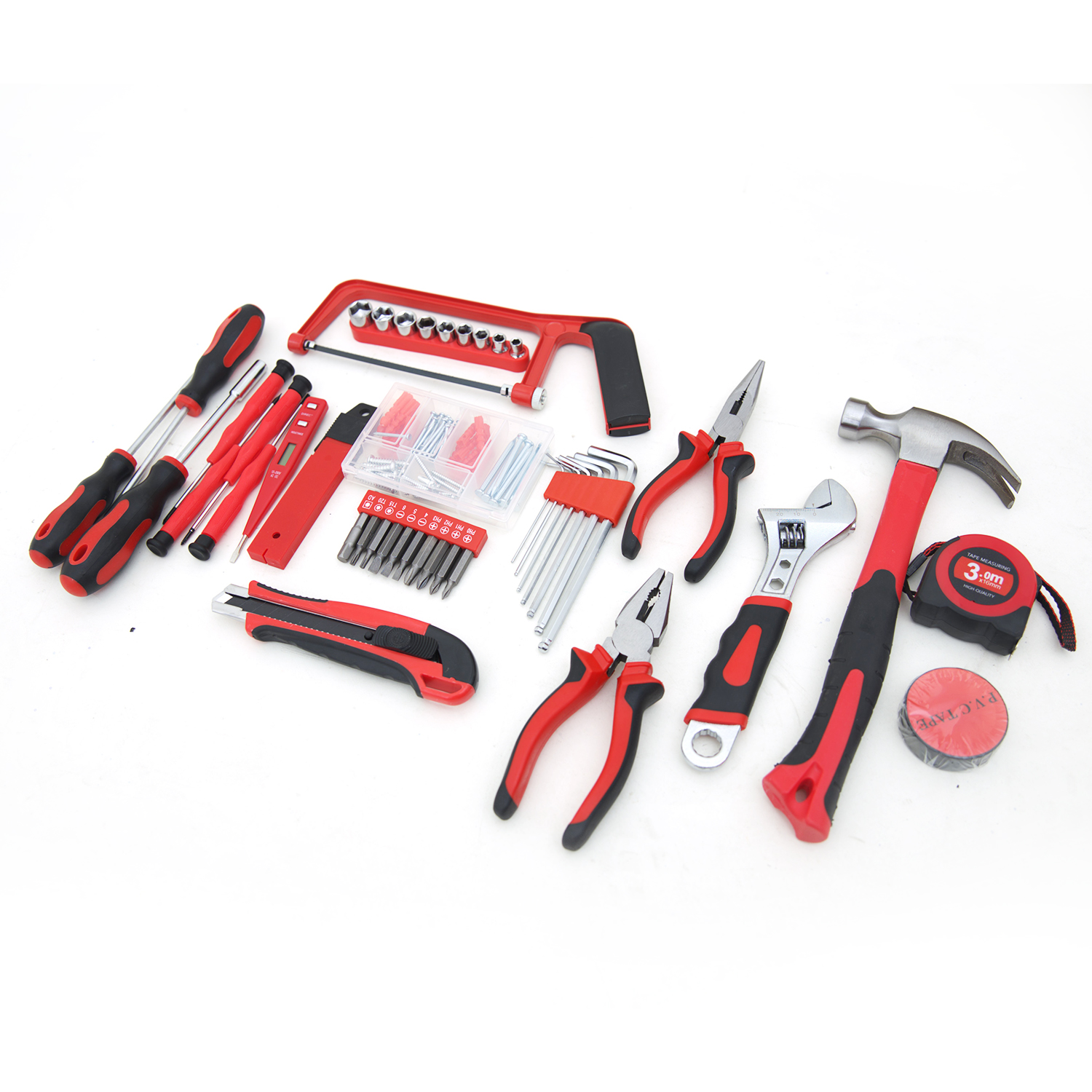
Building a functional kit means ignoring flashy novelty items. You must prioritize high-frequency foundational carpentry tools first. Additionally, every efficient workshop requires a baseline of general utility equipment for machine calibration, jig assembly, and routine maintenance. Investing in a comprehensive 169pcs Household Repair Hand Tools Kit ensures you have the essential wrenches, screwdrivers, and measuring devices ready before you even touch a piece of wood. We evaluate these specialized woodworking instruments based on their direct impact on your daily workflow.
Measuring and Marking
Accuracy strictly dictates your final project outcomes. A tiny marking error multiplies exponentially during assembly. You should prioritize engineered squares over cheap stamped metal alternatives. Marking gauges equipped with micro-adjusters provide vastly superior layout control. Always choose dedicated striking knives over standard carpenter pencils. A knife severs the top wood fibers perfectly, creating a physical trench for your saw or chisel to follow. A pencil line is simply too thick for precision joinery.
Hand Saw Tools
You must differentiate between delicate joinery saws and rough breakdown saws. Joinery saws, like dovetail or tenon variants, feature stiff brass or steel backs. This spine keeps the thin blade perfectly straight during meticulous cuts. When evaluating hand saw tools, closely assess plate thickness and tooth geometry. Rip teeth are filed flat across to act like tiny chisels, cutting along the grain. Crosscut teeth feature alternating bevels to slice cleanly across wood fibers like knives. Handle pitch also matters. A lower handle angle typically improves wrist comfort at the workbench.
Planes and Chisels (Truing and Shaping)
These core Woodworking Hand Tools handle the bulk of truing and shaping. Every shop needs a foundational plane trio. First, acquire a low-angle block plane for trimming end grain and chamfering edges. Second, invest in a versatile No. 5 jack plane for rapid material removal and board flattening. Third, secure a finely tuned No. 4 smoothing plane for final surface finishing. Bench chisels are equally vital. They require impact-resistant handles designed to absorb mallet blows safely. The chisel backs must feature high-tolerance flatness. A perfectly flat back guarantees a predictable cutting angle during delicate paring tasks.
Evaluating Tool Quality: Separating Premium from Expendable
High-quality woodworking tools separate an enjoyable craft session from endless frustration. We evaluate these instruments across three primary dimensions: metallurgy, ergonomics, and machining tolerances.
Metallurgy and Edge Retention
Steel formulation dictates how long you spend working versus how long you spend sharpening. We typically analyze three common steel types: O1, A2, and PM-V11. You must frame the trade-off clearly. O1 high-carbon steel sharpens incredibly easily but requires frequent honing sessions. A2 steel holds an edge much longer but takes significantly more effort to sharpen on standard stones. PM-V11 represents a modern metallurgical breakthrough. It provides the prolonged edge retention of A2 while sharpening almost as easily as O1.
Steel Alloy Type
Edge Retention
Ease of Sharpening
Primary Advantage
O1 High-Carbon
Moderate
Excellent
Takes an extremely keen, fine edge quickly.
A2 Tool Steel
High
Moderate
Requires less frequent trips to the sharpening station.
PM-V11 Powdered
Very High
High
Ideal balance of durability and easy maintenance.
Ergonomics and Physical Impact
Manual planing and sawing demand significant physical exertion. We must address the bodily toll of laborious workshop tasks. Evaluate the handle symmetry and weight distribution of every tool you buy. Premium planes feature tote angles specifically designed to align with natural body mechanics. This thoughtful geometry directs your pushing force horizontally, reducing painful spinal compression. Cheaply made tools often ignore these biomechanics. They force your wrists into unnatural angles, causing joint fatigue and long-term strain.
Machining Tolerances
Machining tolerances explain exactly why premium brands command higher prices. High-end planes arrive with dead-flat soles straight out of the box. You do not need to spend hours lapping them on sandpaper. They feature precise, backlash-free lateral adjustment mechanisms. These mechanisms allow for adjustments measured in thousandths of an inch. You will notice a complete absence of blade chatter under heavy load. Expendable tools flex and vibrate during use, leaving terrible tear-out on your wood surfaces.
Acquisition Strategy: Vintage Restoration vs. Modern Premium
Acquiring manual tools requires balancing your available capital against your available free time. You essentially face two distinct pathways. Both have merit depending on your current shop circumstances.
The Vintage Route (Cost vs. Time)
Hunting for pre-WWII Stanley or Millers Falls tools is a popular entry point. This route offers a significantly lower initial capital outlay. Historically, these older models feature superior high-carbon steel compared to modern budget brands. The castings from this era are also highly regarded.
However, you face severe hidden risks. You might uncover structural cracks under rust layers. Warped soles are incredibly common. Restoring these tools creates a massive time debt. You might spend ten hours flattening a sole and reshaping a damaged blade. This is time spent restoring, not woodworking.
Modern Premium Brands (Capital vs. Reliability)
Brands like Lie-Nielsen or Veritas represent the modern premium tier. These tools offer plug-and-play readiness immediately upon delivery. They usually include lifetime warranties and boast exact machining tolerances. You take them out of the box, give the blade a quick hone, and start cutting.
The primary risk here is purely financial. They require a high upfront cost. You must practice strict budget allocation. Buying an entire set of premium planes at once is prohibitively expensive for most beginners.
Shortlisting Logic
We recommend a hybrid acquisition model to maximize your budget. Buy modern premium models for critical precision tools. Your smoothing plane and your joinery saws demand absolute perfection. Source vintage options for secondary tools. Heavy mortise chisels, rough breakdown hand saws, and large jointer planes are easily restored. They do not require the microscopic tolerances of a smoothing plane.
Infrastructure Requirement: The Sharpening Ecosystem
Manual tools are entirely useless without a reliable sharpening methodology. Many beginners buy an expensive plane but neglect the stones required to maintain it. The cost of a sharpening setup must be factored into your initial tool budget. It is a mandatory prerequisite.
Media Evaluation Chart
We generally evaluate two primary sharpening media categories. Each possesses distinct workflows and maintenance requirements.
Sharpening Media
Cutting Speed
Maintenance Required
Workspace Impact
Waterstones (Synthetic)
Fast cutting, excellent high-polish finish.
Requires constant flattening to prevent dishing.
Messy; requires water soaking and slurry cleanup.
Diamond Plates
Aggressive initial cut, slower final polishing.
Zero maintenance; permanently flat surface.
Clean; only requires a quick spray of glass cleaner.
Scalability
You do not need a massive collection of stones to begin. Start small to ensure scalability. Purchase a simple dual-grit system, such as a 1000-grit and an 8000-grit waterstone. You also need a reliable honing guide. Freehand sharpening is a great skill, but a honing guide ensures repeatable, verifiable bevel angles immediately. Master this manual, two-stone process first. Establish a consistent burr and polish it away. Only after mastering this should you consider investing in mechanized sharpening wheels or slow-speed grinders.
Conclusion
Transitioning to traditional woodworking relies on calculated, deliberate investments in foundational tools. You must conduct a realistic assessment of physical ergonomics to protect your body during long sessions. Most importantly, you must commit to a rigorous sharpening and maintenance routine. Without a sharp edge, even the most expensive plane becomes a frustrating paperweight.
To begin this transition, take immediate action. Audit your current shop limitations, specifically noting dust issues or recurring precision failures. Next, invest in one high-quality, low-angle block plane and a dedicated, two-stone sharpening setup. Use this modest kit to benchmark the immediate difference in your workflow. You will quickly experience the superior finish quality that only a razor-sharp manual blade can provide.
FAQ
Q: Are woodworking hand tools practical for a modern production shop?
A: Yes, they are highly practical when applied correctly. They excel primarily at final surface smoothing and flush-trimming complex joinery. In many cases, executing a single custom cut manually takes far less time than setting up a complex machine jig.
Q: How much should I budget for a beginner set of traditional carpentry tools?
A: A functional, mid-tier starter kit typically ranges from $400 to $800. This budget should cover one versatile No. 5 jack plane, two saws (dovetail and tenon), a core four-piece bench chisel set, and basic diamond sharpening media. For general shop maintenance and everyday utility needs alongside your specialized gear, integrating a versatile 169pcs Household Repair Hand Tools Kit is also a highly practical strategy to guarantee you have all standard fastening and measuring tools readily accessible.
Q: Do hand tools require a specific type of workbench?
A: Yes. Manual tool use requires a heavy, exceptionally rigid workbench. It must feature reliable work-holding solutions like sturdy vises and bench dog holes. The bench must absorb intense horizontal sheer forces during planing without racking or swaying.
Q: Is PM-V11 steel worth the premium over standard O1 or A2?
A: For high-use smoothing planes and paring chisels, yes. It provides the incredible edge retention of A2 steel but sharpens almost as easily as O1. This balance significantly reduces your workshop downtime, making the premium price highly worthwhile.