Because equipment downtime drains revenue and disrupts daily operations, relying on poor tool sets inevitably leads to delayed repairs and compounded safety risks. Facility maintenance is a relentless job where time is quite literally money. In this comprehensive guide, we explore how the right manual instruments dramatically improve facility maintenance. By upgrading your equipment strategy, you can transform a reactive maintenance team into a proactive, highly efficient unit.
Key Takeaways
Efficiency and Speed: High-quality implements allow maintenance teams to perform quick, on-the-spot repairs without the extensive setup time required for heavy power equipment.
Cost-Effective Preventative Maintenance: Catching small mechanical or structural issues early with the correct manual instruments prevents expensive, large-scale system failures.
Scalability of Tool Kits: Different facility zones require distinct setups. These range from compact 25-piece kits for light office repairs to 177-piece trolley setups for major mechanical rooms.
Safety First: Ergonomic, professional-grade materials reduce workplace injuries, minimize hand fatigue, and significantly improve technician safety during repetitive tasks.
Industry Trends: The Resurgence of Manual Precision in Smart Facilities
Recent industry analyses highlight a fascinating paradox within modern facility management. As commercial buildings become smarter through predictive analytics and automated sensors, the demand for skilled technicians equipped with reliable manual instruments has actually surged. Predictive maintenance systems are generating work orders faster than ever before. An automated building management system might instantly detect a pressure drop in a commercial HVAC unit. However, it still takes a human hand, guided by tactile feedback, to physically tighten the faulty valve.
Furthermore, the shift toward sustainable building operations requires meticulous calibration of existing hardware rather than wholesale replacement. This trend heavily favors precision manual adjustments over brute-force power tool applications. Facility managers are now realizing that outfitting their teams with premium manual kits is a direct investment in the operational uptime of their smart buildings.
The Crucial Role of a Hand Tool in Modern Facility Maintenance
Facility management is an ongoing process demanding precision, reliability, and immediate action. While automated diagnostic systems dominate modern discussions, the foundational element of daily upkeep remains the manual tool.
Despite the rapid rise of cordless power tools, basic manual equipment offers unmatched precision and accessibility. Power tools often deliver excessive torque. They can easily strip delicate screws on expensive control panels or crack fragile plumbing fixtures. Manual turning and gripping provide technicians with essential physical feedback. This allows a maintenance worker to feel the exact resistance of a fastener, ensuring it is tightened to the correct tolerance without causing accidental damage.
Specifically, cramped electrical closets, narrow drop ceilings, and the tight spaces behind heavy manufacturing machinery often render bulky power tools useless. In these restricted environments, a low-profile ratcheting wrench or a stubby screwdriver becomes the only viable solution to complete the repair.
How High-Quality Hand Tools Improve Maintenance Efficiency
Investing in premium manual equipment is not merely a matter of convenience. It is a strategic financial decision that directly impacts the operational efficiency of a building. Below are objective ways that high-quality tools streamline maintenance workflows.
In manufacturing plants, commercial office buildings, and healthcare facilities, machinery downtime directly correlates to revenue loss. Quick access to the exact wrench, hex key, or screwdriver keeps facility infrastructure running seamlessly. When technicians use standardized tool sets, they eliminate the frustrating hours wasted searching for the correct size or dangerously adapting the wrong tool for a specific job. Consequently, this sharp reduction in Mean Time To Repair ensures critical systems are brought back online swiftly.
Worker safety remains a primary concern for any facility manager. The physical differences between low-cost generic equipment and professional-grade instruments are substantial. Premium tools are engineered with ergonomic grips. They often utilize Thermoplastic Rubber materials that provide maximum slip resistance even when coated in industrial oil or water.
Precision-machined tips on screwdrivers and exactly calibrated jaws on wrenches prevent the metal from slipping off a fastener. Tool slippage is a leading cause of knuckle injuries, hand lacerations, and subsequent compensation claims in maintenance departments. By providing tools that securely grip the work surface, facilities actively reduce workplace injuries.
While budget-friendly tools may seem appealing for initial procurement, they frequently suffer from rapid material fatigue. Soft metals strip easily under torque, and cheap plastic handles crack under pressure. Evaluating the Return on Investment reveals that purchasing durable tools forged from Chrome Vanadium steel is far more economical over a multi-year period.
Tool Quality Tier
Initial Cost
Estimated Lifespan
Replacement Frequency over 5 Years
Long-Term ROI
Standard or Generic
Low
6 to 12 Months
High, replacing 4 to 8 times
Negative due to high hidden costs
Professional-Grade Cr-V
Moderate to High
5+ Years
Low, replacing 0 to 1 times
Positive one-time investment
Essential Categories of Workshop Hand Tools Every Facility Needs
A well-rounded maintenance department requires a comprehensive inventory of manual equipment to address the diverse challenges of a commercial building. Having the right assortment guarantees technicians are prepared for any structural, mechanical, or electrical anomaly.
The vast majority of facility maintenance involves assembling, disassembling, or adjusting hardware. A robust selection of screwdrivers is mandatory. This includes Phillips, flathead, and Torx variants to handle modern tamper-resistant fixtures found in public restrooms. Hex keys are critical for adjusting commercial door closers and assembling modular office furniture. Comprehensive socket sets equipped with quick-release ratchets are indispensable for servicing heavy machinery and structural bolting.
Manipulating thick wires, bending sheet metal, and extracting stubborn fasteners require high-leverage gripping tools. Every facility cart should include standard slip-joint pliers, needle-nose pliers for delicate electrical work, and locking pliers for securely clamping materials. Cutting tools are equally vital. Heavy-duty utility knives, precise wire strippers, and diagonal flush cutters allow technicians to safely manage cabling and perform drywall repairs.
Structural adjustments often require controlled brute force. Hammers and mallets serve entirely different purposes. A standard claw hammer is necessary for carpentry, while a polyurethane dead-blow mallet is used to adjust metal fixtures without marring the surface finish. Pry bars are also essential for leveraging heavy equipment or dismantling damaged structural components safely.
Matching the Right Kit to the Maintenance Task
Facility needs vary significantly depending on the specific zone being serviced. Equipping every single staff member with a massive mechanical tool chest is highly inefficient. Likewise, sending a master mechanic to a boiler room with a basic screwdriver set is ineffective. Implementing a tiered strategy for tool distribution is the most logical approach to facility management.
Front-desk staff, property managers, and administrative coordinators often encounter minor issues that do not require a specialized technician. Tasks such as tightening a wobbly office chair, hanging a presentation whiteboard, or fixing a jammed desk drawer track demand immediate attention but minimal technical expertise. By empowering general staff with basic reliable tools, facility managers can reserve their highly trained technicians for critical infrastructure problems.
In contrast, industrial zones, boiler rooms, and manufacturing floors present complex mechanical challenges. These environments involve high-pressure piping, heavy-duty electrical conduits, and large-scale industrial machinery. Technicians operating in these zones require comprehensive heavy-duty sets to ensure preventative maintenance schedules are met without dangerous delays.
Spotlight: Top Professional Hand Tool Kits for Facility Managers
Selecting the appropriate equipment for a facility maintenance team is a critical procurement decision. Purchasing ad-hoc tools as needed frequently results in mismatched, disorganized, and easily lost items. Investing in structured tool sets ensures that technicians have exactly what they need, precisely when they need it.
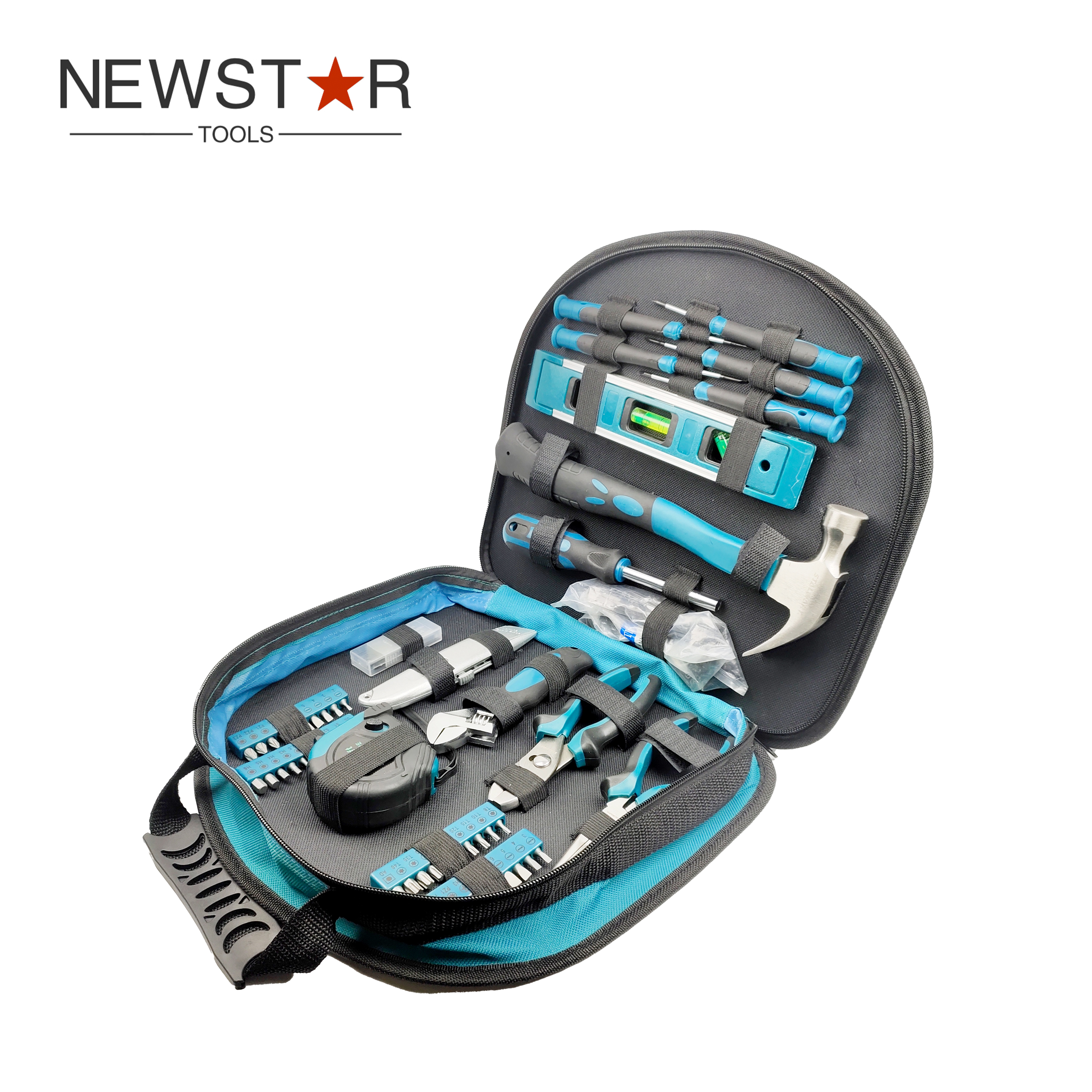
Not every maintenance task requires a master mechanic. In many commercial office buildings and hotels, a significant percentage of daily work orders consist of minor complaints. Issuing massive tool chests to front-desk staff to fix a loose cabinet handle is highly inefficient. Instead, compact and highly portable solutions are preferred. Investing in high-quality home repair hand tools resolves up to 80 percent of minor daily complaints without dispatching a dedicated technician. A standard 25-piece kit—typically featuring a claw hammer, slip-joint pliers, a tape measure, and multi-bit drivers housed in a durable blow-molded case—provides the essential gripping and fastening items needed for immediate triage.
For general daily maintenance tasks like adjusting commercial door closers, replacing HVAC filters, or tightening loose office fixtures, a standardized approach is highly recommended. Equipping general maintenance staff with a reliable professional hand tool kit establishes a baseline of efficiency. Look for sets forged from Chrome Vanadium steel that arrive in custom-molded cases. Standardizing the equipment issued to each technician streamlines inventory tracking and ensures a uniform standard of work across the facility.
Heavy-duty environments demand a highly comprehensive approach. When dealing with industrial machinery or extensive electrical panels, technicians cannot afford to waste time walking back and forth to a central maintenance closet. Mobility and absolute completeness are critical performance factors here. By utilizing a comprehensive setup of workshop hand tools, master mechanics are empowered to perform complex teardowns on the spot. A 177-piece professional trolley system acts as a mobile workshop. These setups feature built-in shadow boarding, deep-well sockets, and heavy-duty wrenches housed in a rolling steel cabinet, minimizing the risk of tool loss in hazardous industrial environments.
Best Practices for Tool Organization and Upkeep
Procuring high-quality equipment is only the first step in optimizing facility maintenance. To maximize the lifespan of the equipment and ensure ongoing operational safety, facility managers must implement rigorous organizational protocols.
Tool loss is a significant hidden cost in facility management. When items go missing, organizations bear the financial burden of replacement and suffer from increased labor costs as technicians waste valuable time searching. Implementing the 5S methodology—Sort, Set in order, Shine, Standardize, Sustain—is an industry best practice. Shadow boarding provides immediate visual confirmation of inventory status. If a wrench is missing at the end of a shift, the empty shadow instantly alerts the technician.
The longevity of a manual tool is directly correlated with the preventative maintenance it receives. Even premium materials are susceptible to oxidation if subjected to moisture, harsh chemicals, or prolonged neglect. Technicians should wipe down every item with a lightly oiled rag at the end of their shift. This simple habit removes corrosive sweat and debris while leaving a microscopic protective barrier against rust. Tools with moving parts require periodic lubrication with specialized penetrating oils to ensure smooth mechanical operation.
Operating with compromised equipment is a primary cause of workplace injuries. Facility managers must enforce regular visual inspections to identify early signs of material fatigue. Key indicators for immediate retirement include mushroomed chisel heads, stripped screwdriver tips, and cracked composite handles. Adhering to strict safety guidelines regarding equipment ensures a secure working environment and mitigates institutional liability.
How to Measure the ROI of a Professional Tool Upgrade
Transitioning from a disorganized procurement strategy to a standardized professional-grade system requires an initial capital investment. To justify this expenditure to stakeholders, facility managers must objectively measure the Return on Investment through specific operational metrics.
In the framework of Lean Six Sigma, unnecessary movement is categorized as motion waste. If a maintenance technician earns 35 dollars per hour and spends an average of 15 minutes per day walking back to the shop to retrieve missing items, that equates to significant wasted labor annually. Equipping staff with comprehensive mobile kits virtually eliminates this motion waste. Technicians arrive at the work order location fully prepared to execute the repair, increasing the overall volume of work orders completed per shift.
One of the most immediate financial benefits of upgrading facility equipment is the reduction in outsourced service calls. In-house maintenance teams are frequently forced to call expensive external contractors simply because they lack the proper specialized wrenches to handle the job themselves. Empowering your internal staff with proper gear allows them to safely manage a wider scope of preventative maintenance. Avoiding just two or three expensive contractor callouts can entirely offset the purchase price of a premium tool trolley.
Conclusion
Daily facility maintenance requires reliable equipment to succeed. A quality manual instrument remains the absolute foundation of operational efficiency. Upgrading from mismatched, degraded equipment to standardized kits significantly reduces asset downtime while increasing productivity for your entire maintenance team.
Proper organization, regular cleaning, and timely replacement ensure workplace safety and protect your investment. Take the time to audit your current maintenance carts to identify missing or damaged items. Ready to upgrade your maintenance fleet? Explore the full range of industrial-grade solutions at Newstar Hardware to find the exact configuration your facility needs to operate at peak efficiency.
FAQ
Can I use home repair kits for commercial facility maintenance?
Yes, for specific light-duty applications. While heavy industrial machinery requires specialized equipment, high-quality basic kits are highly portable and perfectly adequate for front-office maintenance. Tasks such as tightening office furniture, adjusting door hinges, and performing basic fixture alignments can be executed efficiently with these compact sets. This makes them ideal for property managers and administrative staff.
What is the most important hand tool for a facility manager to carry?
While specific requirements depend heavily on the nature of the facility, empirical evidence suggests that a multi-bit screwdriver, a reliable pair of slip-joint pliers, and an adjustable wrench are the most critical items. Having these three versatile tools readily accessible allows maintenance personnel to successfully triage and resolve the vast majority of on-the-fly daily maintenance tickets without delay.
Why should I invest in a professional kit on a trolley?
A trolley system provides ultimate mobility, comprehensive organization, and immediate access to a wide array of equipment. It allows technicians to transport an entire workshop directly to the site of the mechanical issue. This logistical advantage drastically reduces repair times, minimizes technician fatigue, and prevents the costly loss of gear by utilizing built-in shadow boarding and secure drawer systems.
How often should facility hand tools be replaced?
Professional-grade manual tools are engineered to last for decades if properly maintained and lubricated. However, any items featuring moving mechanical parts or those subjected to high-torque applications should undergo formal visual inspections on a monthly basis. They must be replaced immediately if any signs of material fatigue, bending, cracking, or gear stripping appear.
What is the best way to prevent tool loss in large facilities?
The most effective method is implementing strict shadow boarding within tool drawers or pegboards. When every item has a designated, visually marked resting place, technicians can perform a two-second visual inventory before leaving a job site. Combining this with a standardized checkout system drastically reduces equipment shrinkage.
How do ergonomic tools impact maintenance team productivity?
Ergonomic designs reduce the physical strain on a technician's hands and wrists during repetitive tasks. Tools with dual-material grips and proper weight distribution prevent muscle fatigue and blistering. When technicians are comfortable, they can work faster, apply proper torque safely, and are far less likely to suffer from repetitive strain injuries that lead to absenteeism.