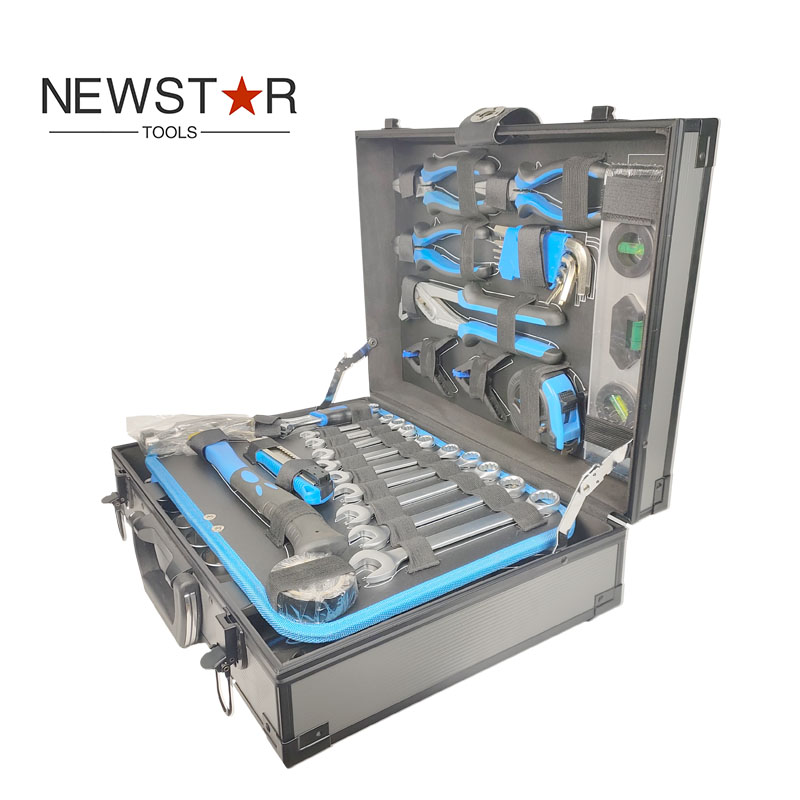
Light industrial maintenance operates as a high-stakes balancing act daily. These facilities require much faster response times than heavy manufacturing environments. However, they endure significantly higher wear-and-tear than standard commercial buildings. Relying on piecemeal tool procurement directly inflates your Mean Time to Repair (MTTR). Similarly, deploying consumer-grade equipment creates immediate bottlenecks on the plant floor. Technicians scrambling for the right wrench extend machine downtime. Hunting through unorganized drawers wastes valuable minutes during critical breakdowns. This inefficiency harms overall productivity and restricts output.
You can eliminate these recurring operational delays. Comprehensive, professional-grade hand tool sets serve as a strategic asset for your facility. They minimize downtime and standardize daily workflows effectively. Upgrading your equipment improves technician efficiency across the entire plant. We will explore how proper tool selection directly supports light industrial maintenance. You will learn the hidden costs of consumer tools and the essential components of a professional kit. Finally, we will outline how to implement a standardized system successfully.
Key Takeaways
Professional hand tool sets reduce MTTR by eliminating "tool hunting" and standardizing technician loadouts.
Upgrading from a basic household hand tool set to an industrial kit ensures compliance with torque requirements, durability standards, and safety regulations.
An organized hand tool set utilizing EVA foam or shadow boards is critical for 5S compliance and preventing Foreign Object Debris (FOD).
Transitioning to a mobile workshop tool set optimizes plant-floor mobility, bringing the maintenance crib directly to the breakdown site.
1. The Cost of Inefficiency: Why Consumer Sets Fail in Industrial Settings
Hidden costs plague maintenance departments relying on mismatched or under-specced tools. Stripped fasteners cause hours of unnecessary delay. Broken drives require immediate replacements mid-shift. These failures compound into wasted labor hours quickly. A technician fighting a rounded bolt loses precious diagnostic time. These problems usually stem from inadequate equipment. When companies ignore tool quality, they increase their mean time to repair. You end up paying for extended downtime and frustrated employees.
We must recognize the material realities separating equipment tiers. A standard household hand tool set often relies on basic carbon steel. It features low manufacturing tolerances and offers limited socket configurations. These consumer sets simply cannot handle repetitive, high-torque applications. Industrial environments demand Chrome-Vanadium (Cr-V) or Chrome-Molybdenum (Cr-Mo) alloys instead. These superior metals provide exceptional strength. Precision machining ensures sockets fit snugly over fasteners. This tight tolerance prevents slipping under heavy pressure.
What makes a kit truly industrial-ready? First, tools must meet stringent DIN or ANSI standards. These certifications guarantee baseline performance and dimensional accuracy. Second, ergonomic grips matter immensely. Hand tools need handles resistant to harsh industrial solvents. Brake cleaner, Skydrol, and cutting fluids will melt cheap plastic handles. Professional tools withstand chemical exposure easily. They maintain their grip integrity even when covered in machine oil.
2. Core Capabilities: What Defines a Light Industrial Maintenance Kit?
Building a facility maintenance set requires careful curation and planning. You cannot buy a random assortment of items. You must break down the essential layers of a facility kit. A robust set covers fastening, diagnostics, and specialty repairs. It provides specific solutions for common plant-floor breakdowns. By layering these capabilities, technicians handle varied tasks without returning to the main shop.
Fastening and torquing form the foundation of any maintenance kit. Technicians require multiple drive sizes for different applications. A complete setup includes 1/4", 3/8", and 1/2" drives. You also need both shallow and deep sockets. Depth variations allow easy access to recessed bolts. Furthermore, the kit must offer comprehensive SAE and metric coverage. Skipping sizes remains unacceptable in industrial settings. If your kit skips a 15mm socket, work stops completely upon encountering that specific bolt.
Light manufacturing and HVAC systems cross over frequently. Your team needs specialty diagnostics and electrical equipment on hand. Core capabilities should include:
Insulated screwdrivers for safe access to energized electrical panels.
Precision drivers for delicate sensor adjustments and terminal blocks.
Multi-use pliers, such as Linesman and Knipex-style water pump pliers, for high-leverage gripping.
Hex key sets tailored for metric machinery adjustments.
Modularity represents a major shift in modern tool storage. Old blow-molded cases crack and break over time. They cannot expand as your operational needs grow. Today, facilities rely on modular, expandable systems. These platforms let you add new trays easily. They adapt to changing maintenance demands without requiring entirely new boxes.
3. Evaluating Hand Tool Sets: Dimensions for Procurement Decisions
Connecting specific tool features to actual maintenance outcomes is vital. Consider socket geometry as a prime example. A 12-point socket slides onto a fastener quickly. However, it grips the corners of the bolt head. A 6-point socket grips the flat sides instead. When working on older machinery, 6-point sockets prevent fastener rounding. This single feature prevents hours of drilling and tapping stripped bolts. You must align tool features with your typical repair scenarios.
Metallurgy and manufacturing tolerances separate professional gear from amateur kits. Many brands claim their tools undergo advanced heat treatment. You must verify these claims by checking industry certifications. Plating quality also requires strict evaluation. In sensitive environments, chrome flaking poses a massive operational risk. High-quality industrial kits use specialized plating or black oxide finishes. These finishes eliminate flaking while preventing dangerous corrosion.
Vendor support significantly impacts operational disruption. Assess the reality behind advertised lifetime warranties. A lifetime warranty means little if replacement takes six weeks. Focus on the speed of warranty execution. You want advance replacement policies rather than slow mail-in processes. Local distributors who replace broken items immediately keep your team moving. Reliable vendor support ultimately minimizes unexpected downtime.
Table 1: Consumer vs. Industrial Set Capabilities
Feature Category
Consumer Grade Sets
Industrial Grade Sets
Base Metallurgy
Carbon Steel
Cr-V or Cr-Mo Alloys
Socket Design
Often 12-point, corner-gripping
6-point, flank-drive technology
Finish Quality
Basic Chrome (Prone to flaking)
Industrial Chrome or Black Oxide
Chemical Resistance
Low (Plastics degrade easily)
High (Resists industrial solvents)
4. 5S Integration: The ROI of an Organized Hand Tool Set
Implementing a visual management system transforms workflow efficiency entirely. An organized hand tool set eliminates the mental strain of searching for equipment. Technicians open a drawer and immediately see what they need. Every wrench and socket has a designated home. This visual system reduces physical fatigue significantly. It also speeds up the diagnostic phase of any repair order.
Inventory control improves dramatically through proper organization. CNC-cut EVA foam inserts offer precise homes for every item. Shadow boarding provides similar visual benefits for wall-mounted storage. These cues instantly identify missing tools before a shift ends. If a slot sits empty, the technician knows immediately. They can retrieve the forgotten item from the machine before walking away. This structural organization protects your equipment investment.
Strict tool control heavily influences compliance and workplace safety. Leaving a wrench inside a moving machine causes catastrophic damage. It creates severe safety hazards for operators standing nearby. In electrical panels, a forgotten screwdriver causes dangerous shorts. Foam-organized trays prevent Foreign Object Debris (FOD). They ensure technicians account for every item before turning the machine power back on.
5. Facility Mobility: Scaling to a Mobile Workshop Tool Set
Carrying heavy, static boxes across large footprints creates massive operational friction. Light-industrial plants often span tens of thousands of square feet. Forcing a technician to lug a heavy metal box to a distant site slows response times. They often carry only a few items to save weight. When they discover they need a different wrench, they must walk back. This mobility challenge directly hurts your bottom line.
Modern system integration solves this problem completely. A mobile workshop tool set integrates seamlessly with rolling carts. Interlocking modular boxes click together securely. They stack onto wheeled bases or mobile workbenches easily. You can customize the loadout based on the specific repair order. Technicians roll the entire diagnostic suite directly to the problem area.
Consider the efficiency of a cart-to-machine workflow. A mobile unit brings the maintenance crib directly to the point of failure. The technician diagnoses the issue, performs the repair, and cleans up the site. They never return to the main shop during the process. This workflow maximizes active wrench time. It eliminates wasted motion and accelerates equipment recovery across your facility.
6. Implementation Risks & Shortlisting Logic
Rolling out new equipment involves specific adoption risks. Over-specifying happens frequently during procurement. Buying massive 500-piece sets wastes budget if your team only needs 150 core pieces. Unnecessary clutter slows technicians down. Conversely, under-specifying causes major headaches. If the company kit lacks essential pieces, technicians start hoarding personal gear again. You lose control over 5S compliance rapidly.
Navigating standardization versus personal preference causes friction. Many seasoned mechanics trust their own hand tools implicitly. Replacing technician-owned gear with company-issued items requires tact. You must provide high-quality replacements. If the new kits feel cheap, technicians will reject them. Emphasize how company-supplied gear protects their personal assets from damage and daily wear.
Follow a step-by-step logic for your shortlisting process:
Audit current maintenance requests to identify the most frequent repair types.
Categorize these tasks by mechanical, electrical, or pneumatic frequency.
Determine the required socket sizes based on your legacy machinery base.
Select a tier and brand offering strong warranties and local support.
Test a pilot set with your most experienced technician before a full rollout.
This logical approach ensures you purchase exactly what your facility requires.
Conclusion
Selecting equipment for light industrial maintenance demands a clear decision-making framework. You must prioritize alloy quality, organizational format, and mobility over pure piece-count. A massive kit filled with low-quality bits helps no one. Focus on strong, reliable essentials packed in durable EVA foam. Choose systems moving easily across your expansive plant floor.
Investing in the right equipment acts as an investment in machine uptime. It also boosts technician retention significantly. Professionals appreciate working with professional gear. It shows you value their time and their safety. Organized, high-quality kits eliminate daily frustrations and keep repairs running on schedule.
Take action today by auditing your current tool cribs. Check for missing pieces, broken handles, and disorganized drawers. If you spot inefficiencies, request a demo for modular industrial sets. Upgrading your equipment represents the fastest path to reducing repair times and optimizing facility operations.
FAQ
Q: What is the difference between automotive and industrial maintenance tool sets?
A: Industrial sets lean heavier on structural wrenches, hex keys, and plant maintenance tools. They prioritize heavy-duty fastening and electrical safety for stationary machines. Automotive sets focus heavily on specialized sockets, spark plug tools, and vehicle diagnostics. Industrial environments require tools resistant to harsh solvents and designed for continuous high-torque applications.
Q: Does piece count matter when buying a hand tool set?
A: High piece counts are often inflated by cheap driver bits. Pure piece count matters less than utility. Focus on core socket and wrench continuity without skipped sizes. A well-organized 150-piece set of high-quality, essential tools always outperforms a disorganized 500-piece consumer kit.
Q: How do we transition our team to standardized, organized tool sets?
A: Advise a phased rollout. Start with new hires or specific departments. Allow them to use the new modular systems first. Use 5S audits to demonstrate the time saved searching for items. Once veteran technicians see the efficiency of standardized kits, adoption friction decreases significantly.