Unpredictable field environments test every appliance technician. You move from a spacious suburban kitchen to a cramped downtown apartment. Suddenly, a missing tool instantly kills your schedule. In the field service industry, time translates directly into revenue. A disorganized or inadequate kit leads to extended diagnostic periods. Customers get frustrated. Ultimately, profit margins shrink.
High-quality, professional gear forms the foundational backbone of any successful mobile repair operation. Let us explore how field service teams utilize these instruments on the front lines. We will analyze the critical differences between consumer-grade equipment and professional kits. Finally, we will outline exactly how procurement managers can select the optimal setup for a service fleet.
Key Takeaways
Efficiency is Key: A highly structured storage system dramatically reduces diagnostic and repair times by keeping essential instruments immediately accessible.
Pro vs. DIY: While a basic consumer kit is sufficient for occasional home fixes, mobile technicians require heavy-duty, specialized gear forged from advanced alloys to withstand daily commercial wear and tear.
Standardization: Equipping a service fleet with standardized configurations ensures consistent service quality, simplifies inventory management, and improves safety compliance.
Safety First: Utilizing the correct, insulated hand tools reduces corporate liability and protects technicians from electrical and mechanical hazards.
Industry Trend: Smart Appliances Demand Mechanical Precision
Recent industry data shows a massive shift toward digital diagnostics. Bluetooth-enabled modules, smart appliance interfaces, and proprietary error-code readers are now standard issue. However, this digital revolution has not replaced the physical wrench. In fact, it has made precision hand tools more critical than ever.
Modern smart appliances feature tightly packed chassis. Manufacturers hide fasteners to maintain sleek aesthetics. Once a diagnostic tablet identifies a blown defrost heater or a faulty inlet valve, the software steps aside. The technician must rely entirely on physical instruments. They must safely dismantle complex housings without damaging highly expensive control boards located mere inches away. The gap between knowing what is wrong and actually fixing it requires robust mechanical execution.
The Role of Hand Tool Sets in Mobile Appliance Repair
The daily workflow of a mobile appliance technician involves a unique blend of modern technology and traditional mechanics. Diagnosing a modern refrigerator might feel like IT work, but replacing its compressor is pure mechanical engineering.
Portability and the First-Time Fix Rate
With rising fuel costs and inflation, fleet managers are hyper-focused on the First-Time Fix rate. This metric measures the percentage of service calls resolved on the technician's initial visit. Portability directly impacts this number.
Imagine a technician climbing three flights of stairs to service a dryer. They realize they lack a specific Torx bit. The repair comes to a grinding halt. Returning to the central warehouse ruins the First-Time Fix rate and delays the customer's schedule. A comprehensive, highly portable kit ensures the technician is equipped for unforeseen mechanical challenges. This readiness protects the company's bottom line.
Essential Components of a Mobile Workshop Tool Set
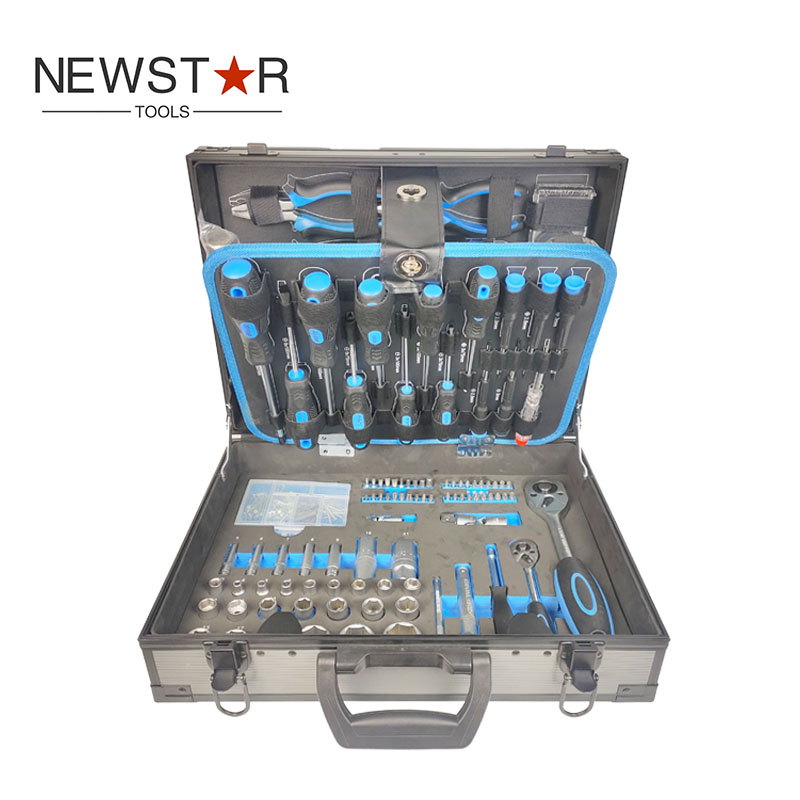
A professional technician does not carry a random assortment of hardware. Instead, they deploy a carefully curated inventory designed specifically for the unique fasteners found in white goods. When outfitting a van, investing in a comprehensive mobile workshop tool set guarantees immediate access to specialized gear. A robust 177-piece trolley kit, for instance, provides the exact variety needed to tackle both domestic and European appliance brands.
Fastening and Loosening Tools
Appliance manufacturers rely heavily on specific fasteners. The fastening section of a technician's kit must be precise and durable. The quarter-inch and five-sixteenth-inch nut drivers are the undisputed workhorses of the trade. Technicians use them to remove the vast majority of sheet metal panels and access plates. Magnetic tips are mandatory. They prevent dropping screws into inaccessible areas, like the bottom chassis of a dishwasher. Additionally, a complete set including Phillips, flathead, and Torx screwdrivers is essential for modern units.
Gripping, Cutting, and Prying Tools
Manipulating wires, hoses, and tight-fitting plastic clips requires extreme precision. Needle-nose pliers reach into tight spaces to retrieve dropped screws or connect small wire terminals. Locking pliers provide necessary leverage for gripping stripped screws.
Specifically, stiff-bladed putty knives are unsung heroes in appliance repair. Technicians slide them into the seams of washing machines to depress hidden metal spring clips. This technique allows them to remove front panels without scratching the baked enamel finish.
Why an Organized Storage System is Critical for Field Technicians
Operational efficiency in field service heavily depends on organization. The concept of having a specific place for everything is a highly applicable methodology for mobile service vans.
Preventing Tool Loss and Saving Time
Tool replacement is a significant hidden cost in mobile service businesses. Technicians work in chaotic environments. They crawl behind heavy refrigerators and reach into dark dishwasher cavities. Leaving a pair of pliers behind happens easily.
Deploying an organized hand tool set solves this problem through visual management. High-quality professional kits utilize custom-molded hard cases. When a technician finishes a repair, a single empty slot serves as an immediate visual trigger that an item is missing. Furthermore, organization saves diagnostic time. Rather than fumbling through a dark, disorganized bag for a wire crimper, the technician grabs exactly what they need instantly.
Professional Appearance and Customer Trust
In the residential service industry, customer perception is reality. When a technician enters a home to repair a luxury smart refrigerator, the homeowner quietly evaluates their competence.
Arriving with a dirty, rattling canvas bag immediately degrades trust. In contrast, unlatching a clean, professional-grade hard case where every instrument is gleaming and perfectly slotted projects an image of precision. This psychological impact reassures the customer and reduces pushback on repair estimates.
Consumer vs. Professional-Grade Kits
Procurement managers outfitting a new fleet often face the temptation to save capital by purchasing standard consumer-grade equipment. Understanding the fundamental differences between consumer and professional gear is crucial for long-term operational success.
Material Durability and Ergonomics
The primary differentiator between a basic household hand tool set and a professional kit lies in the metallurgy. Consumer-grade items are typically manufactured from basic carbon steel. They are designed for homeowners assembling flat-pack furniture once a month. Under the severe stress of daily commercial use, carbon steel degrades rapidly. Screwdriver tips round off. Ratchets break their internal gears under high torque.
Professional-grade instruments are forged from advanced alloys like Chrome Vanadium or Chrome Molybdenum steel. These alloys undergo heat treatment to provide exceptional hardness. Beyond metallurgy, professional tools feature ergonomically engineered handles. These handles maximize torque transfer while minimizing hand fatigue during an exhausting eight-hour shift.
Core Comparison: DIY vs. Pro Gear
Feature
Household Kits
Professional Fleet Kits
Metallurgy
Standard Carbon Steel
Chrome Vanadium / Chrome Molybdenum
Storage System
Basic blow-molded or soft bags
Heavy-duty molded hard cases with visual slots
Torque Tolerance
Low to Medium
High industrial torque capacity
Ergonomics
Basic plastic grips
Anti-slip, fatigue-reducing TPR handles
Application
Occasional home repairs
8-hour daily commercial tear-downs
A master technician understands that cheap metal not only breaks, but it also damages the appliance. Using a poorly machined household wrench on a soft brass water valve can round off the nut. This turns a simple ten-minute replacement into a complex plumbing nightmare. Investing in professional-grade kits from day one ensures the technician has the precision required to execute repairs safely.
Real-World Applications on the Job
Understanding the practical application of these instruments highlights their importance in the field. Let us look at specific examples of how technicians deploy their kits during common appliance repairs.
Dismantling a Washing Machine
Accessing the internal components of a top-load washing machine requires a precise sequence. A technician first uses a specialized putty knife to slide under the top panel. They depress the hidden spring clips with a distinct click to avoid scratching the paint. Next, a magnetic nut driver removes the front panel screws. If the repair involves the transmission, the technician deploys a heavy-duty spanner wrench and a mallet to loosen the seized retaining nut holding the inner tub in place.
Refrigerator Compressor Service
Servicing a refrigerator sealed system demands absolute precision. To replace a faulty start relay on a compressor, the technician uses quarter-inch nut drivers to remove the protective housing. Wire strippers and crimping tools cleanly cut the old wiring harness and secure new spade connectors. Precision flathead screwdrivers are gently wedged to pry the old, heat-fused relay off the compressor pins without bending them.
Oven and Range Heating Element Replacement
Replacing a baked-on heating element in an electric oven presents unique challenges due to accumulated grease and heat-warped metal. Technicians rely heavily on magnetic nut drivers to remove the mounting screws at the back of the oven cavity. The magnetic feature is crucial. Dropping a screw into the chassis through the back wall often requires disassembling the entire rear of the appliance. Insulated pliers carefully pull the wire terminals forward, ensuring the wires do not slip back into the fiberglass insulation layer.
Safety, Compliance, and Risk Management
Beyond operational efficiency, the correct application of field equipment is a critical component of a company risk management strategy.
Protecting Against Electrical Hazards
Appliance technicians routinely work in close proximity to high-voltage circuits. Components like microwave capacitors store lethal electrical charges long after unplugging the unit. The mandatory use of VDE-certified insulated screwdrivers and pliers is non-negotiable. These specialized tools withstand up to 1,000 volts, providing a life-saving barrier between the technician and potential electrocution.
Reducing Liability and Injury Claims
Improvising with the wrong instrument frequently leads to slippage. Using loose pliers instead of a properly sized wrench causes severe knuckle injuries. This leads to compensation claims and lost labor hours. Additionally, tool slippage causes significant property damage, such as gouging a customer expensive stainless-steel refrigerator door. Utilizing the exact item designed for the specific fastener drastically reduces both physical injury rates and corporate liability.
Procurement Guide: Choosing the Best Gear for Your Fleet
For service business owners and procurement officers, purchasing equipment in bulk requires strategic consideration. The goal is to maximize return on investment while equipping the team for optimal performance.
First, mandate standardization across the team. Purchasing identical kits for the entire fleet offers massive logistical advantages. Standardization simplifies the training process. Senior technicians instruct new hires using the exact same layout. It also streamlines inventory management. If a specific Torx bit breaks, the procurement manager knows exactly which replacement part number to order.
Second, prioritize hard cases over soft bags. Molded hard cases offer superior protection against impact and moisture. Their strict layout enforces organization. Look for sets featuring Chrome Vanadium steel components and comprehensive piece counts. A well-equipped 177-piece set in a rugged case covers nearly every mechanical variable a technician will encounter in the field.
Conclusion
A mobile technician is ultimately only as effective as the equipment they carry. Digital diagnostics tell the team what needs fixing, but the mechanical tear-down and reassembly dictate how fast and safely the job gets done.
Transitioning from basic, mismatched gear to a fully integrated, professional setup transforms a stressful, unpredictable job into a streamlined, highly profitable process. Service teams must audit their current service vehicles today. Upgrading your fleet equipment directly boosts your first-time fix rates, protects your technicians from injury, and elevates overall customer satisfaction. Ready to equip your team for success? Explore the industrial-grade solutions at Newstar Hardware to find the exact configuration your service fleet demands.
FAQ
What is the most used hand tool in appliance repair?
The quarter-inch and five-sixteenth-inch nut drivers, along with a multi-bit screwdriver, are the most heavily used tools. The vast majority of appliance rear panels, internal brackets, and control boards are secured with these specific fasteners.
Can I use a standard household hand tool set for commercial appliance repair?
While a basic consumer kit handles minor fixes at home, it lacks the metallurgical durability, specialty bits, and ergonomic design required for daily commercial repair work. Professional environments demand industrial-grade steel like Chrome Vanadium to prevent premature failure.
Why is an organized storage system so important for mobile techs?
It prevents tool loss at customer homes by providing immediate visual confirmation of missing items through empty case slots. It saves significant billable time spent searching for the right bit and projects a highly professional, trustworthy image to the client.
What makes a tool set a mobile workshop?
A mobile workshop set is highly comprehensive, easily transportable, and housed in rugged, shock-resistant casing. It is specifically designed to withstand being bumped around in the back of a moving service van while keeping every piece securely in its designated spot.
Do appliance technicians need insulated tools?
Yes. Technicians frequently work with high-voltage appliances like electric ranges and components that store energy long after being unplugged. Insulated hand tools are absolutely essential for workplace safety and regulatory compliance.
How often should appliance repair tools be replaced?
Professional-grade tools forged from Chrome Vanadium can last for years under heavy daily use. However, items with moving parts like ratchets, or tools subjected to high friction like wire strippers and screwdriver tips, should be inspected quarterly and replaced as soon as they show signs of rounding or slipping to prevent fastener damage.
What is the best way to maintain hand tools in a service van?
Keep them in their designated hard case slots to prevent impact damage during transit. Wipe down metal surfaces weekly with a lightly oiled cloth to prevent rust, especially if working in humid environments or dealing with water-bearing appliances like washing machines and dishwashers.