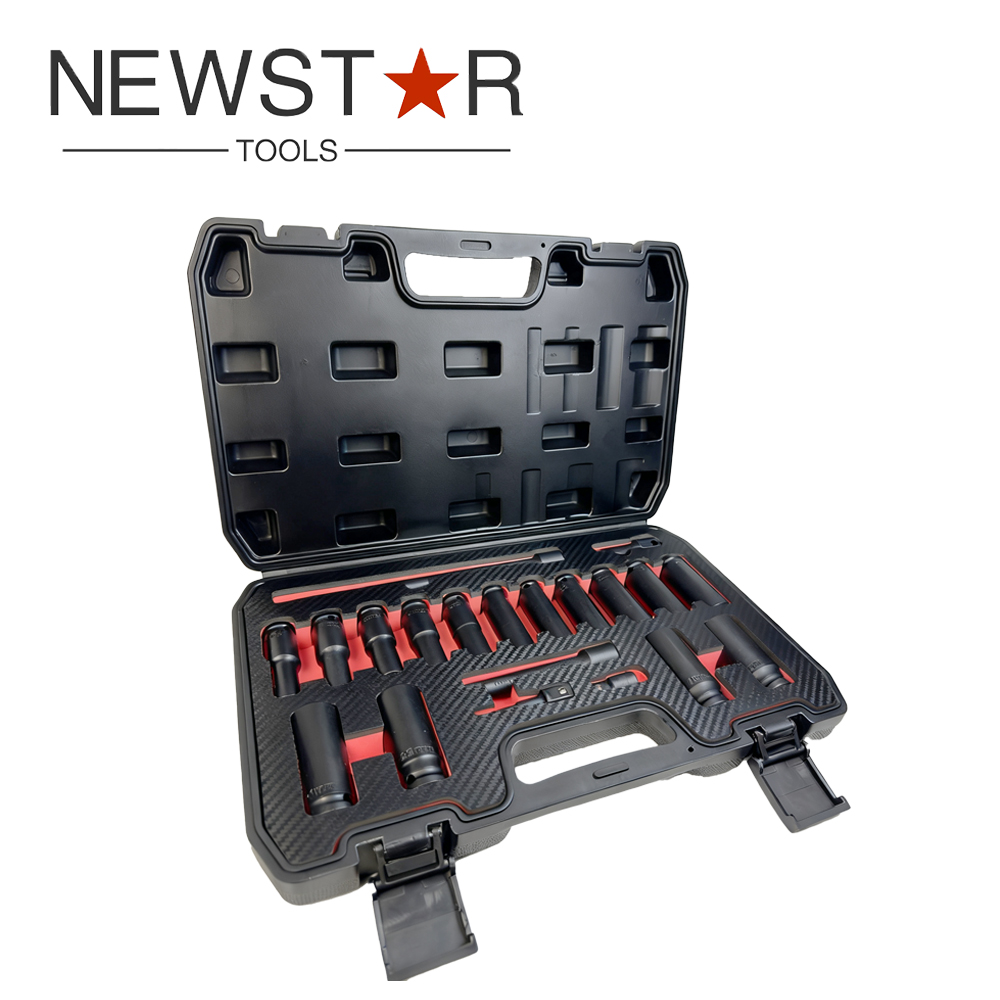
High-torque pneumatic and cordless impact wrenches generate extreme rotational forces that instantly shatter standard chrome sockets. This creates severe safety hazards and halts repair work immediately. The tool market floods buyers with varying grades of steel, and misleading marketing often hides poor durability. Many sets intentionally skip sizes to lower retail costs. Choosing the wrong set leads to rounded fasteners, damaged vehicle components, and costly technician downtime. To maximize shop efficiency and safety, you must evaluate an Impact Socket Set rigorously. Assess metallurgy, dimensional tolerances, and drive size alignment. You need tools built for daily abuse. Proper selection prevents injuries and keeps repair bays moving efficiently without waiting on replacement parts or dealing with drilled-out bolts.
- Metallurgy is Non-Negotiable: Chromium-Molybdenum (CR-MO) steel is the required standard for impact applications; Chromium-Vanadium (CR-V) is prone to catastrophic failure under high torque.
- Continuous Sizing Prevents Bottlenecks: Sets with skipped sizes inevitably lack the exact socket needed for specific automotive applications, negating the initial cost savings.
- Deep Sockets Drive ROI: Deep impact sockets are mandatory for suspension work, lug nuts, and applications with protruding studs, making them the priority investment over shallow sets.
- Warranty Fulfillment Outweighs Warranty Length: A lifetime warranty is only valuable if the replacement process does not require weeks of tool downtime.
Success Criteria: Why Standard Mechanic Socket Tools Fail Under Impact
The Physics of Impact Torque
Hand tools apply smooth, sustained torque. Impact wrenches operate differently. They deliver violent, concussive blows known as radial impacts. Standard mechanic socket tools cannot survive this stress. The sudden energy spikes overwhelm rigid metals. A proper impact socket undergoes temporary elastic deformation. It stretches slightly to absorb energy peaks. It does not resist the force until structural failure occurs. This flexibility keeps the tool intact during heavy use on seized suspension bolts or rusted exhaust manifolds.
The Metallurgy Difference: CR-MO vs. CR-V
Chromium-Molybdenum (CR-MO) steel defines professional impact tools. Manufacturers typically use 4140 or 4340 alloy steel. They heat-treat CR-MO to a lower hardness but higher ductility. This allows the metal to flex. It absorbs impact without shattering. Chromium-Vanadium (CR-V) works perfectly for hand tools. It offers high hardness and excellent corrosion resistance. However, CR-V is too brittle for impact use. It poses a severe shrapnel risk under pneumatic power. Manufacturing quality also matters. Hot drop-forging aligns the metal grain structure. Cold-drawing disrupts it. Drop-forged CR-MO guarantees maximum strength.
| Material | Hardness | Ductility | Best Application | Failure Mode |
| CR-MO (Chromium-Molybdenum) | Medium-High | High | Impact Wrenches | Deforms or rounds out over time |
| CR-V (Chromium-Vanadium) | Very High | Low | Hand Ratchets | Shatters explosively under impact |
Surface Coatings and Corrosion Prevention
Professional impact sockets use industrial black phosphate finishes. Black phosphate absorbs protective oils. This actively resists rust in damp shop environments. Cosmetic black oxide offers less protection. Decorative chrome coatings flake off under impact stress. Chrome flakes cut technicians' hands. They also contaminate engine bays. Black phosphate remains the only acceptable finish for heavy-duty applications.
Fastener Engagement and Wall Thickness
Impact sockets utilize thicker walls. Extra mass handles radial stress without cracking. Standard chrome sockets feature thin walls for tight spaces. They split open when hit with an impact gun. A 6-point design is strictly required for impact work. It prevents rounding off rusted or seized automotive fasteners. The 6-point shape maximizes flat-to-flat contact. A 12-point design grips the corners. High torque easily strips corners off old bolts. Always choose 6-point sockets for power tools.
Categorizing Your Needs: Drive Sizes and Automotive Applications
3/8-Inch Drive Sets
Mechanics use 3/8-inch drive sets for engine bay work. They fit under-dash components perfectly. These sockets reach tight-clearance areas. A larger 1/2-inch anvil cannot physically fit in these spaces. The 3/8-inch size pairs well with modern compact tools. High-torque cordless impact wrenches drive them easily. They handle medium-duty fasteners without adding unnecessary bulk to the tool setup. You will use these for water pump bolts, intake manifolds, and interior seat brackets.
1/2-Inch Drive Sets
The 1/2-inch drive represents the industry workhorse. You must build your foundation here. A complete automotive impact socket kit starts with 1/2-inch tools. Mechanics use them for wheel lug nuts. They remove brake caliper brackets and suspension components. Drivetrain disassembly requires this drive size. Modern professional impact guns output 400 to 1,200 ft-lbs of torque. The 1/2-inch socket handles this power reliably day after day.
3/4-Inch and 1-Inch Drive Sets
Heavy equipment demands massive tools. Frame these sizes as strict requirements for commercial applications. Diesel trucks need them. Heavy machinery repair relies on them. Industrial axle nuts require massive torque. A heavy duty socket set in 3/4-inch or 1-inch drive prevents equipment failure. Standard 1/2-inch tools snap when facing industrial-grade fasteners on commercial fleet vehicles.
![Automotive Impact Socket Kit in a Repair Shop]()
Specialty Profiles: Solving Clearance and Accessibility Challenges
Deep vs. Shallow Impact Sockets
Shallow sockets work best in tight-clearance chassis zones. Engine compartments often restrict overhead space. A shallow socket fits where others fail. However, deep impact sockets serve as the default purchase. They clear long protruding studs easily. U-bolts, manifold studs, and recessed lug nuts require deep profiles. Buy deep sets first. Add shallow sets later as your budget allows.
Thin-Wall Impact Sockets
Custom wheels present a unique dilemma. Standard impact sockets scratch expensive alloy rims. Thin-wall impact sockets solve this problem. Engineers design them specifically for aftermarket wheels. They fit into recessed lug cavities. These sockets include non-marring outer plastic sleeves. Internal plastic inserts protect the lug nut finish. You trade some structural strength for wheel protection. Use them only for wheel service, never for suspension teardowns.
Flex / Universal Joint Impact Sockets
Obstructions block straight access to many bolts. Flex sockets transfer torque around these obstacles. Pinless universal joints offer smooth rotation. They prevent binding under heavy loads. Pinned joints can bind and cause dangerous tool whip. Pinless designs distribute force more evenly. They last longer in professional environments. Invest in high-quality flex sockets for exhaust and transmission work.
Evaluation Dimensions for an Automotive Impact Socket Kit
Size Coverage and the "Skipped Size" Trap
Manufacturers often skip less common sizes. They omit 15mm, 16mm, 18mm, or 20mm sockets. This artificially boosts piece counts at lower price points. It tricks buyers into thinking they get a deal. Skipped sizes destroy shop efficiency. Continuous sizing is critical. You need every size from 8mm through 32mm without gaps. Modern automakers use non-standard fastener sizes constantly. They do this for weight and packaging reasons. Missing a 16mm socket stalls a brake job for hours.
Measurement Systems: Metric Dominance vs. SAE
Modern domestic and import vehicles use metric fasteners. Metric dominance is an absolute reality. A comprehensive metric set forms your primary purchasing requirement. SAE sets see very little use in modern auto repair. Relegate SAE tools to classic vehicle restorations. Heavy-duty domestic machinery still uses some SAE bolts. Specific aftermarket performance components might require them. Spend your money on metric tools first.
Flank Drive and Off-Corner Loading Technology
High-quality impact sockets grip the flats of the fastener. They do not grip the corners. We call this off-corner loading. This technology distributes force over a broader surface area. It drastically reduces the risk of stripping rusted bolts. Soft fasteners survive high torque when using flank drive designs. Cheap sockets grip the corners and instantly round off old hardware.
Socket Retention Systems
Sockets must secure tightly to the tool anvil. Friction ring anvils allow fast socket changes. Mechanics prefer them for general automotive work. Pin detent systems lock the socket in place securely. They require a tool to release the socket. Thru-hole pinning uses a retaining pin with an O-ring. High-torque 3/4-inch and 1-inch drive operations require thru-hole pinning. It prevents heavy sockets from flying off the anvil.
Visibility and Identification
Technicians work in dark, greasy environments. Socket sizes must remain readable under pressure. Dual-marking systems offer the best durability. They combine high-visibility laser etching with permanent roll-stamped markings. Laser etching wipes clean easily. Roll stamps remain legible even after years of heavy wear. Avoid sockets with only painted numbers. Brake cleaner washes painted numbers away instantly.
Value Influencing Factors and Conceptual Trade-Offs
Mobile Tool Trucks vs. Direct-to-Consumer Alternatives
Traditional mobile tool distributors charge a massive premium. You pay for the brand name and the truck service. High-tier direct-to-consumer brands offer similar CR-MO steel at a fraction of the price. You must weigh the cost of convenience. Tool trucks provide immediate, weekly replacement for broken tools. Online warranties require shipping turnarounds. If you break a rare size, waiting a week hurts productivity. If you break a common size, having a cheap backup set covers the gap.
Upfront Cost vs. Cost of Downtime
Cheap tools cost more in the long run. A stubborn bolt rounds off when using a cheap socket. You now face hours of extraction work. Bay productivity stalls completely. The labor cost of drilling out one broken bolt exceeds the price difference of a premium socket set. Invest in quality upfront. Keep the vehicles moving through the shop.
Storage and Organization
Shop floor real estate holds high value. Heavy-duty blow-molded carrying cases protect tools during transport. They take up too much space in a toolbox drawer. Magnetic socket rails organize tools efficiently. Custom toolbox trays keep sizes visible. A heavy set requires durable storage. It must survive constant relocation. Drop impacts should not spill sockets across the shop floor.
Implementation Risks and Mitigation in the Shop
Fastener and Socket Wear
Using worn impact sockets damages fasteners. Stretched or rounded-out internal profiles reduce torque transfer efficiency. The tool slips under load. Establish a routine inspection protocol. Check socket internal profiles monthly. Look for widening or worn flats. Discard and replace any socket that fits loosely on a new bolt.
Tool Fatigue and Catastrophic Safety Hazards
Cracked sockets cause explosive failures under load. Metal shrapnel flies across the bay. Technician injury follows immediately. Mandate the immediate decommissioning of damaged tools. Look for hairline fractures near the drive square. Check for micro-cracks along the walls. Significant wall deformation requires instant warranty replacement. Never weld or modify a cracked impact socket.
Torque Loss via Adapters and Extensions
Using multiple adapters absorbs impact energy. Stepping from 3/8-inch to 1/2-inch reduces delivered torque. Long, non-impact extensions twist under load. They introduce severe point-of-failure risks. Match the socket drive size directly to the impact wrench anvil. Enforce the use of specialized, solid-body impact extensions. Use them only when reach is absolutely required.
Conclusion
- Audit your current tool inventory to identify any skipped metric sizes between 8mm and 32mm.
- Inspect all existing impact sockets for internal rounding, hairline fractures, or wall deformation, and discard compromised units.
- Standardize your shop's primary drive size to 1/2-inch for general automotive repair to minimize the use of torque-draining adapters.
- Establish a dedicated storage system using magnetic rails or custom trays to prevent tool loss and protect socket finishes.
FAQ
Q: Can I use regular chrome sockets with an impact wrench?
A: No. Regular chrome sockets use CR-V steel. They are brittle and will shatter explosively under the violent radial impacts of a power tool, causing severe injury.
Q: What is the difference between CR-V and CR-MO impact sockets?
A: CR-MO flexes to absorb impact energy without breaking. CR-V is harder but brittle, making it suitable only for hand tools, not impact wrenches.
Q: Do I need both shallow and deep impact sockets for auto repair?
A: Yes, but prioritize deep sockets first. Deep sockets clear long studs and recessed lug nuts. Shallow sockets are needed later for tight engine bay clearances.
Q: Why do some impact socket sets skip sizes?
A: Manufacturers skip less common sizes to lower the overall retail price and artificially boost the piece count with cheap accessories. This creates bottlenecks during repairs.
Q: Are 6-point or 12-point impact sockets better for automotive work?
A: 6-point sockets are strictly required. They grip the flats of the fastener, preventing high torque from rounding off rusted or seized bolt corners.