![Must-Have Automotive Hand Tools for Every Mechanic]()
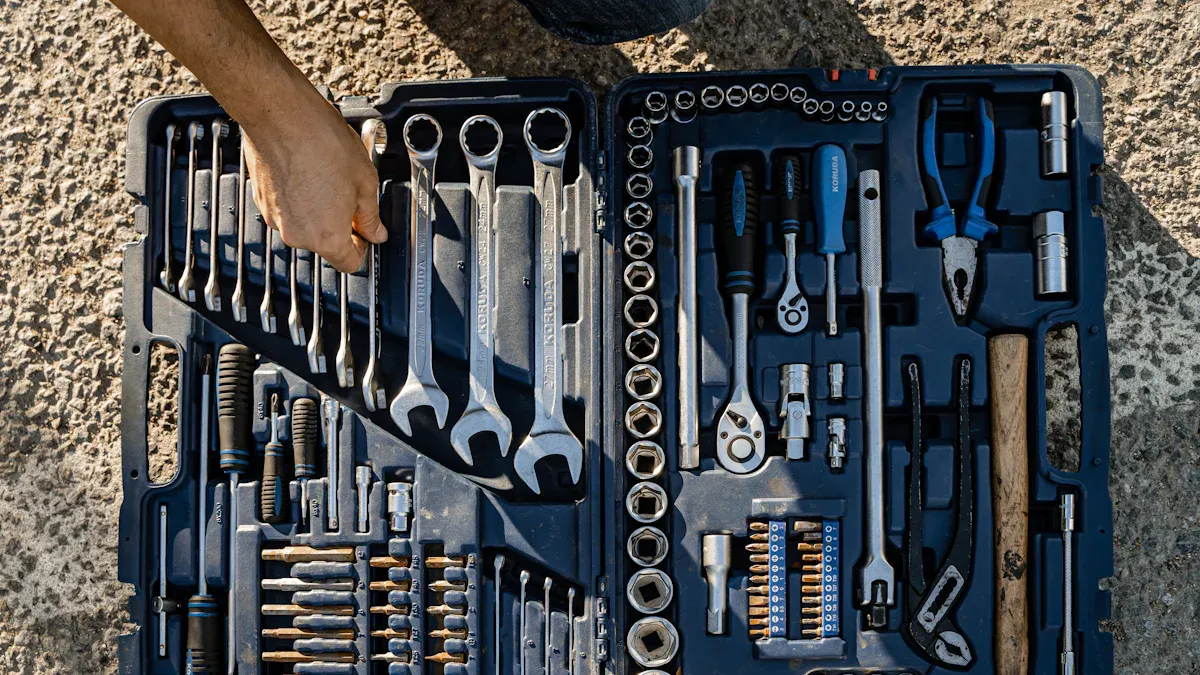
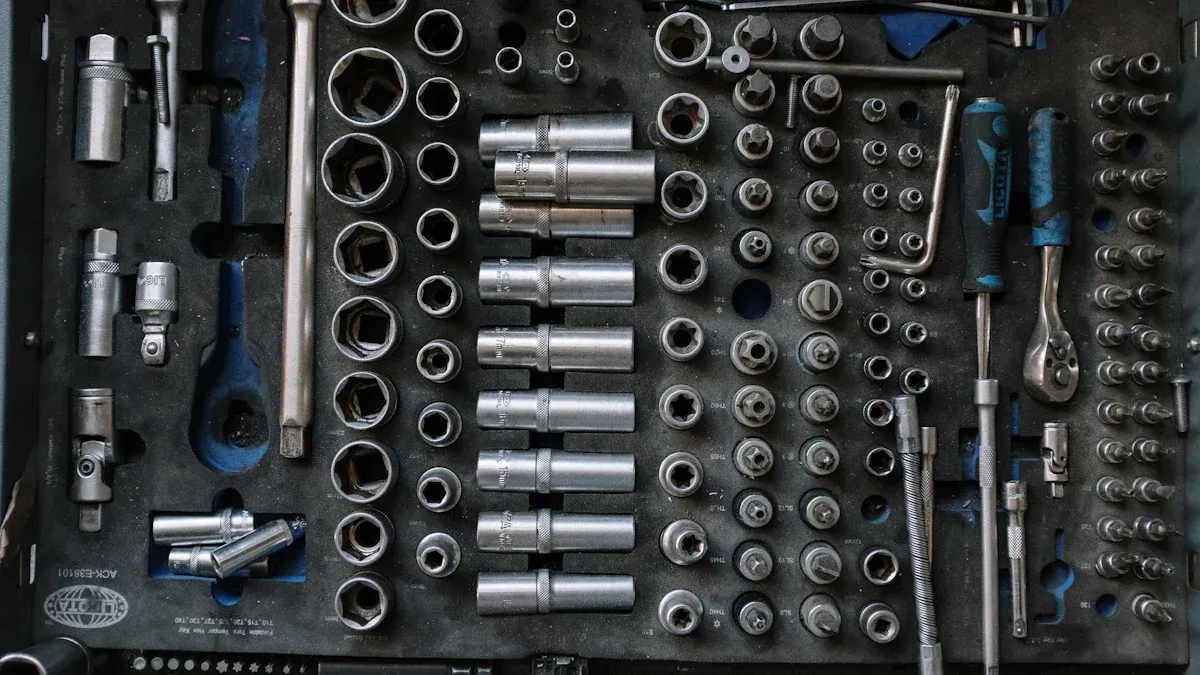
When you step into any busy shop, you’ll notice mechanics reach for the same core automotive hand tools every day. You need a solid mechanic tool list to handle automotive repair jobs safely and efficiently. Most professionals agree the best automotive hand tools include socket wrenches, wrench sets, screwdrivers, pliers, oil filter wrenches, spark plug socket sets, flex sockets, and mechanic tool kits. Hammers, hand tools, and automotive tools play a huge role in your daily work. Using the right tools for mechanics, inspecting them before use, and keeping them in top shape helps mechanics avoid injuries and get quality results. Take a minute to see if your own mechanic tool list covers these essentials—every automotive professional relies on them.
Essential Automotive Hand Tools
![Essential Automotive Hand Tools]()
When you build your mechanic tool list, you want to start with the basics. These essential automotive tools help you tackle almost any job in the shop. Let’s break down the must-haves for every mechanic’s tool set.
Socket Sets
A good socket set is the backbone of any mechanic tools kit. You’ll use sockets every day, whether you’re working on brakes, engines, or suspension. Sockets come in different types, each designed for specific automotive repair tasks.
Tip: Always choose sockets made from high-quality materials like chrome vanadium or chrome-molybdenum steel. These materials resist corrosion and handle heavy torque, so your tools last longer.
Here’s a quick look at the main types of socket sets and their uses:
| Type of Socket Set | Description & Specific Use in Automotive Repair |
| Standard Socket Sets | Cover a range of sizes in metric and SAE. Great for general automotive repairs and maintenance. Usually come in hard cases for easy storage. |
| Impact Socket Sets | Made from tough materials like chrome-molybdenum steel. Designed for use with impact wrenches. Perfect for heavy-duty car repairs. |
| Deep Socket Sets | Longer sockets that reach nuts and bolts in tight engine compartments. Essential for hard-to-reach fasteners. |
| Shallow Socket Sets | Shorter sockets for fasteners in open or surface-level spots. Used in general repairs. |
| SAE vs. Metric Sets | SAE sockets fit American fasteners. Metric sockets fit European and Asian fasteners. Many sets include both for versatility. |
Deep Sockets
Deep sockets are a lifesaver when you need to reach bolts buried deep inside an engine bay. You’ll find them especially useful for spark plugs or suspension work. Deep sockets let you access fasteners that shallow sockets just can’t reach.
Look for deep sockets with a strong, corrosion-resistant finish.
Choose sets that include both SAE and metric sizes for maximum versatility.
Brands like Craftsman, Matco Tools, and Snap-On Tools offer deep socket sets that stand up to daily use.
Ratchet Wrenches
Ratchet wrenches make your work faster and easier. You can loosen or tighten bolts without removing the socket after every turn. This saves time, especially in tight spaces.
Pick a ratchet wrench with a comfortable, ergonomic handle to reduce hand fatigue.
Fine-tooth ratchets give you more control in cramped areas.
Make sure your ratchet wrenches are compatible with your socket set.
Note: Investing in a quality ratchet wrench pays off. Cheap ratchets can slip or break under pressure, which can slow you down or even cause injury.
Wrenches
Wrenches are another staple in every mechanic’s tool set. You’ll use them for everything from engine work to brake jobs. There are several types of wrenches, each with its own strengths.
| Wrench Type | Primary Function in Automotive Repair |
| Socket Wrenches | Used with ratchet handles to loosen/tighten nuts and bolts efficiently, especially in tight spaces. |
| Combination Wrenches | Feature two different sized ends; used for nuts requiring strong impact force and to prevent belt deformation screws. |
| Ratcheting Wrenches | Combine ratcheting box-end and socket head; provide maximum turning capacity for various fasteners. |
| Torque Wrenches | Allow precise adjustment of tightening force; display torque level to ensure correct fastening. |
| Impact Wrenches | Deliver high torque for tough fasteners; often cordless for convenience in tight spaces. |
Combination Wrenches
Combination wrenches are a favorite among mechanics. Each wrench has an open end and a box end, so you can switch between them without grabbing a new tool. The open end lets you quickly loosen or tighten bolts, while the box end gives you a secure grip for more torque.
Combination wrenches come in many sizes, so you can handle a wide range of bolts. Their dual design makes them one of the most versatile hand tools in your mechanic’s tool set. You’ll find them useful for almost every automotive repair task.
Tip: Choose combination wrenches with angled heads for better access in tight spots. Look for sets with a durable chrome finish to resist rust.
Crows Foot Wrenches
Crows foot wrenches help you reach fasteners in places where regular wrenches or sockets won’t fit. They attach to a ratchet or extension bar, giving you the flexibility to work around obstacles. These wrenches are perfect for brake lines, fuel lines, and other hard-to-reach fittings.
Screwdrivers
No mechanic’s tool set is complete without a reliable screwdriver kit. You’ll use screwdrivers for everything from interior trim to electrical work. The right screwdriver kit helps you avoid stripped screws and makes every job smoother.
Tip: Always keep your screwdrivers clean and dry. This prevents rust and keeps the tips sharp for better grip.
Here’s what to look for in a quality screwdriver kit:
Multiple types: Flathead, Phillips, Torx, and Allen/Hex are all important for automotive work.
Ergonomic handles: Look for anti-slip grips to keep your hand comfortable during long jobs.
Magnetic tips: These hold screws securely, so you don’t drop them in tight engine bays.
Different shaft lengths: Longer shafts help you reach recessed screws.
Insulated screwdrivers: Essential for electrical repairs to protect against shocks.
Durable construction: Choose brands like GearWrench or TEKTON for long-lasting performance.
| Screwdriver Tip Design Feature | Influence on Automotive Repair Effectiveness |
| Magnetic Tips | Hold screws securely, preventing dropped fasteners in tight engine compartments, reducing risk and improving efficiency. |
| Ergonomic Ratcheting Screwdrivers | Reduce operator fatigue during repetitive tasks and improve efficiency in confined spaces like engine compartments and dashboards. |
| Consistent Torque Control | Prevents damage by ensuring screws are tightened correctly, critical for modern vehicle components. |
| Versatility and Ergonomics | Lightweight, comfortable grips, and adjustable settings enhance user comfort and adaptability to various automotive tasks. |
Flathead
Flathead screwdrivers are the classic choice for slotted screws. You’ll use them for prying, scraping, and even as a makeshift chisel in a pinch. Make sure your screwdriver kit includes several flathead sizes for different jobs.
Phillips
Phillips screwdrivers fit cross-shaped screws, which are common in automotive repair. A good Phillips screwdriver grips the screw tightly, so you don’t strip the head. Look for magnetic tips and comfortable handles to make your work easier.
Note: Always use the right size Phillips screwdriver for the job. Using the wrong size can damage both the screw and your tool.
When you choose your mechanic tools kit, focus on quality, durability, and versatility. Trusted brands like Snap-On Tools, Matco Tools, Craftsman, and those found at Newstar Hardware offer reliable automotive hand tools that stand up to daily use. Regular cleaning, proper storage, and periodic upgrades keep your essential tools in top shape. With the right mechanic’s tool set, you’ll handle any automotive repair with confidence.
Pliers and Vise Grips
Pliers and vise grips are some of the most versatile automotive tools you’ll ever use. You’ll reach for them when you need to grip, twist, cut, or hold something steady. Every mechanic’s tool set should include a variety of pliers because each type serves a unique purpose in the shop.
Here’s a quick look at the most indispensable pliers for mechanics:
| Type of Pliers | Key Features & Functions | Why Indispensable for Automotive Mechanics |
| Combination (Linesman) | Cutting and gripping; bending, stripping, twisting wires; square serrated jaws; some have pipe grip | Versatile for electrical and wiring tasks common in automotive repair |
| Slip Joint | Adjustable pivot for wider jaw opening; gripping, bending, crimping, cutting; flat and serrated jaws | Multi-purpose for holding, bending, tightening or loosening nuts and bolts |
| Water-Pump (Tongue & Groove) | Wider jaw opening; angled head for tight spaces; suitable for gripping thicker objects like pipes | Useful for accessing and gripping pipes and screws in confined automotive spaces |
| Needle Nose | Tapered, long, conical jaws; holding, placing, bending, cutting; straight or bent nose variants | Essential for working in tight or hard-to-reach areas in automotive assemblies |
| Locking (Vise-Grip) | Screw drive to adjust jaw opening; locks objects firmly without hands | Enables hands-free holding of objects, helpful when extra manpower is unavailable |
| Diagonal (Cutting) | Compact angled blades; high leverage; cuts copper, steel wires, thin nails | Important for cutting wires and small components in automotive electrical and mechanical work |
| Snap Ring | Specialized for installing/removing snap rings; internal and external types; some with bent noses | Necessary for handling snap rings in bearings and shafts, common in vehicle mechanical assemblies |
You’ll find that needle-nose and locking pliers are must-have tools for car maintenance. They help you pull fuses, twist wires, and hold components steady during repairs. Brands like Knipex and Irwin stand out for their durability and precision.
Needle-Nose
Needle-nose pliers have long, tapered jaws that let you reach into tight spots where your fingers just can’t fit. You’ll use them to grab small parts, bend wires, and even retrieve dropped fasteners from deep inside an engine bay. These pliers come in straight and bent nose versions, so you can pick the one that fits your task best.
Tip: Choose needle-nose pliers with a comfortable grip and a strong spring action. This makes it easier to control the tool and reduces hand fatigue during long jobs.
Slip-Joint
Slip-joint pliers are true workhorses in any mechanic’s tool set. Their adjustable pivot lets you open the jaws wider or keep them narrow, depending on what you need to grip. You’ll use slip-joint pliers for holding, bending, tightening, or loosening nuts and bolts. The flat and serrated jaws give you a solid grip on different shapes and sizes.
Locking pliers, also known as vise grips, deserve a special mention. They clamp down on objects with a vise-like grip, so you don’t have to keep squeezing. You’ll find curved jaws for gripping fastener heads or pipes, straight jaws for pinching lines, and needle-nose jaws for tight spaces. Padded grips give you extra leverage for stubborn parts. Locking pliers are perfect when you need to hold something steady and free up your hands for other tools.
Breaker Bars
Sometimes, a regular wrench or ratchet just won’t cut it. That’s when you need a breaker bar. This tool gives you the extra leverage to break loose stubborn, rusted, or extremely tight fasteners. Mechanics prefer breaker bars for the initial loosening of bolts and nuts, especially when a ratchet might slip or break under pressure.
Use a breaker bar when you need steady holding or controlled torque without a ratcheting action.
They work great for holding or positioning camshafts during timing belt or chain work.
Avoid using a ratcheting adapter with a breaker bar, as it can fail quickly.
You’ll notice that breaker bars provide better feedback for back-and-forth motion, which is helpful when working with rusted fasteners or thread chasers. They’re also handy in tight spaces where a ratchet’s thickness might get in the way. If you want a tool that can handle the toughest jobs, add a quality breaker bar from a reputable brand to your collection.
Palm Ratchets
Palm ratchets are a game-changer for working in tight spaces. These compact tools often have swivel or flexible heads, so you can reach bolts at awkward angles. You can apply continuous torque without having to reposition the tool, which saves time and effort.
Palm ratchets let you switch rotation direction quickly and require less clearance to operate. Features like twist handles or high tooth counts make them even more versatile. You’ll find palm ratchets especially useful for engine work, dashboard repairs, or any job where space is limited.
Note: When you’re shopping for palm ratchets, look for sturdy construction and smooth operation. Brands found at Newstar Hardware offer reliable options that stand up to daily use.
With the right pliers, breaker bars, and palm ratchets in your mechanic’s tool set, you’ll handle any challenge that comes your way. These automotive tools boost your efficiency and help you deliver top-quality repairs every time.
Lifting and Support
When you work on cars, lifting and supporting the vehicle safely is a must. You never want to risk your safety by crawling under a car that isn’t properly supported. That’s why you need the right lifting tools in your mechanic’s toolkit.
Jack
A jack helps you lift your vehicle off the ground so you can work on tires, brakes, or suspension. You’ll find different types, like hydraulic floor jacks and bottle jacks, but they all serve the same purpose—raising your car safely and steadily.
Tip: Always check the load rating before using a jack. The rating tells you the maximum weight the jack can safely lift. You’ll see this number clearly marked on the tool.
Here are some important safety standards and tips for using a jack:
OSHA says you must immobilize vehicles during lifting by using brakes, wheel blocks, and jack stands.
Never use a jack to support a vehicle for long periods. Always block the load right after lifting.
Place the jack on a firm, level surface and center it under the lifting point.
Jacks must have stop indicators and should never exceed the manufacturer’s load limits.
Regularly inspect and lubricate your jack to keep it working smoothly.
If you use your jack often, inspect it at least every six months.
| Safety Standard | Description |
| ASME PASE-2014 | Requires load testing at 1.5 times the rated capacity and checks for structural integrity. |
| Labeling | Jacks must show rated capacity and safety instructions clearly. |
| Construction | High-grade steel, reinforced bases, and bypass valves for overload protection. |
You should always use a jack that matches or exceeds your vehicle’s weight. Don’t forget, sloped driveways can reduce the jack’s load capacity, so always work on a flat surface.
Jack Stands
Once you lift your car, you need jack stands to keep it safely in the air. Jack stands are designed to hold the weight of your vehicle for as long as you need. They give you peace of mind when you’re working underneath.
High-quality jack stands, like those from Pro Lift, offer great stability and enough weight capacity to prevent sudden drops. These features protect you from accidents while you work under the car. Always use two jack stands per vehicle for proper support. Never trust a single stand to keep your car steady.
Using jack stands at the correct jack points keeps your vehicle stable. Place your car on a level, solid surface, like a cement driveway, for extra safety.
Here’s what you should look for in jack stands:
| Feature | Why It Matters |
| Load Rating | Rated in pairs; a pair of 3-ton stands supports 6,000 lbs. |
| Safety Features | Ratcheting mechanisms, wide bases, and safety pins prevent collapse and slipping. |
| Certification | Certified stands reduce the risk of failure and injury. |
| Construction | Made from thick-walled steel tubing with reinforced bases for strength. |
| Labeling | Must show rated capacity, serial number, and safety instructions. |
Mechanics rely on jack and jack stands for every undercar repair. Always inspect your stands for cracks or damage before use. For extra safety, you can place a spare wheel under the car as a backup. Remember, your safety comes first—never cut corners when lifting and supporting a vehicle.
Electrical Tools for Mechanics
When you work on cars, electrical problems can be some of the trickiest to solve. You need the right tools to test, diagnose, and repair wiring or sensors. Two tools you’ll reach for again and again are the multimeter and a good pair of wire strippers and cutters.
Multimeter
A multimeter is your go-to tool for checking car batteries, fuses, sensors, and wiring. If you want to find out why a light won’t turn on or a sensor isn’t working, you’ll need a reliable multimeter. Not all multimeters are created equal, though. Some models offer features that make your job much easier and safer.
When you pick a multimeter for automotive work, look for these key features:
DC voltage measurement: Car electrical systems use DC voltage, so this is a must.
Continuity testing: This feature helps you find breaks in wires or circuits. Many multimeters beep when there’s a break, which is handy when you can’t see the screen.
Resistance testing: You can check if a part is blocking electrical flow, which helps you spot faulty components.
Safety features: Look for things like internal blast shields, shrouded plugs, and finger protection. These keep you safe from accidental shocks.
True RMS capability: This lets you measure odd-shaped voltage signals from modern sensors accurately.
Back-lit display: You’ll often work in dim engine bays, so a bright screen helps you see readings clearly.
Durability: Choose a model that resists impacts, water, and automotive fluids. Some even come with lifetime warranties.
Tip: Mid-to-high-end multimeters cost more, but they last longer and offer more functions. You’ll save money in the long run by avoiding cheap models that break or give bad readings.
Professional multimeters can also record minimum and maximum values, test diodes and capacitors, and show voltage changes with bar graphs. These features help you diagnose tricky electrical issues faster.
Wire Strippers and Cutters
When you repair car wiring, you need to strip insulation and cut wires cleanly. Using the wrong tool can damage wires, leading to poor connections or future problems. That’s why a quality pair of wire strippers and cutters is a must in your toolkit.
Here’s what makes a great set of wire strippers and cutters:
| Feature | Description | Why It Matters for Car Repairs |
| Multi-functionality | Strips, cuts, and crimps wires | Saves time by combining tasks |
| Adjustable blade pressure | Lets you handle different insulation thicknesses | Prevents wire damage, keeps connections strong |
| Wire gauge compatibility | Works with 10–20 AWG wires | Fits most automotive wiring sizes |
| Clean, precise operation | Strips insulation without nicking the wire | Reduces troubleshooting and rework |
| Ergonomic handle | Comfortable grip for long jobs | Less hand fatigue, faster repairs |
| Compact design | Small and lightweight | Easy to use in tight engine bays |
You’ll find that some wire strippers have self-adjusting jaws. These let you strip wires of different sizes without changing tools. Others have sharp, accurate blades that make clean cuts every time. Many models also include a crimping function, so you can attach connectors without reaching for another tool.
If you want to work faster and avoid mistakes, invest in a tool that combines stripping, cutting, and crimping. You’ll spend less time switching tools and more time fixing the problem.
With a good multimeter and a reliable pair of wire strippers and cutters, you’ll handle most automotive electrical repairs with confidence. These tools help you work smarter, not harder, and keep your repairs safe and professional.
Specialty Tools
Torque Wrenches
You can’t talk about must-have specialty tools without mentioning torque wrenches. These tools help you tighten bolts and nuts to the exact force your car’s manufacturer recommends. If you skip this step, you risk damaging threads, breaking fasteners, or leaving parts too loose. That can lead to leaks, failures, or even accidents.
Torque wrenches come in several types. Click-type wrenches give you a clear “click” when you reach the right torque. Beam and dial wrenches show you the force as you turn, so you can stop at the perfect moment. Digital torque wrenches use electronic sensors and display the exact number, making them easy to read and super accurate.
Tip: Always store your torque wrench at its lowest setting and get it calibrated every 6 to 12 months. This keeps your readings accurate and your repairs safe.
Here’s why you need a torque wrench in your toolkit:
Prevents over-tightening and under-tightening, which can cause damage or unsafe conditions.
Ensures every fastener meets the right specs for safety and performance.
Helps you work faster and more consistently, especially when you have lots of bolts to tighten.
If you want to keep your car running smoothly and safely, don’t skip this tool.
Oil Filter Wrenches
Changing your oil filter can get messy and frustrating without the right tool. That’s where an oil filter wrench comes in. This specialty tool grips the filter tightly, so you can twist it off without slipping or crushing it.
There are several types of oil filter wrenches, each with its own strengths:
| Type | Best Use | Pros | Cons |
| Strap Wrench | Tight spaces, various filter sizes | Affordable, easy to use | Not great for stuck filters |
| Claw Wrench | Stubborn or hard-to-reach filters | Excellent grip, versatile | Can be bulky |
| Cap Wrench | Filters with accessible ends | Secure fit, strong leverage | Needs exact size |
| Pliers-Style Wrench | Stuck or large filters | Great leverage, adjustable | Can crush small filters |
You’ll find that a good oil filter wrench set makes oil changes much easier. Look for one made from strong materials that won’t bend or break. Some sets include several sizes or styles, so you’re ready for any job.
Note: Always match your wrench to the filter size. Using the wrong type can damage the filter or make removal harder.
Automotive Stethoscopes
Ever hear a strange noise coming from your engine and wonder what’s wrong? An automotive stethoscope helps you find the source fast. This tool works like a doctor’s stethoscope but is built for cars. You place the metal probe on different parts of the engine or transmission, and it amplifies the sound so you can listen closely.
You can use an automotive stethoscope to:
Pinpoint knocks, squeaks, or rattles in the engine, transmission, or rear axle.
Detect worn bearings, piston slap, or faulty gaskets.
Check for issues in hard-to-reach spots, thanks to the long probe.
Listening with a stethoscope helps you diagnose problems before they get worse. It saves you time and money by showing you exactly where to look.
If you want to take your troubleshooting skills to the next level, add an automotive stethoscope to your toolbox. It’s a simple tool, but it can make a big difference in how quickly you find and fix problems.
Trim Removers
Ever tried to pry off a door panel or dashboard trim with a screwdriver? You probably ended up with scratches or broken clips. That’s where trim removers come in. These tools make your life so much easier when you work on a car’s interior or exterior. You get the job done faster, and you keep everything looking sharp.
Trim removers are special tools designed just for removing trims, moldings, vents, and panels. Most sets include several different shapes and sizes. Each tool fits a specific job, so you don’t have to force anything. You can pop out a stubborn clip or gently lift a delicate panel without leaving a mark.
Here’s why you’ll love having a set of trim removers in your toolbox:
Made from strong, lightweight poly or nylon composite. This material prevents marring or scratching your car’s surfaces.
Many sets include a metal fastener remover with a rubber protector and an ergonomic handle. You get extra strength and comfort for tough jobs.
The tools come in a folding storage pouch. You can keep everything organized and ready to grab.
You’ll find moderate curves and anti-scratch surfaces on each tool. These features protect your car’s finish while you work.
Most sets meet or exceed OEM standards. You know you’re using tools that professionals trust.
You can use trim removers for all sorts of tasks. Need to remove a door panel to fix a window? These tools slip right under the edge and pop it loose. Want to swap out a dashboard vent or install a new stereo? Trim removers help you get in and out without breaking anything. They’re also perfect for taking off spoilers, rocker panels, or even exterior moldings.
Tip: Always use the right tool for the job. A wide, flat trim remover works best for big panels. A narrow, curved one is perfect for tight spots or small clips.
Check out some of the top benefits you get with a quality trim remover set:
Damage-free removal of trims, moldings, dashboards, door panels, and clips.
Dual-sided tool designs for extra versatility.
Impact-resistant nylon fiber material that’s tougher than regular ABS plastic.
Lightweight and easy to handle, even for long jobs.
Engineered for both interior and exterior work.
You don’t have to worry about damaging your car’s finish or breaking expensive parts. Trim removers give you a safe, efficient way to tackle any trim job. Once you try them, you’ll wonder how you ever managed without them. If you want clean, professional results every time, make sure you add a set of trim removers to your toolkit.
Safety Gear for Mechanics
![Safety Gear for Mechanics]()
When you work on cars, your hands and eyes face constant risks. Sharp metal, hot surfaces, and flying debris can turn a simple job into a painful one. That’s why you need the right safety gear every time you step into the garage. Let’s look at two essentials: mechanic’s gloves and safety glasses.
Mechanic’s Gloves
You use your hands for every repair, so protecting them should be a top priority. The right gloves do more than just keep your hands clean. They help you grip tools, prevent cuts, and shield your skin from chemicals. Not all gloves are the same, though. Each type offers different protection and comfort.
Here’s a quick guide to the most common gloves you’ll find in a mechanic’s toolkit:
| Glove Type | Material | Protection Offered | Additional Notes |
| Latex Gloves | Natural latex | Moderate puncture and tear resistance; conforms easily to hand | Powdered versions absorb moisture; not fully puncture-proof |
| Nitrile Gloves | Synthetic polymer | High puncture resistance; chemical and solvent protection; flexible | Great for latex allergies; fits snugly |
| Leather Gloves | Natural or synthetic leather | Heat and spark resistance; protection against cuts, burns, abrasions; reliable grip | Durable and reusable; may dry out over time |
| Disposable Gloves | Latex, nitrile, vinyl, thermoplastic elastomer | Protection from grease, oil, coolant, chemicals; good for high temps and sharp tools | Best for light maintenance; single-use for hygiene |
| Reusable Gloves | Rubber, leather, thick durable materials | Protection from abrasions, cuts, water, gasoline, heat, lacerations | Washable; better for heavy-duty tasks |
Wearing gloves gives you a better grip, so tools don’t slip out of your hands. You also avoid calluses and reduce hand fatigue during long jobs. Gloves protect you from scrapes, impacts, and contact with hot or sharp parts. They even help you meet OSHA safety rules, which require protection from punctures, cuts, chemicals, and heat. If you want to keep your hands safe and strong, always choose the right glove for the job.
Tip: Nitrile gloves work best if you have a latex allergy or need extra chemical resistance. Leather gloves are your go-to for welding or working near hot surfaces.
Safety Glasses
Your eyes are precious. One flying metal chip or splash of brake fluid can cause serious injury in seconds. Safety glasses act as a shield, blocking hazards before they reach your eyes. You should never skip this step, even for quick repairs.
Here’s how safety glasses protect you in the shop:
Block flying debris like metal shavings, wood chips, and particles from grinding or drilling.
Guard against chemical splashes from solvents, oils, and cleaners, especially with side shields.
Shield your eyes from sparks, heat, and intense light during welding or cutting.
Reduce glare and eye strain with anti-glare or tinted lenses, making it easier to see under bright lights.
Prevent dust and fumes from irritating your eyes, thanks to dust-resistant designs.
Provide impact resistance, protecting you from blunt force if a tool slips or drops.
Offer UV protection during welding or soldering, stopping flash burns and corneal damage.
Help you follow workplace safety rules, lowering the risk of accidents and injuries.
You can find safety glasses with different features, like wraparound frames or adjustable nose pads. Some even come with anti-fog coatings for clear vision in any condition. If you want to keep your eyes safe and your work on track, make safety glasses a non-negotiable part of your gear.
Remember: One small accident can change everything. Put on your gloves and glasses before you pick up a tool. Your future self will thank you!
Toolkit Maintenance
Keeping your mechanic's toolbox in top shape is just as important as having the right tools inside it. If you want your gear to last and work well, you need to clean, organize, and check everything regularly. Let’s break down how you can keep your mechanic's toolbox—and your work—running smoothly.
Cleaning Tools
Dirty tools don’t just look bad—they can rust, wear out, or even break. You can keep your mechanic's toolbox in great condition by following a few simple cleaning habits:
Wipe down your tools after every use with a damp cloth. For stubborn grime, use a brush or sponge.
Wash tools with mild soap and water, but avoid soaking wooden handles. Instead, wipe them gently.
Dry each tool completely with a clean towel. This step helps prevent rust.
Remove any rust or dirt from metal parts using a wire brush or sandpaper.
Apply a thin layer of oil or a rust inhibitor to metal surfaces. This keeps corrosion away.
Lubricate moving parts like pliers and wrenches to keep them working smoothly.
Sharpen blades and tips on screwdrivers, chisels, and saws so they stay precise.
Tighten loose screws or bolts on your tools to make sure they’re safe to use.
Tip: Regular cleaning and care will help your tools last longer and work better every time you reach for them.
Storage Solutions
A well-organized mechanic's toolbox saves you time and protects your investment. You have lots of options for keeping your tools safe and easy to find:
Wall-mounted storage like pegboards, racks, or magnetic strips keeps your most-used tools within reach and off your workbench.
Tool chests and cabinets with locking drawers protect your tools from theft and damage. Many are mobile, so you can move them around your shop.
Drawer dividers and foam inserts stop your tools from sliding around and getting damaged.
Workbench storage with built-in drawers or shelves makes it easy to grab what you need for each job.
Overhead storage helps you keep bulky or seasonal items out of the way, reducing clutter.
Group similar tools together and store them near where you use them most. This makes it easier to put them back and keeps your workspace tidy.
Long-term storage works best when you keep tools dry and protected. Use silica gel packs to control moisture, and always store valuable tools in a locked cabinet.
Regular Inspection
You should check your mechanic's toolbox and tools often. Regular inspections help you catch problems before they get worse. Here’s a quick checklist:
Look for cracks, splinters, or other damage, especially on handles.
Make sure all moving parts work smoothly and nothing feels loose.
Sharpen blades and tips as needed.
Check for rust or corrosion and clean it off right away.
Replace or repair any tool that looks worn out or unsafe.
Upgrading your tools from time to time can make a big difference. Newer tools often have better grips, safer designs, and more features. Shops that upgrade their hand tools see faster repairs, fewer mistakes, and happier customers. You can prioritize new purchases by replacing the tools you use most or those that show signs of wear.
| Benefit of Upgrading | Real-World Impact |
| Faster diagnostics | More jobs finished each day |
| Better repair quality | Fewer errors and less fatigue |
| Improved safety | Fewer accidents and injuries |
| Expanded capabilities | Ability to handle more complex repairs |
Keeping your mechanic's toolbox clean, organized, and up-to-date helps you work faster, safer, and with more confidence.
When you build your toolkit with the right hand tools, you set yourself up for safe, effective repairs. Mechanics who invest in trusted brands enjoy tools that last longer, work better, and feel more comfortable. You save money over time and avoid the hassle of constant replacements. Mechanics also see fewer breakdowns and finish jobs faster.
Professional-grade tools help mechanics work in tough conditions with less downtime.
Mechanics get better accuracy and speed, which means more jobs done right.
Lifetime warranties and strong support give mechanics peace of mind.
Keep your tools organized and up to date. Mechanics who do this stay ready for any challenge.
FAQ
What are the first tools I should buy as a beginner mechanic?
Start with a socket set, combination wrenches, screwdrivers, pliers, and a jack with stands. These cover most basic repairs. You can add specialty tools as you gain experience.
How do I know if a tool is high quality?
Check for solid construction, a comfortable grip, and a good warranty. Trusted brands like those at Newstar Hardware usually offer reliable tools. If a tool feels flimsy, skip it.
How often should I clean and inspect my tools?
You should wipe down your tools after every use. Inspect them weekly for rust, cracks, or loose parts. Regular care keeps your tools safe and ready for work.
Can I use household tools for car repairs?
Household tools might work for simple jobs, but they often lack the strength and design for automotive tasks. You risk damaging your car or the tool. Invest in proper automotive tools for safety.
What’s the difference between SAE and metric tools?
SAE tools fit fasteners measured in inches. Metric tools fit those measured in millimeters. Most modern cars use metric, but some American vehicles still use SAE. Keep both in your kit for versatility.
How do I store my tools to prevent rust?
Store your tools in a dry toolbox or cabinet. Use silica gel packs to absorb moisture. Wipe tools with a light oil after cleaning. This helps prevent rust and keeps everything in top shape.
Do I really need a torque wrench?
Yes! A torque wrench lets you tighten bolts to the exact specification. This prevents over-tightening or under-tightening, which can cause damage or unsafe conditions. It’s a must for critical repairs.
What safety gear should I always wear?
Always wear mechanic’s gloves and safety glasses. Gloves protect your hands from cuts and chemicals. Glasses shield your eyes from debris and splashes. Safety gear keeps you working confidently and injury-free.