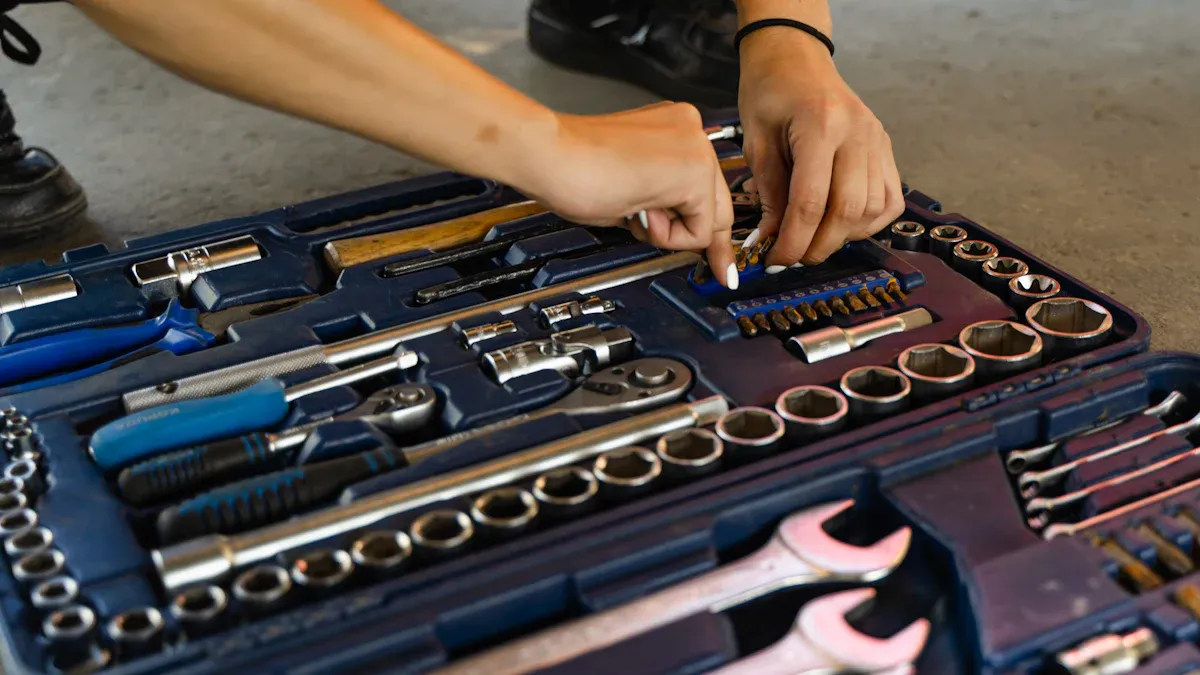
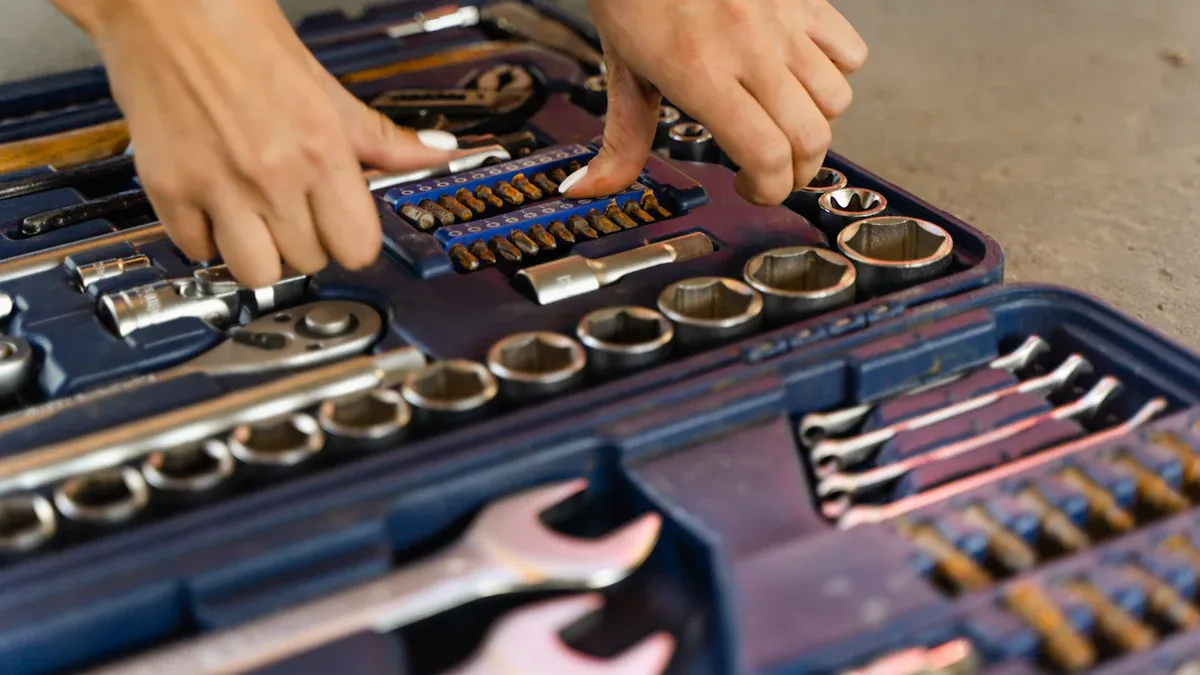
Spanner socket sets give you a reliable solution for tightening and loosening nuts and bolts in mechanical tasks. Their design features a hollow cylindrical socket that fits over fasteners, providing a strong grip. You can work more efficiently because the ratcheting mechanism allows continuous rotation, so you do not need to reposition the tool. Many people choose spanner socket sets for their ability to reach tight spaces where other tools might not fit. For trusted spanner socket sets, Newstar Hardware stands out with the following qualities:
Feature | Description |
Durable Construction | Made from high-quality chrome vanadium steel for long-lasting durability. |
Multi-Functional Design | Designed for various applications, including auto repair. |
Customization Options | Offers OEM and ODM support for businesses to tailor products to their needs. |
Convenient Packing | Comes in blister card packaging for easy storage and transport. |
Wide Compatibility | Suitable for a range of applications with 1/2 inch and 1/4 inch drive sizes. |
Key Takeaways
Spanner socket sets are essential for tightening and loosening nuts and bolts efficiently, especially in tight spaces.
The ratcheting mechanism allows continuous rotation, saving time and effort during mechanical tasks.
Choose the right socket material: chrome molybdenum for heavy-duty jobs and chrome vanadium for lighter tasks.
Use extensions and adapters to reach fasteners in hard-to-access areas, enhancing the versatility of your socket set.
Regular maintenance, like cleaning and lubricating your tools, extends their lifespan and ensures reliable performance.
Select a socket set that includes both metric and imperial sizes to handle a variety of fasteners.
Always wear safety gear and follow proper techniques to prevent injuries while using socket sets.
Organize your tools and plan your steps before starting a project to improve efficiency and reduce mistakes.
Spanner Socket Sets Overview
What Are Spanner Socket Sets
Basic Function
You use spanner socket sets to tighten or loosen nuts and bolts with speed and accuracy. Each socket fits over a fastener, giving you a secure grip. The ratcheting mechanism lets you turn the handle back and forth without removing the socket from the fastener. This feature saves you time and effort, especially when you work in tight spaces. You can switch between different sockets to match the size of the nut or bolt you need to adjust. The design of socket sets makes them a top choice for both professionals and DIY users.
Key Features
Socket sets stand out because of their versatility and durability. You can find sockets in many sizes and shapes, which means you can handle a wide range of tasks. The ratcheting handle allows you to apply torque efficiently, even when you have limited room to move. Most socket sets include extensions and adapters, so you can reach fasteners in hard-to-access spots. The material of the sockets affects how well they perform and how long they last. Here is a comparison of common materials used in sockets:
Material | Designed For | Shock Absorption | Durability |
Chrome Molybdenum (Cr-Mo) | High torque and repeated impacts | Excellent at absorbing shocks and resisting fractures | Ideal for heavy-duty tasks; durable under extreme conditions |
Chrome Vanadium (Cr-V) | Lighter-duty tasks | Less effective at absorbing shocks, more prone to brittleness | Harder but more brittle; can crack under extreme pressure |
You should choose the right material based on your typical applications. Cr-Mo sockets work best for heavy-duty jobs, while Cr-V sockets suit lighter tasks.
Common Uses
Automotive
You will find socket sets essential in automotive work. Mechanics use sockets for vehicle maintenance, assembly, and repair. The automotive industry relies on socket sets because they fit many fastener sizes and deliver the torque needed for tough jobs. Here are some reasons why socket sets are popular in automotive applications:
Automotive workshops and service centers use socket sets for flexibility across different fastener sizes.
The growth in vehicle ownership and aftermarket services increases the demand for these tools.
Specialized sockets help with vehicle assembly and repair, making them vital for maintenance.
Durability and torque accuracy are key features that meet automotive standards.
The rise of electric vehicles and new technologies drives the need for advanced socket sets.
Home Repairs
You can use socket sets for many home repair tasks. They help you finish jobs faster than traditional wrenches. The ratcheting action lets you tackle stubborn fasteners with less effort. Many users report that a 1/2 inch drive socket saves time and justifies the cost of a full set. You will notice these benefits:
Socket sets save time on tasks that would take longer with standard wrenches.
The ratcheting handle makes it easier to remove or tighten fasteners.
You can handle a variety of repairs around the house with one set.
Machinery
Socket sets play a big role in machinery maintenance and assembly. You need sockets that can handle high torque and repeated use. The right socket set lets you work efficiently on industrial equipment, farm machinery, and other heavy-duty machines. You can switch between sockets quickly, which keeps your workflow smooth. The durability of the sockets ensures they last through tough jobs. You can rely on socket sets for many industrial applications.
Socket Sets Components
Sockets
You will find that the socket is the core part of any spanner socket set. The socket fits around the head of a nut or bolt and allows you to turn it with ease. You can choose from many types of sockets, each designed for a specific task. The most common types of sockets include standard sockets, deep sockets, impact sockets, universal sockets, and spark plug sockets. Each type of socket serves a unique purpose. For example, standard sockets work well for everyday fastening and loosening. Deep sockets help you reach nuts on long bolts or recessed fasteners. Impact sockets are made for use with power tools and can handle high force. Universal sockets fit a range of bolt shapes and sizes. Spark plug sockets have rubber inserts to protect spark plugs during removal or installation.
Here is a table that shows the different types of sockets and their uses:
Socket Type | Description |
Standard Sockets | Commonly used for general fastening and loosening. |
Deep Sockets | Longer sockets for reaching nuts on longer bolts or recessed fasteners. |
Impact Sockets | Made from stronger materials to withstand the force of impact wrenches. |
Universal Sockets | Designed to fit a range of bolt head shapes and sizes. |
Spark Plug Sockets | Specialized with rubber inserts for safely removing and installing spark plugs. |
You should know the different types of sockets before you start a project. This knowledge helps you pick the right socket for the job. You will see that using the correct socket prevents damage to fasteners and tools.
Ratchets
The ratchet is the handle that attaches to the socket. You use the ratchet to apply torque and turn the socket. The ratcheting mechanism lets you tighten or loosen fasteners without removing the socket from the bolt head. This feature saves you time and effort. You can switch directions on the ratchet to either tighten or loosen. Ratchet socket sets come in many sizes, so you can use them for different tasks. You do not need to buy many tools because one ratchet and a set of sockets cover most jobs. The ratchet mechanism also increases speed and efficiency. You finish tasks faster and with less strain. With proper care, your ratchet will last for years.
Tip: Always check that the ratchet is set to the correct direction before you start working.
Extensions
Extensions are bars that fit between the ratchet and the socket. You use extensions to reach fasteners in tight or hard-to-access places. Sometimes, a bolt sits deep inside an engine or behind other parts. An extension lets you reach it without removing other components. You can find extensions in different lengths. Choose the right length to match your workspace. Extensions make your socket set more flexible and useful.
Here is a table that summarizes the main components and their functions:
Component | Function |
Sockets | Fit around fasteners, sized in inches or millimeters to match bolt heads. |
Ratchets | Attach to sockets to apply torque, allowing for both unbolting and bolting. |
Extension Bars | Help reach fasteners in tight spaces, extending the reach of the socket driver. |
You will see that knowing the different types of sockets, ratchets, and extensions helps you use your socket set to its full potential.
Adapters
Adapters play a key role in making your spanner socket set more flexible. You use adapters to connect sockets of different sizes to your ratchet handle. This means you can work with a wider range of fasteners without buying extra tools. Adapters help you solve problems when you face bolts or nuts that do not match your current socket or ratchet size.
You often find adapters in sets that include both metric and imperial sizes. If you have a 1/2 inch ratchet but need to use a 1/4 inch socket, an adapter bridges the gap. You attach the adapter to your ratchet, then connect the smaller socket. This simple step lets you tackle jobs that require different tools. Adapters also allow you to use impact sockets with hand ratchets or extend the reach of your tools.
Tip: Keep a few common adapters in your toolbox. You will save time and avoid frustration when you need to switch between sizes.
Adapters come in several types. You see drive size adapters, universal joint adapters, and bit adapters. Drive size adapters let you connect sockets and ratchets of different sizes. Universal joint adapters give you extra flexibility by allowing the socket to pivot. Bit adapters let you use screwdriver bits with your ratchet handle. Each type serves a specific purpose and increases the usefulness of your socket set.
Here is a table that shows how adapters boost versatility:
Feature | Description |
Socket Adapters | Adapt different socket sizes to ratchet drives. |
Versatility Impact | Enhances versatility of ratchets for various fasteners. |
You gain more options when you use adapters. You can handle fasteners in tight spaces, odd angles, or unusual sizes. Adapters help you work on cars, bikes, appliances, and machinery. You do not need to buy separate tools for every job. You simply add the right adapter and keep working.
Adapters also improve safety. You avoid forcing the wrong socket onto a ratchet, which can damage tools or cause injury. You keep your workspace organized because you use fewer tools. You also reduce the risk of losing sockets or ratchets.
When you choose adapters, look for strong materials like chrome vanadium steel. This ensures your adapters last through tough jobs. Clean your adapters after use and check for wear. Replace any damaged adapters to keep your set safe and reliable.
Note: Using the correct adapter prevents damage to both your sockets and ratchets. Always match the adapter to the job for best results.
Adapters make your spanner socket set a true all-in-one solution. You work faster, safer, and with more confidence. You can tackle any project, big or small, with the right adapter in hand.
How Spanner Socket Sets Work
Ratcheting Mechanism
You rely on the ratcheting mechanism to make your work faster and easier. The ratchet handle connects to the socket and lets you turn fasteners without removing the tool after each movement. You push or pull the handle, and the ratchet clicks as it rotates. This action allows you to tighten or loosen nuts and bolts with minimal effort. You switch the direction of the ratchet to either tighten or loosen. Many professional mechanics use this feature to save time during repairs. You find that the ratcheting mechanism works well with impact sockets, especially when you need to apply high torque. The ratchet prevents slippage and reduces fatigue, making it a favorite among mechanics and DIY users.
Tip: Always check the ratchet direction before starting. You avoid mistakes and work more efficiently.
Using in Tight Spaces
You often face fasteners in confined or hard-to-reach areas. Spanner socket sets help you solve this problem. The design allows you to reach bolts and nuts that traditional tools cannot access. You use extensions and adapters to increase the reach of your sockets. This adaptability gives you an advantage in challenging environments. Mechanics appreciate socket sets because they can work inside engines, behind panels, or under vehicles. You select the right socket and extension to fit the space. Impact sockets also perform well in tight spots, especially when you need extra strength. You avoid removing other parts just to reach a single fastener. This efficiency makes socket sets essential for professional mechanics and home users.
Note: Spanner socket sets are crafted to reach fasteners in obstructed areas. You enhance efficiency by using extensions and adapters.
Step-by-Step Guide
Preparation
You start by preparing your workspace and tools. You check the lighting to ensure you see all parts clearly. You wear gloves and safety glasses for protection. You examine your ratchet and sockets for any damage or wear. You clean and lubricate the ratchet to prevent malfunctions. You organize your sockets and impact sockets so you can find the right size quickly. You make sure you have all necessary extensions and adapters ready.
Selecting Sockets
You select the correct socket for the job. You match the socket size to the nut or bolt. You choose between standard sockets, deep sockets, or impact sockets based on the task. You avoid using the wrong size to prevent damage. Professional mechanics recommend checking the fit before applying force. You use impact sockets for jobs that require high torque or power tools. You keep your sockets organized to speed up your work.
Attaching Ratchet
You attach the socket to the ratchet handle. You make sure the connection is secure. You use adapters if the socket size does not match the ratchet drive. You add extensions when you need extra reach. You check that the ratchet is set to the correct direction. You test the ratchet and socket combination before starting. Mechanics often use universal joint adapters for angled access.
Applying Torque
You apply torque by turning the ratchet handle. You use steady force to avoid slippage. You follow the recommended torque settings to prevent over-tightening. You stop when the fastener feels secure. You switch the ratchet direction to loosen or tighten as needed. You avoid excessive force to protect threads and bolts. Impact sockets handle high torque without cracking. Professional mechanics rely on impact sockets for tough jobs. You finish by checking the fastener for proper tightness.
Safety Alert: Always use personal protective equipment and work in a well-lit area. You reduce the risk of accidents and injuries.
Recommended Steps for Safe and Effective Use:
Select the right size and category of ratchet. You ensure the ratchet fits the nut and bolt.
Maintain the ratchet. You clean and lubricate it regularly.
Examine before use. You check for damage or wear.
Apply force correctly. You use the ratchet in the right direction.
Avoid over-tightening. You follow specific torque settings.
Use personal protective equipment. You wear gloves and safety glasses.
Work in a well-lit area. You minimize accidents.
You follow these steps to use your socket set safely and efficiently. You protect your tools and yourself. You achieve professional results whether you are a mechanic or a DIY enthusiast.
Step | Action |
Preparation | Organize workspace, check tools, wear PPE |
Selecting Sockets | Match socket size, choose impact socket for high torque |
Attaching Ratchet | Secure socket, use adapters/extensions as needed |
Applying Torque | Turn ratchet, follow torque settings, avoid over-tightening |
You master these steps to get the most from your socket set. You work faster, safer, and with greater confidence.
Choosing Socket Sets
Factors to Consider
When you want to choose the perfect socket set, you need to look at several important factors. These details help you find a must-have tool that fits your needs and lasts for years.
Size Range
You should always check the size range before you choose a socket set. A versatile set includes both metric and SAE sizes. Metric sizes go up in whole millimeters, like 8mm or 9mm. SAE sizes increase in fractions, such as 5/16 or 3/8. You need a broad spectrum of sizes to handle different nuts and bolts. Similar sizes do not always fit the same fastener, so using the wrong one can cause damage. A high-quality socket set with a wide range of sizes lets you work on cars, bikes, and home projects without searching for extra tools.
Look for sets with both metric and imperial sockets.
Make sure the set covers common sizes for your tasks.
Check that the sockets fit your existing ratchets or power tools.
Material
The material of your socket set affects its strength and how long it lasts. Most high-quality sets use chrome vanadium or chrome molybdenum steel. These metals resist rust and handle heavy use. Chrome vanadium works well for hand sockets, while chrome molybdenum is better for power tools and impact guns.
Material | Hardness | Shock Resistance | Best Use |
Chrome Vanadium Steel | High | Moderate | Hand sockets |
Chrome Molybdenum Steel | Moderate | High | Pneumatic and electric tools |
You should choose the perfect socket set with strong materials for safety and durability.
Durability
Durability matters when you want a must-have tool for your workshop. You should pick a set made from high-quality materials. Check that the ratchet has a smooth action and a comfortable grip. A sturdy storage case with slots keeps your sockets organized and easy to carry. You want a set that stands up to repeated use and resists corrosion.
Choose a socket set with a tough case for transport.
Make sure the sockets and ratchets feel solid and reliable.
Look for a warranty or guarantee for extra peace of mind.
Comparing Sets
You will see many brands and options when you compare socket sets. Some focus on professional features, while others offer value for home users. Here is a quick look at how popular brands compare:
Brand | Key Features | User Satisfaction and Reliability |
Snap-On | Exceptional durability, advanced finish | Top choice for professionals, unmatched quality |
Craftsman | Trusted durability, affordable price | Reliable for both pros and home users |
Tekton | Impact-grade steel, easy-to-read markings | Popular with DIYers for quality and price |
If you want to choose the perfect socket set, you should also consider Newstar Hardware. They offer a wide selection of high-quality socket set options for every need. You can visit their website at https://www.newstarhardware.com/ for product recommendations and expert advice.
Tip: Always match the set to your main tasks. A high-quality socket set becomes your must-have tool for any project.
Practical Tips for Spanner Socket Sets
Safety
You should always put safety first when working with spanner socket sets. Following these steps helps you avoid injuries and keeps your tools in good condition:
Wear safety goggles. Protect your eyes from flying debris or metal shavings.
Use only impact sockets with impact guns. Regular sockets can crack under high force.
Check the air pressure. Never exceed a gun pressure rating of 90 psi to keep your tools working well.
Limit torque application time. Do not dwell longer than necessary to get the right torque. This prevents damage to sockets and fasteners.
Keep hands clear. Never hold attachments or sockets while the impact tool is running.
Use adapters only for special applications. Always choose the right tool for the job to avoid accidents.
Tip: Inspect the handle and grip for cracks or damage before each use. A secure grip gives you better control and reduces the risk of slips.
Maintenance
You can extend the life of your spanner socket set with regular maintenance. These steps help your tools stay reliable and ready for any task:
Clean after each use. Wipe down sockets and ratchets to remove dirt and grease. Make sure all parts are dry before storing them.
Lubricate moving parts. Apply a light oil to the ratchet mechanism every few months. This keeps the action smooth and prevents rust.
Inspect for damage. Check sockets and ratchets for cracks, wear, or other signs of damage. Replace any worn-out pieces right away.
Store tools properly. Keep your set organized in a sturdy case. This prevents loss and protects your tools from damage.
Prevent rust. Store your tools in a dry place. Add silica gel packets to your case to absorb moisture.
Keeping your tools organized and clean not only extends their lifespan but also makes your work more efficient.
Troubleshooting
You may face some common issues with spanner socket sets. Knowing how to solve these problems keeps your work on track:
Material quality: If you notice sockets breaking or wearing out quickly, check the material. Choose sets made from impact-resistant metals like Chrome Vanadium steel for better durability.
Tool organization: Losing sockets or ratchets can slow you down. Always return tools to their case after use to keep everything in order.
Durability concerns: If your tools do not last through heavy use, focus on quality construction rather than just the brand name. Well-made tools handle tough jobs and last longer.
Regular checks and proper storage help you avoid most problems with your socket set. Reliable tools make every project safer and easier.
Efficiency
You can boost your efficiency with spanner socket sets by using smart techniques and the right tools. When you work on repetitive tasks, every second counts. You want to finish jobs quickly without sacrificing quality. Here are some ways you can make your work faster and easier:
Choose socket wrenches for a secure grip. Socket wrenches hold fasteners tightly. This grip reduces the risk of stripping bolts. You can apply torque more efficiently, especially in tight spots.
Use ratchet wrenches with a 72-tooth mechanism. These ratchets need only a small movement to turn the fastener. You can tighten or loosen bolts with less effort. In cramped areas, this feature can cut your assembly time by up to 30%.
Calibrate your torque wrench. Proper calibration ensures you apply the right amount of force. You avoid damaging parts and extend the life of your tools.
You should also organize your tools before you start. Place sockets, ratchets, and adapters where you can reach them easily. This habit saves you time searching for the right size. You can use a magnetic tray or a tool organizer to keep everything in order.
Tip: Lay out the sockets you need for the job in advance. You will not waste time looking for the next size.
Try to develop a routine for each task. For example, always check the fastener size first. Then, select the correct socket and attach it to the ratchet. This step-by-step approach helps you avoid mistakes and keeps your workflow smooth.
Here is a table with quick tips to improve your efficiency:
Technique | Benefit |
Use socket wrenches | Secure grip, less risk of stripping |
72-tooth ratchet wrenches | Faster work in tight spaces |
Calibrate torque wrenches | Prevents damage, extends tool life |
Organize tools | Saves time, reduces frustration |
Plan your steps | Fewer errors, smoother workflow |
You can also save time by cleaning your tools after each use. Clean tools work better and last longer. If you keep your set in good condition, you will not have to stop for repairs or replacements.
Remember, efficiency is not just about speed. It is about working smart, staying organized, and using the right technique for every job. When you follow these tips, you get more done with less effort.
Spanner Socket Sets for DIY and Professionals
Home Projects
You can use spanner socket sets for many home improvement tasks. These sets help you assemble furniture, repair bicycles, and fix appliances. You do not need advanced skills to get started. You only need to match the right size to the fastener. Many homeowners find that a basic set covers most needs around the house. You can tighten loose bolts on chairs or adjust shelves with ease. A socket set saves you time because you do not have to search for different wrenches. You also reduce the risk of damaging nuts or bolts.
Tip: Keep your set in a central location. You will always know where to find the right tool when you need it.
Automotive Work
You will find spanner socket sets essential for car maintenance. Mechanics use these tools to change tires, replace batteries, and work on engines. You can remove spark plugs or tighten battery terminals with the correct socket. Many sets include both metric and imperial sizes, so you can handle different vehicles. You do not need to visit a mechanic for simple repairs. You can check your car’s manual to find the right size for each job.
Here is a table showing common automotive tasks and the socket sizes you might use:
Task | Common Socket Size |
Change spark plugs | 5/8 inch |
Remove battery bolt | 10 mm |
Tighten lug nuts | 19 mm or 21 mm |
You can complete routine maintenance at home and save money. You also gain confidence as you learn new skills.
Industrial Use
You need reliable tools for industrial environments. Spanner socket sets must meet higher standards in factories and workshops. You should look for these key features:
Choose chrome vanadium or alloy steel for strength and long-lasting use.
Make sure your set covers both metric and imperial sizes.
Select handles with a non-slip grip for comfort during long shifts.
Pick a compact case for easy transport between work areas.
Trust certified brands that meet international standards for quality.
You can work safely and efficiently when you use the right tools. Industrial jobs often require more torque and frequent use. You should inspect your set regularly to ensure every piece works as expected.
Note: Always follow safety guidelines in industrial settings. Proper use of your tools protects you and your coworkers.
You gain many benefits when you choose a quality spanner socket set. Look for durable materials, a wide size range, and a well-organized case. Using the right set improves safety and efficiency in every project. Remember these tips:
Select sockets that fit your tasks and tools.
Store your set properly for easy access.
Follow expert advice for first-time buyers.
For more guides and expert help, explore resources from Newstar Hardware. You can always reach out for advice on finding the perfect set.
FAQ
What is the difference between a spanner and a socket set?
A spanner is a fixed-size wrench. A socket set uses interchangeable sockets with a ratchet handle. You get more flexibility with a socket set because you can switch socket sizes quickly.
Can I use a socket set for both metric and imperial fasteners?
Yes, you can. Many socket sets include both metric and imperial sizes. You should always match the socket size to the fastener to avoid damage.
How do I know which socket size to use?
You measure the nut or bolt head. Then, you select the socket that fits snugly. If the socket feels loose or tight, try the next size up or down.
Are impact sockets safe to use with hand ratchets?
Yes, you can use impact sockets with hand ratchets. Impact sockets are stronger and handle more force. You should not use regular sockets with power tools.
How do I maintain my socket set?
You should clean your sockets after each use. Store them in a dry case. Lubricate the ratchet occasionally. Inspect for cracks or wear and replace damaged parts.
What should I do if a socket gets stuck on a bolt?
You can gently tap the socket with a rubber mallet. If it stays stuck, use a little lubricant. Avoid using too much force to prevent damage.
Can I use adapters to fit different socket sizes?
Yes, you can use adapters to connect sockets and ratchets of different sizes. Adapters help you work with more fasteners without buying extra tools.
How do I prevent sockets from rusting?
You should keep your tools dry. Wipe them after use. Store them with silica gel packets in the case. This helps prevent moisture and rust.