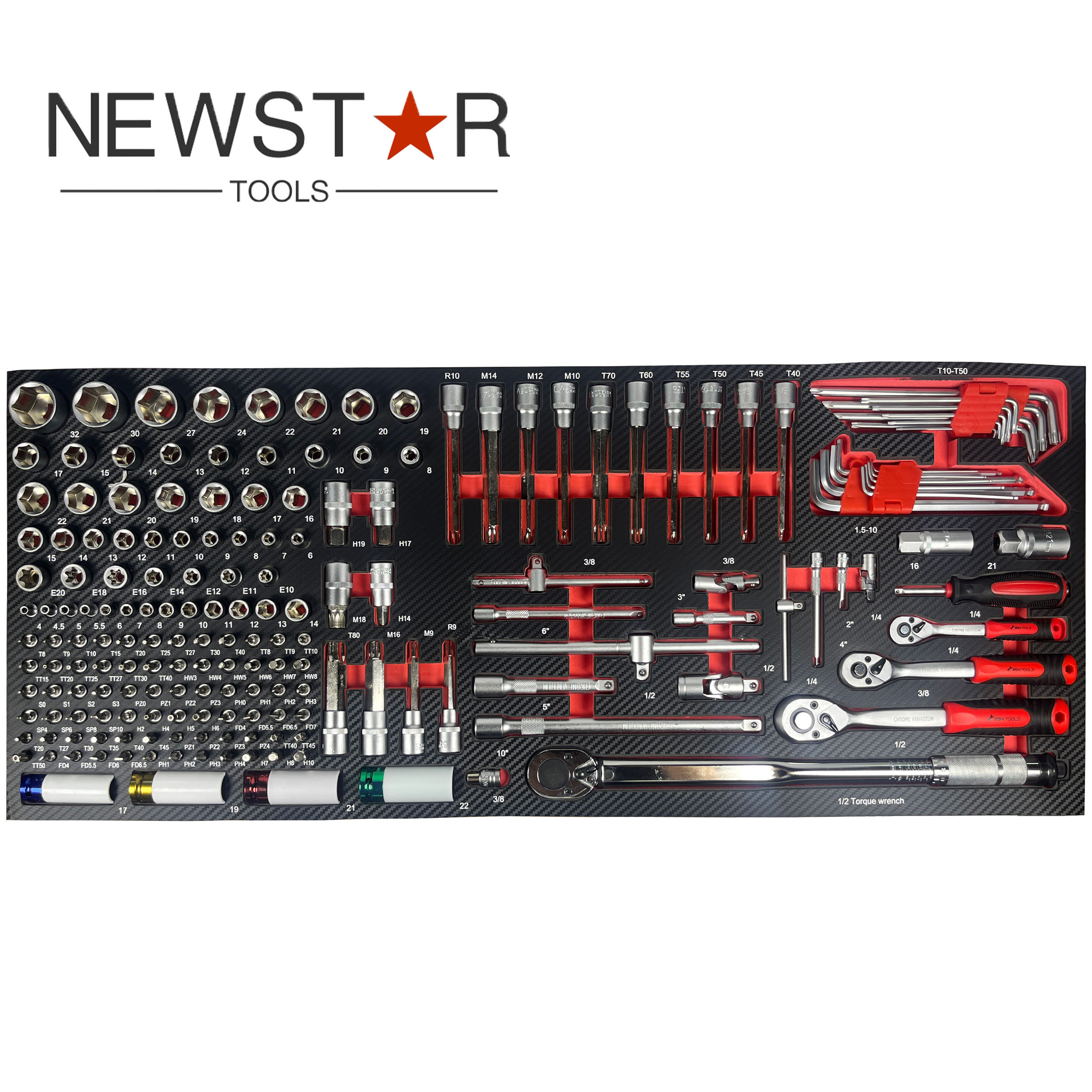
Inefficient tool storage carries a measurable cost in professional environments. Wasted motion, extended tool retrieval times, and the severe risks of foreign object damage (FOD) directly impact daily output. Every minute a technician spends searching for a misplaced wrench or untangling air hoses translates to lost operational capacity. Generic, off-the-shelf storage solutions often fail to accommodate specialized tasks. They force workers to adapt their physical movements to the box, leading to cluttered workspaces and bottlenecked productivity.
Workflow-driven storage planning flips this dynamic. By aligning a Tool Cabinet's architecture with specific physical actions and daily task sequences, you transform a static metal box into an active operational asset. This methodology ensures tools are positioned exactly where they are needed, reducing transit time and minimizing physical strain. Planning a specialized layout requires mapping storage directly to your facility's unique operational demands.
Workflow Dictates Architecture: Effective custom tool cabinet design requires mapping storage to specific physical actions and task sequences rather than simply sorting by tool type.
Mobility vs. Stability Trade-offs: Choosing between a fixed unit, a rolling tool cabinet, or a hybrid system depends strictly on the spatial footprint, unique workspace layout, and the necessity of point-of-use deployment.
Internal Configuration is Critical: Drawer depth, slider mechanisms, and custom inserts determine the actual usable volume and retrieval speed, separating high-performance storage from standard consumer options.
Future-Proofing Mitigates Risk: Over-customizing for a single, hyper-specific task can limit long-term ROI; modularity and cross-functional referencing must be built into the initial design.
Framing the Problem: Why Standard Storage Fails Specialized Workflows
Professional environments demand strict success criteria for industrial storage. Baseline requirements include rapid visual inventory to maintain 5S compliance, ergonomic access to heavy equipment, and high load-bearing capabilities. A storage unit must withstand daily impacts, chemical exposure, and the constant shifting of heavy metal components without structural failure or drawer binding. When a facility relies on consumer-grade options, the structural integrity degrades rapidly under the stress of continuous shift work.
The limitations of a standard metal tool box set become obvious in specialized settings. Pre-configured drawer layouts often result in wasted vertical space. Technicians place small hand tools in deep drawers, stacking them haphazardly. This destroys any visual inventory system and increases the time spent digging for the right socket or gauge. Furthermore, standard boxes lack the weight distribution required for heavy tooling like pneumatic impacts or large torque wrenches. They also fail to integrate with facility-specific workflows, forcing operators to walk back and forth between a central tool crib and their workstation.
Let us break down exactly where standard storage fails on the shop floor:
Inadequate drawer depth variation forces the stacking of precision tools, leading to calibration damage.
Weak slider mechanisms buckle under the weight of heavy jigs, causing drawers to jam permanently.
Lack of modularity prevents the cabinet from adapting when a facility introduces new product lines.
Poor caster quality restricts movement across uneven concrete, grating, or expansion joints.
Implementing point-of-use storage solves the transit problem. This lean manufacturing principle dictates that tools must sit exactly where the physical action occurs. If a technician calibrates a machine at station four, the calibration tools belong at station four. Eliminating the walk eliminates the waste. Storage must adapt to the location and the specific task performed there, rather than forcing the operator to adapt to the storage.
Step 1: Mapping the Custom Tool Cabinet to the Physical Action
Organizing by Task Sequence vs. Tool Category
Traditional sorting methods dictate placing all screwdrivers in one drawer and all pliers in another. This approach fails in specialized workflows. Instead, implement task-based kitting. If a specific calibration process requires two screwdrivers, a multimeter, and a specialized gauge, store those exact items together in one drawer. When the operator opens that drawer, they have the complete kit required to finish the job without opening multiple compartments. This reduces the physical steps required to complete a standard operating procedure.
The physical action layout strategy takes this further. Group tools by the ergonomic movement required. Dedicate a zone for twisting actions, another for striking, and a separate protected area for measuring. This reduces cognitive load during repetitive tasks. To prevent these tool kits from becoming isolated to a single task, design modular sub-kits. Place these sub-kits in removable trays. Technicians can reference or transfer these trays across multiple workflows. This maximizes the utility of the tools while maintaining strict organization across different shifts.
Conducting a Tool Usage Audit
Before specifying drawer layouts, conduct a comprehensive tool usage audit. Categorize every tool by its frequency of use: daily, weekly, or rarely. This data dictates placement within the cabinet. You must allocate the golden zone—the ergonomic area between waist and shoulder height—exclusively to high-frequency items. Daily tools go here to prevent excessive bending or reaching, which reduces operator fatigue over an eight-hour shift.
Weekly tools occupy the lower drawers, requiring a slight bend to access. Rarely used tools, bulky jigs, or seasonal maintenance equipment belong in the bottom-most drawers or separate storage areas entirely. This audit prevents heavy, rarely used items from occupying premium ergonomic real estate.
To execute a proper audit, follow these steps on the shop floor:
Empty the current workstation completely and lay all tools on a flat surface.
Log every tool used over a standard five-day shift to establish a baseline.
Quarantine any tool not touched during that week to a secondary storage location.
Measure the physical dimensions of the remaining daily-use items to determine volume requirements.
Group the daily items by their specific task sequence to map out the drawer layout.
Step 2: Selecting the Base Architecture: Stationary vs. Mobile
When to Specify an Industrial Tool Cart
Certain workflows demand high agility and deal with smaller tool payloads. Assembly line maintenance, diagnostic stations, and rapid-response repair bays benefit heavily from an industrial tool cart. These units allow technicians to bring a focused set of tools directly to the problem area, bypassing the need to drag heavy equipment across the facility.
Evaluate your footprint constraints and maneuverability requirements. Tight corridors, crowded machine shop floors, and narrow assembly lines restrict the use of massive storage units. A compact cart navigates these obstacles easily, ensuring point-of-use deployment without blocking facility traffic. You must also consider the flooring material. Carts moving over metal grating require larger, softer casters than those rolling on polished concrete to prevent vibration damage to sensitive tools.
High-Capacity Rolling Tool Cabinet Configurations
When mobility is required but tool payloads are massive, you need a high-capacity rolling tool cabinet. These configurations demand strict structural requirements. Caster load ratings must exceed the total weight of the cabinet plus its maximum tool payload. Specify polyurethane casters with grease fittings for smooth rolling under heavy stress. Phenolic casters work well for static loads but chip easily on rough floors or when striking debris.
The chassis design must feature reinforced steel construction to prevent warping when moving over uneven concrete floors. Address the trade-offs of mobility immediately. Dynamic load shifting occurs when a heavy cabinet rolls, pushing tools to the back of the drawers. You must install heavy-duty locking mechanisms on the casters and secure drawer latches to prevent accidental opening during transit. Anti-tip mechanisms are non-negotiable for mobile heavy storage, as a shifting load can easily unbalance the unit.
Fixed Custom Tool Cabinet Installations
Stationary, high-density storage fits perfectly in machine shops, central tool cribs, and dedicated fabrication cells. A fixed custom tool cabinet maximizes previously unusable architectural dead space. Custom dimensions allow facilities to fit cabinets under stairwells, between structural columns, or seamlessly along irregular walls where standard boxes simply will not fit.
Fixed installations allow for deep integration with existing infrastructure. You can bolt these cabinets directly to heavy-duty workbenches or wall structures for maximum stability. Furthermore, stationary units easily integrate with facility utilities. You can route power strips, USB charging ports, and pneumatic air lines directly through the cabinet chassis. This creates a centralized, powered workstation that keeps cords off the floor and maintains a clean working environment.
Step 3: Evaluating Drawer Layouts and Internal Mechanics
Drawer Depth and Volume Optimization
Calculating required drawer depths based on actual tool profiles prevents dead space. Standard cabinets often feature uniform drawer depths, which wastes vertical volume. Hand tools like wrenches and screwdrivers require shallow drawers, typically two to three inches deep. This prevents tools from being buried under one another, maintaining a single-layer visual inventory that speeds up retrieval times.
Conversely, deep top tills or oversized bottom drawers accommodate power tools, bulky jigs, and large diagnostic equipment. Measure the tallest tool in a specific kit and add half an inch of clearance to determine the optimal drawer depth for that specific physical action. Never guess the depth; physical measurement ensures you maximize the internal volume of the cabinet.
Slider Mechanisms and Load Capacities
The choice of slider mechanism dictates the lifespan of the cabinet. Heavy-duty ball-bearing slides offer smooth operation under massive loads, often supporting 200 to 400 pounds per drawer. However, in environments with high particulate matter, such as grinding bays or woodworking shops, bearings can foul and fail over time.
Sliderless friction designs offer a viable alternative for specific environments. They eliminate bearings entirely, relying on steel-on-steel or composite friction tracks. This provides immunity to dust, though they require more physical effort to open under heavy loads. Regardless of the mechanism, specify 100% to 120% drawer extension. This over-travel allows safe, vertical access to heavy items stored at the very back of the drawer, preventing awkward lifting angles that cause back injuries.
Slider Type
Best Environment
Load Capacity Range
Key Advantage
Ball-Bearing (Heavy Duty)
Clean manufacturing, automotive, assembly
200 - 400+ lbs
Smooth operation under maximum weight
Sliderless Friction
High-dust, grinding, woodworking
100 - 250 lbs
Immune to particulate fouling and debris
Over-Travel (120% Extension)
Heavy tooling, deep storage, ergonomic lifting
150 - 300 lbs
Complete vertical access to the rear of the drawer
Shadow Boarding and Custom Foam Inserts
CNC-cut foam inserts provide immediate visual tool control. When a tool is missing, the contrasting color of the bottom foam layer instantly alerts the operator. This is a primary defense against FOD in aerospace and precision manufacturing environments where a single left-behind tool can cause catastrophic equipment failure.
Custom foam also protects precision instruments like micrometers and calipers from impact damage when drawers open and close. The return on investment for shadow boarding manifests in reduced lost-tool replacement costs and faster end-of-shift inventory checks. Use cross-linked polyethylene foam for environments exposed to oils and solvents, as it resists chemical degradation far better than standard polyurethane foam.
Exterior Utilization: Side Storage and Quick-Access Panels
Do not ignore the exterior volume of the cabinet. Integrate side-mounted storage, louvered panels, and pegboards to hold bulky items that consume too much internal drawer volume. Exterior holsters provide immediate access to high-frequency tools like cordless drills, impact drivers, or shop vacuums.
Mounting spray can racks, paper towel holders, and waste bins on the exterior panels keeps the primary work surface clear. This reserves internal drawer space strictly for precision tooling and kits, ensuring the cabinet operates at maximum efficiency.
Step 4: Material Selection and Durability Trade-Offs
Heavy-Gauge Steel vs. Specialized Composites
The gauge of the steel dictates the cabinet's impact resistance and overall load-bearing capacity. 14-gauge steel provides superior rigidity for heavy industrial applications, resisting dents from dropped tools and maintaining structural integrity under massive static loads. 16-gauge steel offers a lighter alternative, suitable for diagnostic stations or assembly areas where extreme impacts are rare. Avoid 18-gauge or 20-gauge steel for professional environments, as the chassis will flex and warp under dynamic loads.
Corrosive or cleanroom environments require specialized materials. Stainless steel construction prevents rust in washdown areas, food processing plants, or maritime environments. Specialized powder coatings resist harsh chemicals, Skydrol, and industrial solvents, extending the life of the cabinet in aggressive atmospheres where standard paint would peel and flake.
Work Surface Integration
Many cabinets serve a secondary function as a mobile workbench. Evaluate top-surface materials based on the tasks performed. A thick butcher block top absorbs impacts and is ideal for teardown tasks, light fabrication, or hammering. Stainless steel tops provide a durable, easy-to-clean surface for fluid-heavy environments like engine repair.
Chemical-resistant resin tops suit laboratory or testing environments where corrosive spills occur frequently. Ensure the top surface features a raised lip on the back and sides to prevent small parts, hardware, or ball bearings from rolling off during complex assemblies.
Visual Management: Color Coding and Custom Branding
Customizing color palettes offers operational value beyond aesthetics. Assign specific cabinet colors to different departments to prevent cross-contamination of tools. A blue cabinet belongs to electrical maintenance, while a red cabinet belongs to mechanical repair. This strict 5S visual management prevents tools from wandering across a large facility and getting lost in different departments.
Utilize custom engraving on drawer pulls to clearly identify the contents or the specific task kit inside. Clear labeling reduces the time operators spend opening incorrect drawers, streamlining the entire workflow and keeping technicians focused on the task at hand.
Implementation Risks and Mitigation Strategies
The Risk of Over-Customization
Designing a cabinet so specific to current tooling that it cannot adapt creates a high risk of obsolescence. If a manufacturer updates a tool design or a facility changes its equipment, a hyper-specific, permanently welded compartment becomes useless dead space that cannot be repurposed.
Mitigate this risk by specifying modular internal dividers and replaceable foam inserts. Use adjustable steel partitions that can be reconfigured as tooling requirements evolve. When a tool changes, you simply cut a new foam insert rather than replacing the entire drawer structure. This ensures the cabinet remains functional for decades.
Weight Distribution and Safety Hazards
Top-heavy configurations present severe physical risks, especially in mobile units. Loading heavy power tools in the top drawers raises the center of gravity, making the cabinet highly susceptible to tipping when moved or when multiple drawers are opened simultaneously.
Implement strict bottom-up loading protocols. Place the heaviest items, such as rotary hammers and large steel jigs, in the lowest drawers. Mandate single-drawer interlock systems on all mobile units. This mechanical safety feature prevents more than one drawer from opening at a time, effectively eliminating the risk of a forward tip-over caused by shifting weight.
Conclusion
A high-performance storage unit acts as a highly engineered component of a facility's operational workflow, not just a static container. By aligning the physical architecture of the storage with the specific physical actions of the operator, facilities eliminate wasted motion and secure their tooling assets. The shortlisting logic requires a systematic approach: audit the task, determine mobility needs, calculate load requirements, and specify internal layouts based on tool profiles. To transform your workspace, execute the following steps:
Conduct a comprehensive 5S audit of your current workspace to identify bottlenecks and wasted transit time.
Inventory your most frequently used tools and categorize them by physical action to design modular task kits.
Measure the spatial footprint of your work cells to determine if a mobile cart or a fixed high-density unit fits best.
Consult with a manufacturer for CAD-assisted layout planning to optimize drawer depths and slider mechanisms.
FAQ
Q: How do you organize a tool cabinet for maximum efficiency?
A: Organize based on task sequences rather than tool categories. Group tools required for a specific physical action into one drawer. Place daily, high-frequency tools in the ergonomic golden zone between waist and shoulder height. Utilize shadow boarding and CNC foam inserts to maintain strict visual inventory and prevent tools from shifting.
Q: What is the standard weight capacity of an industrial rolling tool cabinet?
A: Per-drawer capacities typically range from 100 to 400 pounds, depending on the slider mechanism. The total caster load rating dictates the overall capacity, often exceeding 2,000 pounds. You must account for dynamic loads, as moving a heavy cabinet places significantly more stress on the casters and chassis than a static load.
Q: How much does a custom tool cabinet cost compared to standard options?
A: The cost delta is driven by the steel gauge, specialized slider mechanisms, custom drawer configurations, and CNC foam inserts. While the initial investment is higher than standard options, the long-term return on investment is realized through reduced labor hours, eliminated wasted motion, and fewer lost tools.
Q: Can you convert a standard metal tool box set into a custom layout?
A: Yes, you can use aftermarket modifications like modular steel dividers, magnetic organizers, and custom-cut foam inserts to improve a standard box. However, standard boxes have structural limitations regarding drawer depth and weight capacity, which may restrict how effectively you can optimize the space for heavy industrial workflows.
Q: What is the best drawer layout for hand tools?
A: Hand tools require multiple shallow drawers, typically two to three inches deep. This maximizes vertical space and prevents tools from being buried under one another. Group the hand tools by the physical action they perform, such as twisting or striking, to streamline access during repetitive tasks.
Q: Why are single-drawer interlock systems important for an industrial tool cart?
A: A single-drawer interlock is a critical safety mechanism that prevents multiple drawers from opening at the same time. This stops the center of gravity from shifting forward, completely mitigating the risk of the cart tipping over and causing severe injury or equipment damage.