![Hand Tools Every Home Needs and How They Perform]()
Picture this: You spot a loose cabinet handle or a leaky faucet. You reach for your Hand Tools and fix it in minutes. You skip the hassle of waiting for a handyman. You save money, too.
You can save $50 to $150 for each small repair.
Plumbing or electrical work often costs at least $100 per hour.
Doing your own repairs adds up to hundreds of dollars saved every year.
A well-stocked toolkit saves you time, money, and stress. Think about how much easier your home life could be with the right tools at your fingertips.
Key Takeaways
Having a basic set of hand tools saves you time and money on repairs.
Essential tools like hammers, screwdrivers, and pliers help you tackle everyday fixes easily.
Keep your tools organized in one place for quick access during emergencies.
Invest in high-quality tools to ensure durability and better performance over time.
A well-stocked toolkit empowers you to handle small repairs without needing a professional.
Regular maintenance of your tools extends their lifespan and keeps them effective.
Start with a basic toolkit and gradually add more specialized tools as your skills grow.
Smart shopping for tools can help you find quality options that fit your budget.
Essential Tools for Homeowners
![Essential Tools for Homeowners]()
Why You Need Hand Tools
You never know when something will break or need a quick fix at home. Having a set of basic tools gives you the power to handle small problems before they turn into big headaches. You save money because you do not have to call a professional for every loose screw or leaky pipe. You also save time since you do not have to wait for someone else to show up.
Tip: Keeping your tools in one place makes it easy to grab what you need in a hurry.
Here are some reasons you should keep hand tools close by:
You avoid expensive technician fees.
You can fix things right away, with no waiting.
You skip the hassle of finding and scheduling a contractor.
You feel proud and independent when you solve problems yourself.
When you have the best tools for the job, you feel ready for anything your home throws at you.
Everyday Repairs
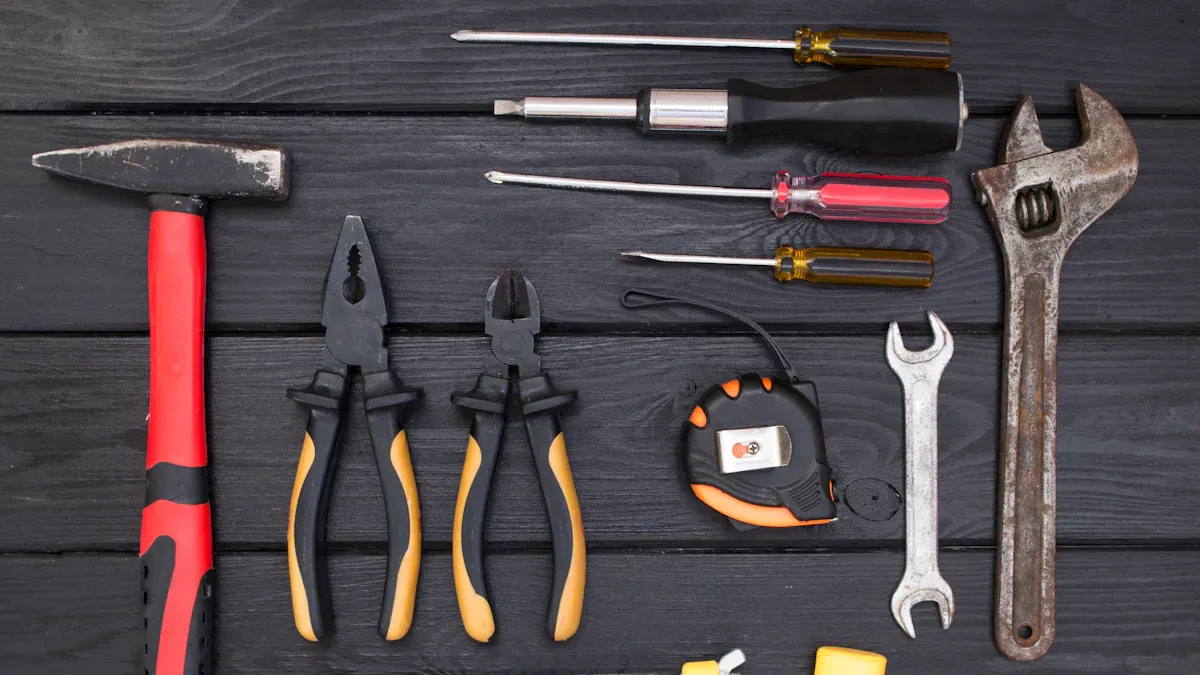
You use essential tools for home almost every week, sometimes without even thinking about it. Maybe you need to hang a picture, tighten a wobbly chair, or measure a space for a new shelf. These jobs call for basic tools like a hammer, pliers, a multi-bit screwdriver, and a tape measure.
Common repairs you can tackle include:
Driving nails or removing them with a hammer.
Gripping, bending, or cutting wires with pliers.
Tightening screws with a screwdriver.
Measuring spaces with a tape measure.
Cutting materials with a utility knife.
Checking if things are level with a bubble level.
Lighting up dark corners with a flashlight.
You do not need to be an expert to use these tools. With a little practice, you can handle most small fixes around your home.
Emergency Fixes
Emergencies happen when you least expect them. A pipe might burst, or a window could break during a storm. In these moments, you need the right tools fast. A 12-inch crescent wrench helps you shut off water mains. A set of screwdrivers and pliers lets you handle quick repairs. A hammer and a box of nails can secure loose boards or make temporary fixes.
Here are some tools you should keep ready for emergencies:
Note: Knowing how to use these tools safely is just as important as having them.
When you keep these tools on hand, you protect your home and your peace of mind. You do not have to scramble or feel helpless during a crisis. You stay in control.
Best Hand Tools for Home Use
Screwdrivers
Types
You will find many types of screwdrivers in a basic toolkit. The most common are Phillips and flathead. You might also see Torx and square drive screwdrivers. Many sets now include multi-bit screwdrivers, which let you swap out bits for different screw types. This saves space and keeps your toolbox organized.
Uses
You use screwdrivers for almost every project at home. Tighten cabinet hinges, assemble furniture, or open battery covers. Multi-bit screwdrivers help you switch between tasks quickly. Magnetic tips make it easy to hold screws in tight spots. Ratcheting screwdrivers let you turn screws faster without lifting your hand.
Performance
When you pick a screwdriver, look for high-grade steel. This keeps the tip from wearing down or twisting. Ergonomic handles reduce hand fatigue, so you can work longer without discomfort. Craftsman screwdrivers stand out for their durability and lifetime warranty. Many users say they last longer than cheaper brands and work well for tough jobs. Stanley screwdrivers also get high marks for regular use. If you want the best tools for your home, choose a set with a variety of bits, comfortable grips, and magnetic tips.
Tip: Store your screwdrivers in a case or rack to keep them organized and easy to find.
Pliers
Types
Pliers come in several shapes and sizes. Needle-nose pliers help you grip small wires or reach into tight spaces. Slip-joint pliers adjust to hold objects of different sizes. Linesman pliers cut and twist wires. Locking pliers, sometimes called vise grips, clamp onto objects and hold them tight.
Uses
You use pliers for gripping, bending, cutting, and twisting. Fix a bent wire, pull out a nail, or hold a nut in place while you turn a bolt. Locking pliers can even act as a small clamp when you need an extra hand.
Comfort
Comfort matters when you use pliers for long periods. Fujiya premium pliers use high-quality materials and ergonomic designs. This means less hand fatigue and better control. Many professionals trust Fujiya because they last a long time and work well in tough situations. Crescent pliers are another solid choice for homeowners. They blend modern technology with traditional skills, so you get a tool that feels good in your hand and stands up to heavy use.
Hammers
Types
You will see two main types of hammers in most toolkits: claw hammers and rip hammers. Claw hammers have a curved claw for pulling nails. Rip hammers have a straight claw for prying boards apart. Handles come in wood, fiberglass, or steel. Each material offers a different feel and level of shock absorption.
Uses
You use a hammer to drive nails, remove them, or break things apart. A 16-ounce hammer works well for most jobs around the house. If you do finish work, a lighter hammer gives you more control. For demolition, a heavier hammer packs more punch.
Durability
Durability depends on the hammer’s design and materials. The Stanley 20-ounce fiberglass claw hammer has a steel head and a shock-absorbing grip. It handles heavy-duty jobs and lasts a long time. The Estwing rip claw hammer is made from a single piece of steel, so it is strong and resists breaking. If you like a classic feel, the Stalwart hardwood hammer offers good shock absorption, but the handle may not last as long as fiberglass or steel.
Note: A well-balanced hammer reduces strain and helps you work more accurately.
| Criteria | Description |
| Quality & Material | Tools must withstand repeated use and demanding environments without bending or rusting. |
| Ergonomic Design & Comfort | Tools should have designs that minimize fatigue and strain during prolonged use. |
| Safety Standards & Compliance | Tools must meet recognized safety standards to prevent accidents and ensure user safety. |
| Brand Reputation & Warranty | Established brands provide assurance of quality and often come with warranties for added security. |
| Price vs Value | Focus on the value for money rather than just the lowest price, considering long-term use. |
Many homeowners trust brands like Stanley, Husky, and Craftsman for their reliability. Stanley tools, for example, get high marks for sockets and vise grips. Husky tools have a good finish and rarely break. Craftsman tools offer a lifetime warranty, which gives you peace of mind.
You do not need every tool on the market. Start with these hand tools, and you will be ready for most repairs. If you want to expand your toolkit, consider adding saws or even circular saws for bigger projects.
Tape Measures
Accuracy
You want your measurements to be spot-on, whether you are hanging shelves or planning a new closet. A tape measure gives you the confidence to cut once and get it right the first time. The best tape measures for home use combine accuracy with durability. You do not want a flimsy blade that bends or a case that cracks after a few drops. Look for a tape measure with a sturdy blade and a solid case. The tang, or the little hook at the end, should move smoothly and catch edges easily. This helps you measure both inside and outside dimensions without guessing.
Here is a quick look at what makes a tape measure accurate and reliable:
| Feature | Description |
| Blade Durability | Essential for longevity; grit and dirt can wear down the blade over time. |
| Case Durability | The case should withstand wear and tear to protect the blade. |
| Tang Design | A right-angled foot that allows smooth movement for accurate measurements. |
| Stand-Out | The distance the blade can extend unsupported; 7-8 feet is enough for home. |
| Ease of Use | A thumb-operated lock that is smooth and easy to use with one hand. |
Features
You will notice some tape measures have extra features that make your life easier. A standout of 7 or 8 feet means you can measure across a room without the blade collapsing. A thumb lock lets you hold the tape in place with one hand. Some models have large, easy-to-read numbers or even magnetic tips that stick to metal surfaces. If you want a tape measure that lasts, pick one with a tough case and a blade that resists bending. Brands like Stanley and Kobalt offer reliable options for every homeowner.
Tip: Wipe your tape measure clean after each use. Dirt and grit can wear down the blade and affect accuracy.
Wrenches
Adjustable
You will reach for an adjustable wrench when you need flexibility. This tool fits many sizes of nuts and bolts. You do not have to dig through your toolbox for the right size. Just turn the thumbwheel to open or close the jaws. Adjustable wrenches work well for plumbing, bike repairs, and even assembling furniture. They save space and money because one tool does the job of many.
An adjustable wrench can fit multiple sizes of fasteners.
This adaptability makes it more versatile for various home repair tasks.
You can use it for a wide range of jobs, from tightening pipes to fixing a leaky faucet.
Fixed
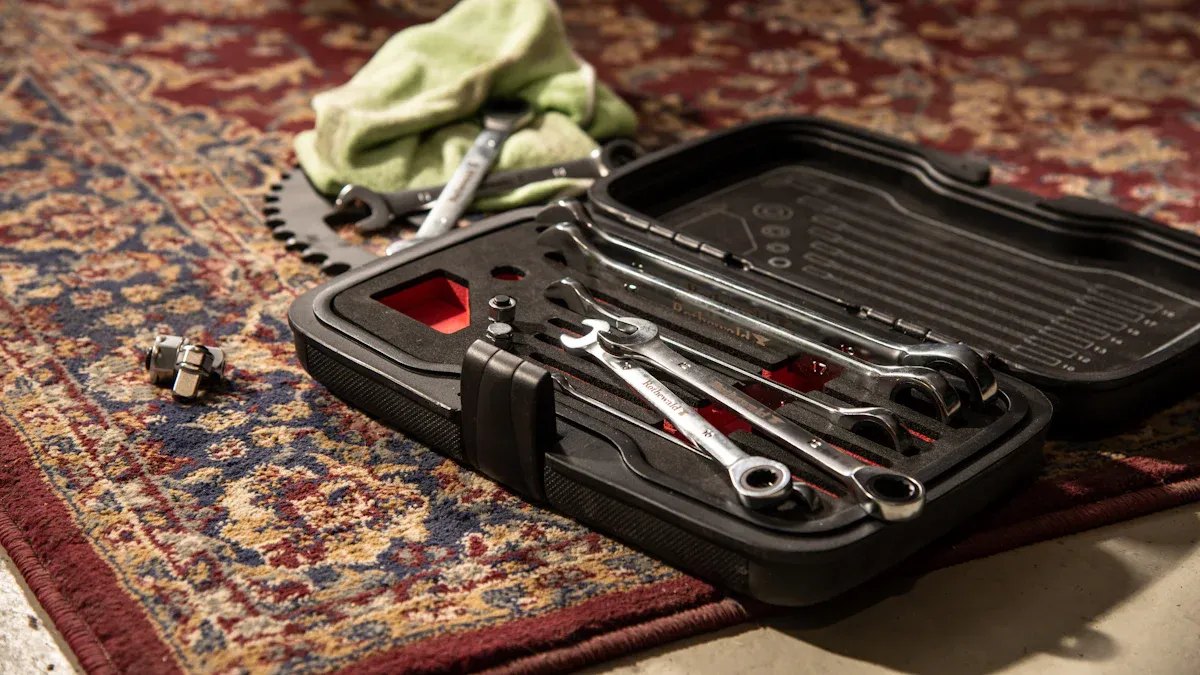
A fixed wrench, sometimes called a combination or open-end wrench, fits one size only. You get a snug fit and more torque, which helps when a bolt is stuck. Fixed wrenches do not slip as easily as adjustable ones. They work best when you know the exact size you need. Many homeowners keep a small set of fixed wrenches for common tasks, like tightening hose connections or working on bikes.
Fixed wrenches are limited to specific sizes.
They lack the flexibility that adjustable wrenches provide.
You get more grip and less chance of rounding off bolts.
Note: For most home repairs, a combination of adjustable and fixed wrenches covers all your bases.
Levels
Bubble
A bubble level is a must-have for hanging pictures, installing shelves, or building furniture. You place the level on a surface and check if the bubble sits between the lines. If it does, your project is straight. Bubble levels come in different lengths. A 24-inch level works for most home projects. Shorter levels fit in tight spaces. You can trust a bubble level to give you quick, accurate results without any fuss.
Laser
Laser levels take things up a notch. You set the tool on a flat surface, and it projects a straight line across the wall. This makes it easy to line up cabinets, tiles, or even wallpaper. Laser levels save time and reduce mistakes. Some models have self-leveling features, so you do not have to adjust them by hand. If you do a lot of DIY or want perfect results, a laser level is worth the investment.
Pro Tip: Use a bubble level for quick checks and a laser level for bigger projects that need long, straight lines.
You do not need every tool in the store. Start with the basics and add more as your projects grow. The right hand tools make every job easier, from measuring and leveling to tightening and building. If you plan to tackle bigger projects, like building a deck or cutting lumber, you might want to add saws or even circular saws to your collection. The best tools help you work smarter, not harder.
Utility Knives
A utility knife is one of those hand tools you reach for again and again. You use it to open boxes, cut carpet, trim wallpaper, or score drywall. It is a must-have for any homeowner who wants to handle quick fixes or creative projects.
Safety
Safety should always come first when you use a utility knife. Modern designs focus on keeping you safe while making the tool easy to use. Here is a quick look at how safety features improve your experience:
| Feature | Benefit |
| Retractable Blade | Keeps the blade hidden when not in use, reducing the risk of accidents. |
| Blade Replacement Mechanism | Lets you change blades quickly and safely, so you always have a sharp edge. |
| BladeLock Technology | Stops the blade from slipping out during tough cuts, giving you confidence. |
You will also find folding utility knives with patented BladeLock Technology. This feature keeps the blade secure, even if you put a lot of pressure on it. Liner locks let you open and close the knife with one hand, which helps when you need to keep your other hand free. Some knives have a 16-degree cutting angle, so you get more comfort and control.
Tip: Always retract or fold your knife when you finish a job. Store it out of reach of children.
Blade Quality
A sharp blade makes every cut smoother and safer. Dull blades slip and can cause injuries. Look for utility knives with high-carbon steel blades. These stay sharp longer and resist rust. Many brands offer quick-change systems, so you can swap out blades in seconds. This keeps your work moving and your cuts clean.
You want a knife that feels solid in your hand. The handle should have a non-slip grip, especially if you work with wet or slippery materials. Brands like Stanley and Husky make reliable utility knives that last for years. If you plan to cut thick materials, choose a knife with a sturdy body and a strong locking mechanism.
Flashlights
You never know when you will need extra light. Power outages, dark corners, or late-night repairs all call for a good flashlight. Every homeowner should keep at least one in their toolkit.
Types
Flashlights come in many shapes and sizes. You can pick a small pocket flashlight for quick jobs or a larger one for emergencies. Some models use disposable batteries, while others have rechargeable options. Headlamps free up your hands, which helps when you need to hold tools or climb a ladder.
When you choose a flashlight, think about these important factors:
Size: Pick one that fits your hand and your storage space.
Output Levels: Check the brightness. Some jobs need a strong beam, while others need a softer light.
Power Source: Decide if you want to use regular batteries or recharge your flashlight.
Controls: Look for simple buttons or switches.
Carrying Options: Clips or holsters make it easy to keep your flashlight close.
Uses
You use flashlights for more than just emergencies. Shine a light under the sink to fix a leak. Check the attic for pests. Find your way during a blackout. A flashlight helps you work safely and see details you might miss in low light.
Pro Tip: Keep a flashlight in your kitchen drawer, your car, and your main toolkit. You never know when you will need one.
Cordless Drills Overview
Cordless drills have changed the way you tackle home projects. You can drive screws, drill holes, mix paint, or even sand wood. These tools give you freedom to move around without worrying about cords.
Versatility
You can use cordless drills for many tasks. Swap out bits to drive screws, drill into wood, or even mix small batches of paint. Some drills have adjustable speed settings, so you can match the power to the job. If you want to build furniture, hang shelves, or assemble a playset, a cordless drill makes the work faster and easier. Many homeowners find that drills are just as important as saws or circular saws for DIY projects.
Battery Life
Battery life makes a big difference in how much you can get done. Most cordless drills use lithium-ion batteries. These batteries are light, hold a charge for a long time, and do not lose power if you recharge them before they are empty. You can work longer without stopping to recharge. Proper charging and storage help your batteries last for years. This means your drill will be ready whenever you need it.
Note: Keep a spare battery charged and ready. You will never have to stop in the middle of a project.
Cordless drills are a smart investment for any toolkit. They help you finish jobs quickly and with less effort.
Choosing Tools
Quality and Materials
When you pick out hand tools, always check what they are made of. The right materials make a huge difference in how your tools perform and how long they last. High-quality hand tools, like wrenches, pliers, and hammers, often use corrosion-resistant metals. These materials help your tools stay strong and precise, even after years of use. You want tools that do not rust or bend easily. This means you can trust them for every project, big or small. If you invest in tools made from tough steel or alloys, you will notice fewer mistakes and less frustration. Good materials also mean you will not have to replace your tools as often, which saves money in the long run.
Tip: Look for brands that mention “forged steel” or “chrome vanadium” on their packaging. These materials usually mean better durability and reliability.
Size and Comfort
You want tools that fit your hand and feel good to use. Size and comfort matter more than you might think. Ergonomic designs help your body work with the tool, not against it. This means less strain and fewer injuries, especially if you spend a lot of time on home improvement projects.
Ergonomically designed tools match your grip and hand size.
They lower the risk of discomfort or injury, even during long jobs.
Non-slip grips and padded handles make it easier to hold tools securely.
Contoured shapes fit the natural curve of your hand, so you use less effort.
If you have smaller hands, look for compact tools. If you have larger hands, try out a few options before you buy. The right fit helps you work faster and safer. You will enjoy your projects more and avoid sore muscles.
Storage Solutions
Keeping your tools organized saves time and keeps your workspace safe. You do not want to waste time searching for a screwdriver or stepping on a loose wrench. Smart storage solutions help you find what you need quickly and protect your investment.
Here are some easy ways to organize your tools:
Use a cart to sort tools by type for quick access.
Hang small hand tools in back-of-door fabric organizers.
Store larger tools with wall-mounted grippers or pegboards.
Repurpose an umbrella stand for garden tools.
Slide a shoe rack under shelves to use dead space for storage.
You can also try these ideas:
| Storage Solution | Description |
| Wall-mounted storage | Hang tools on slat walls or pegboards to keep them visible and handy. |
| Mobile workbench | Store power tools in a rolling bench for easy movement during projects. |
| Labeled totes | Place awkwardly shaped tools in clear, labeled bins for fast identification. |
| Mason jars | Keep small parts like screws and bolts in clear jars on open shelves. |
| Office supplies | Use trays or pencil pots to organize tiny items and add style to your space. |
A well-organized toolkit makes every homeowner feel ready for anything. You will spend less time searching and more time getting things done.
Budget and Value
You want to build a toolkit that works for your needs without draining your wallet. Price matters, but so does value. You do not have to buy the most expensive tools to get the job done. Many brands offer solid performance at a price that makes sense for any homeowner.
When you shop for tools, think about how often you will use them. If you plan to tackle big projects every weekend, investing in higher-end brands might make sense. If you only need tools for the occasional repair, you can find great options at lower price points. The key is to balance cost with quality, so you get tools that last and perform well.
Here are some brands that give you good value for your money:
Husky tools are known for their reliability and affordable prices. Many homeowners trust them for everyday repairs.
Pittsburgh offers ratcheting wrenches and other hand tools that work well for DIY projects. You get solid performance without paying for extra features you may not need.
WorkPro makes general toolsets that cover most basic tasks. These sets are perfect if you want to start your collection without spending a lot.
Vevor tools have gained attention in online forums for their budget-friendly prices and decent quality.
You do not have to sacrifice quality just because you want to save money. Many budget brands use durable materials and offer warranties. Always check for a warranty or satisfaction guarantee before you buy. This gives you peace of mind if something goes wrong.
Think about what tools you actually need. Start with the basics, like a hammer, screwdriver set, pliers, and a tape measure. Add more specialized tools as your skills grow. Buying a set can save you money compared to purchasing each tool separately.
Here are a few tips to get the most value from your toolkit:
Compare prices at different stores before you buy.
Look for sales or bundle deals, especially during holidays.
Read reviews from other homeowners to see how tools perform in real life.
Choose tools with comfortable grips and sturdy construction, even if they cost a little more.
You want the best tools for homeowners, but you do not have to break the bank to get them. Smart shopping helps you build a toolkit that lasts for years and handles any job around the house.
Starter Toolkit
![Starter Toolkit]()
Must-Have Hand Tools
Starting out as a homeowner can feel overwhelming, but you do not need every tool in the store. You just need a solid foundation. Here is a list of must-have tools for your first tool kit:
Measuring tape
Hammer
Screwdrivers
Nails and screws
Pliers
Wire cutters
Wrenches or socket wrench set
Flashlight
Stud finder
Drill
Miter box or saw
Utility knife
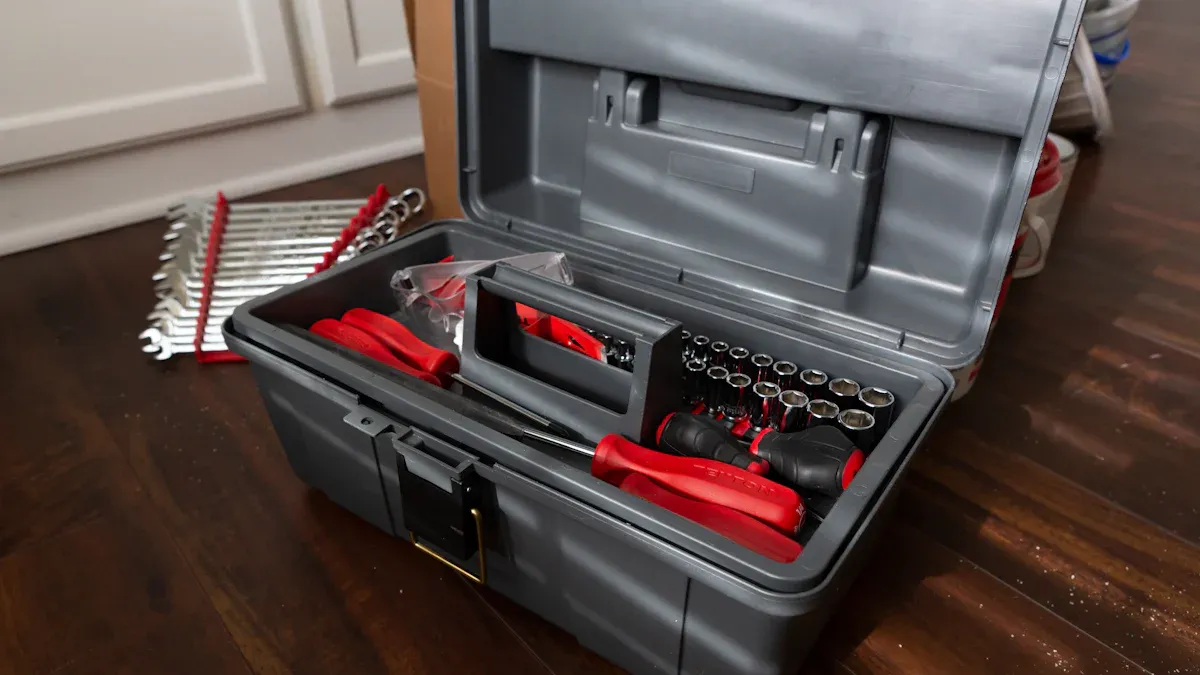
Toolbox
These tools cover most basic repairs and diy projects. You can hang pictures, tighten loose screws, cut materials, and handle small emergencies. A toolbox keeps everything in one place, so you never waste time searching.
Tip: Start with these essentials. You can always add more as you learn what you use most.
Upgrading Your Kit
Once you get comfortable with the basics, you might want to upgrade your tool kit. Adding new tools can make repairs easier and open up more possibilities for home improvement. Here is what happens when you expand your collection:
Having the right tools can save you time, money, and frustration.
A well-organized toolkit empowers you in many ways, making minor tasks easier.
It minimizes frustration, stress, and time wasted searching for tools.
You might add a power sander, a level with laser guidance, or specialty pliers. These upgrades help you tackle bigger projects and work more efficiently. You will feel more confident every time you fix or build something new.
Pro Tip: Upgrade slowly. Try out new tools as you need them, not all at once.
Maintenance Tips
Taking care of your tools means they will last longer and work better. Here are some simple ways to keep your must-have tools in top shape:
| Maintenance Tip | Description |
| Clean Your Tools After Every Use | Prevents rust and corrosion by removing dust, grease, and debris. |
| Store Tools Properly | Protects tools from moisture and accidental damage by keeping them in a dry, organized space. |
| Keep Cutting Edges Sharp | Ensures tools are effective and reduces the risk of accidents caused by dull edges. |
| Perform Regular Inspections | Helps catch issues early, preventing costly repairs and safety hazards. |
| Lubricate Moving Parts | Reduces friction and wear on tools with moving parts, ensuring they operate smoothly. |
You do not need fancy products. A clean rag, a little oil, and a dry storage spot work wonders. Regular care keeps your tools ready for any job.
Note: Well-maintained tools make every project safer and more enjoyable.
When you invest in high-quality tools, you set yourself up for success. You save money over time because strong tools last longer and work better. With homeowner essentials like a sturdy hammer, adjustable wrench, flashlight, and a set of pliers, you can tackle any home improvement project with confidence. Choose tools that feel good in your hand and fit your needs. Quality and comfort make every fix easier and help you handle surprises around the house.
FAQ
What are the first hand tools I should buy for my home?
Start with a hammer, screwdrivers, pliers, a tape measure, and a utility knife. These tools handle most small repairs and projects. You can add more as you discover what you need.
How do I keep my tools from rusting?
Wipe your tools dry after each use. Store them in a dry place. You can add silica gel packs to your toolbox to absorb moisture. Lightly oil metal parts if you live in a humid area.
How often should I replace my hand tools?
Replace tools when you see cracks, rust, or worn-out grips. If a tool slips or feels unsafe, it is time for a new one. Quality tools last for years with proper care.
Can I use power tools instead of hand tools?
Power tools work faster for big jobs. Hand tools give you more control for small repairs. You will want both for a complete toolkit. Start with hand tools and add power tools as needed.
What is the best way to organize my tools?
Use a toolbox or wall-mounted pegboard. Label drawers or bins for small parts. Keep similar tools together. This saves time and helps you find what you need quickly.
Are expensive tools always better?
Not always. Some budget brands offer great value and durability. Check reviews and look for warranties. Focus on comfort, quality materials, and how often you will use the tool.
How do I know which tool to use for a job?
Read the instructions for your project. Match the tool to the task. If you are unsure, search online or ask at your local hardware store. Practice helps you learn which tool works best.
Can kids use hand tools safely?
Yes, with supervision. Choose tools with smaller grips for young hands. Teach kids to use each tool properly. Always store sharp or heavy tools out of reach when not in use.