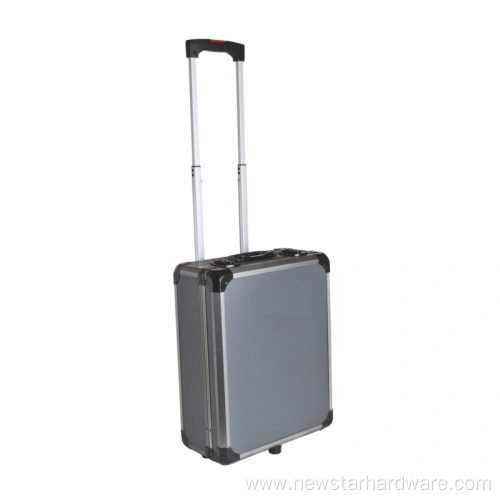
Field technicians and mobile engineers face a constant battle against inadequate storage. Damaged precision instruments, lost inventory, and wasted billable hours searching for specific items drain productivity. When equipment is scattered across job sites or poorly protected during transit, operational costs skyrocket. Professionals require a storage solution that balances extreme durability, strict organizational geometry, and ergonomic mobility without exceeding weight limitations. The Aluminum Tool Trolley Case serves as the industry-standard structural solution for mitigating transit damage, securing high-value assets, and optimizing on-site workflow efficiency. By upgrading to a rigid, mobile platform, technicians can protect their gear and streamline their daily operations. We will examine the structural requirements, material benefits, and internal organization strategies that make this specific storage format superior for field service deployments.
- Structural Integrity: Aluminum extrusions and reinforced corners provide superior torsional rigidity and impact resistance compared to molded plastics or heavy-duty fabrics.
- Operational Efficiency: A properly configured portable tool trolley reduces tool retrieval time and directly impacts first-time fix rates by ensuring all necessary equipment is present and undamaged.
- Asset Security: Integrated locking mechanisms, heavy-duty latches, and rigid frames protect expensive diagnostic equipment and hand tools from theft and environmental exposure.
Success Criteria: Framing the Mobile Tool Storage Problem
Field operations expose equipment to severe physical demands. Vehicular vibration, harsh weather exposure, and rough terrain test the limits of any storage system. Technicians need gear that withstands these daily abuses while keeping contents intact. When a service van hits a pothole at highway speeds, the kinetic energy transfers directly to the storage containers in the back. Soft bags absorb nothing, transferring the shock to the delicate multimeters and calibration devices inside. Hard plastic cases can shatter under extreme cold or repeated impacts. Aluminum structures distribute the force along their extruded frames, protecting the internal payload.
Poorly structured bags or bins lead to constant tool rummaging. This disorganization directly decreases technician utilization rates and extends service windows. Every minute spent searching for a specific wrench or diagnostic probe is a minute lost on the actual repair. Over a week, these lost minutes compound into hours of unbillable time. A structured approach forces a place for everything, meaning a missing tool is immediately obvious before the technician leaves the site.
Physical strain on technicians carrying heavy equipment presents serious safety concerns. Rolling solutions meet occupational health and safety standards by minimizing lifting injuries and fatigue during long shifts. Carrying a fifty-pound bag across a sprawling industrial complex degrades a technician's physical capability before they even begin the repair work. Wheels and telescoping handles shift the load from the technician's spine to the ground.
- Vehicular Vibration: Constant low-frequency shaking loosens poorly secured components and damages sensitive electronics.
- Weather Exposure: Rain, snow, and extreme humidity cause rapid oxidation on unprotected steel hand tools.
- Impact Forces: Drops from tailgates or loading docks require high impact resistance to prevent catastrophic case failure.
- Chemical Spills: Exposure to hydraulic fluid, motor oil, or industrial solvents degrades fabric and some plastics.
![Aluminum Tool Trolley Case]()
Material & Structural Evaluation: Why an Aluminum Tool Trolley Case?
Aluminum vs. High-Density Plastic and Fabric
When comparing tensile strength, puncture resistance, and thermal stability, aluminum stands out. It offers maximum rigidity and security, protecting delicate instruments from crushing forces. However, it introduces a higher baseline weight compared to fabric alternatives, requiring careful consideration of payload limits. Fabric bags tear when snagged on sharp metal grating. Plastic cases warp if left in a hot vehicle during summer months. Aluminum maintains its structural geometry regardless of temperature fluctuations, ensuring that latches align and seals remain tight.
| Material Type | Impact Resistance | Thermal Stability | Puncture Resistance | Weight Profile |
| Aluminum Extrusion | High (Dents, does not shatter) | Excellent | Maximum | Moderate to Heavy |
| High-Density Polyethylene | Moderate (Can crack in cold) | Poor (Warps in heat) | Moderate | Moderate |
| Ballistic Nylon | Low (Transfers shock) | Good | Low (Prone to tearing) | Lightweight |
Aluminum Grades and Surface Treatments
The mechanical properties of different alloys dictate performance. Aircraft-grade aluminum, such as 6061-T6, provides superior strength-to-weight ratios compared to standard utility grades. This specific alloy includes magnesium and silicon, making it highly resistant to stress cracking. Surface finishes also matter. Anodized aluminum prevents oxidation and stops black marks from transferring onto hands and tools, unlike raw finishes. Anodizing creates a controlled oxide layer that is much harder than the base metal, providing excellent scratch resistance in rough industrial environments.
Anatomy of a Professional Repair Trolley
Extruded aluminum frames utilize tongue-and-groove construction to prevent the case from warping under heavy internal loads. This interlocking design ensures that when the case is closed, the top and bottom halves form a single, rigid structural unit. Reinforced corners, often made of steel or heavy-duty composite, absorb drop impacts effectively. Solid aluminum panels or aluminum-clad composite panels offer varying weight-to-strength ratios to suit specific operational needs. Composite panels, featuring a high-density core sandwiched between thin aluminum sheets, reduce the overall tare weight while maintaining puncture resistance.
Core Features to Evaluate in a Rolling Aluminum Tool Case
Wheel Architecture, Axle Durability, and Stair Glides
Wheel materials dictate shock absorption and longevity. Polyurethane wheels with ball bearings outperform hard plastic on rough surfaces. They roll smoothly over concrete expansion joints and gravel without transferring excessive vibration to the case contents. In-line skate style wheels navigate tight clearances, while heavy-duty caster systems handle rough terrain. Integrated skid rails or staircase glides on the underside protect the case body during vertical transitions. Dragging a fully loaded case up a flight of concrete stairs without skid rails will quickly destroy the bottom hinges and paneling.
- Polyurethane Tread: Absorbs micro-vibrations and resists flat-spotting when left stationary for long periods.
- Sealed Steel Bearings: Prevent dust and grit from seizing the wheel rotation.
- Solid Steel Axles: Prevent wheel splay under maximum payload conditions.
- Recessed Housings: Protect the wheel assembly from side-impact damage during transit.
Telescopic Handle Mechanisms
Multi-stage, reinforced aluminum handle tubes must handle significant load-bearing capacities. Cheap handle locking pins often fail under stress, causing the handle to collapse unexpectedly. Evaluate handle rigidity when the case is fully loaded to ensure stability. Heavy-duty spring-loaded side carry handles provide essential support for multi-directional lifting. When a technician needs to lift the case into a truck bed, the telescopic handle should never be used as a lifting point; robust side handles are mandatory for this maneuver.
Environmental Sealing and Ingress Protection (IP)
Continuous neoprene or silicone O-ring seals within the aluminum tongue-and-groove profile block moisture and dust. Performance expectations vary based on IP ratings. IP54 offers dust and water splash resistance, while IP67 allows for complete submersion, crucial for marine or extreme outdoor environments. A proper seal ensures that fine particulate matter, like drywall dust or metal shavings, cannot infiltrate the case and contaminate sensitive electronic testing equipment.
Hardware, Latches, and Pressure Equalization
Heavy-duty butterfly latches, draw latches, integrated key locks, and reinforced padlock loops secure the contents. Butterfly latches pull the two halves of the case together with significant force, compressing the O-ring seal effectively. Automatic pressure equalization valves prevent vacuum lock during air transit or rapid altitude changes, ensuring the case can always be opened easily. Without a pressure valve, a case sealed at sea level will be nearly impossible to open after driving up to a high-altitude job site.
Internal Organization Frameworks
Pallet Boards and Pouches
Double-sided, high-density plastic or textile tool pallets allow for rapid visual inventory of hand tools. Elastic loop retention systems and sewn pockets secure tools during high-vibration transit, preventing them from shifting or causing internal damage. A well-designed pallet board utilizes staggered pocket depths, allowing long screwdrivers and short pliers to sit flush against the board without overlapping. This maximizes the internal volume and prevents tools from striking each other when the lid is closed.
Custom Foam Inserts (Shadow Boards)
CNC-cut closed-cell polyethylene foam or pluck foam secures delicate diagnostic equipment, preventing transit migration. Two-tone contrast foam provides instant visual indication of missing tools, ensuring nothing is left behind on a job site. If a technician sees a bright red foam cutout at the end of a shift, they know immediately that a tool is missing. Closed-cell foam is vastly superior to open-cell foam because it does not absorb moisture, oil, or chemical solvents.
- Inventory Assessment: Lay out all required tools and group them by frequency of use.
- Layout Planning: Arrange the tools on the foam blank, leaving at least half an inch of foam between heavy items.
- Tracing and Cutting: Use a long-blade utility knife to cut the outlines, maintaining a perpendicular angle for clean edges.
- Depth Adjustment: Pluck or route the foam to the specific depth of each tool, ensuring they sit flush with the surface.
- Finger Holds: Cut small semi-circles next to tightly fitted tools to allow for easy extraction.
Adjustable Dividers and Modular Trays
A mobile workshop tool set requires modularity to adapt to different service contracts. Robust bottom-tray dividers isolate heavy items like power tools and batteries from delicate test equipment, maintaining order and preventing crushing damage. Corrugated aluminum or rigid plastic dividers slot into grooved sidewalls, allowing the technician to reconfigure the base compartment as their equipment needs change over time.
Aligning Features to Operational Outcomes
Target Use Cases Across High-Stake Industries
In aviation maintenance, FOD (Foreign Object Debris) prevention relies on structured shadow boards within a secure aluminum case tool kit. A single misplaced socket left inside an aircraft engine can cause catastrophic failure. Telecom and marine diagnostics require ruggedized IP-rated storage for delicate calibration devices, fiber splicers, and OTDRs. Industrial plant maintenance demands heavy hand tool containment within a highly mobile professional repair trolley capable of traversing concrete gratings and catwalks without getting wheels stuck in the gaps.
| Industry | Primary Hazard | Critical Case Feature | Internal Organization |
| Aviation Maintenance | Foreign Object Debris (FOD) | TSA Locking, High Rigidity | Two-Tone Shadow Foam |
| Telecom & Fiber Optics | Moisture and Dust Ingress | IP67 Sealing, Pressure Valve | Padded Dividers, Pallets |
| Industrial Plant Repair | Heavy Impacts, Rough Terrain | Polyurethane Wheels, Skid Rails | Heavy-Duty Bottom Dividers |
Securing the Mobile Workshop Tool Set
Rigid aluminum walls protect sensitive calibration tools and electronics from crushing forces during transit. This structural defense is vital for maintaining the accuracy and functionality of expensive diagnostic gear. When a heavy motor or steel pipe shifts in the back of a service truck and pins the tool case against the bulkhead, the aluminum frame absorbs the load. A soft bag would simply collapse, destroying the thousands of dollars of equipment inside.
Asset Security and Compliance
Locking hardware configurations protect high-value assets from theft. TSA compliance is necessary for aviation technicians or professionals requiring commercial air travel, ensuring secure yet accessible transport. Padlock loops reinforced with steel sleeves prevent thieves from simply cutting through the aluminum to bypass the lock. For high-security environments, cases with integrated combination locks and secondary padlock hasps provide dual-layer protection.
Client Perception and Brand Trust
A technician arriving with a clean, organized aluminum case tool kit projects professionalism. This structured approach builds client confidence far better than a disorganized canvas bag spilling tools onto the floor. When a client sees a technician open a meticulously organized case, they immediately trust the technician's competence. The visual impact of a professional setup justifies higher billing rates and reinforces the company's reputation for precision and care.
Implementation Risks and Mitigation Strategies
Weight Limitations and Transit Constraints
The empty weight of an aluminum case reduces the allowable weight for tools before hitting airline or ergonomic carrying limits. Conduct a strict tool audit to carry only essential items. Select cases with optimized composite or aluminum-clad paneling to reduce tare weight. Technicians often carry redundant tools out of habit. Stripping the inventory down to the absolute necessities ensures the fully loaded case remains maneuverable and compliant with commercial airline baggage restrictions.
Maintenance of Moving Parts
Telescopic handles and wheel bearings can seize if exposed to excessive dust, moisture, or chemical spills. Establish a preventative maintenance protocol, including lubrication and debris clearing. Select cases with user-replaceable wheel and handle assemblies to extend the unit's lifespan. Spraying dry PTFE lubricant into the telescopic handle tracks once a month prevents binding. Inspecting the wheel housings for tangled wire or debris ensures the bearings do not overheat and fail during transit.
Sizing and Capacity Bottlenecks
Purchasing a case that is too small limits future tool additions, while one too large may not fit in standard service vehicle compartments. Measure vehicle storage dimensions prior to procurement and map out current and projected tool volume requirements. Consider the clearance required to open the lid fully while the case is sitting in the truck bed. A case that requires the technician to remove it entirely from the vehicle just to access a screwdriver creates unnecessary physical strain.
Audit your current mobile tool inventory to identify redundant items and measure the heaviest components. Map out the internal dimensions required to house your specific diagnostic equipment alongside standard hand tools. Request technical specification sheets from manufacturers to verify wheel bearing types and handle load ratings before procurement.
FAQ
Q: What is the weight capacity of a standard aluminum tool trolley case?
A: Average load ratings typically range from 40 lbs to over 100 lbs. This capacity depends heavily on the axle design, wheel construction, and the structural rating of the telescopic handle. Always verify the manufacturer's dynamic load rating, which accounts for the stress of rolling over rough terrain.
Q: Are rolling aluminum tool cases suitable for air travel?
A: Yes, provided they meet ATA (Air Transport Association) ratings. They should feature TSA-approved locks, pressure equalization valves, and dimensions that comply with airline oversize baggage policies. Cases without pressure valves may become impossible to open after a flight.
Q: What is the difference between anodized and raw aluminum for tool cases?
A: Anodization creates a hard, corrosion-resistant oxide layer. This prevents the aluminum from oxidizing and rubbing off as a black residue onto hands, clothing, and tools. Raw aluminum will constantly shed this residue and is more susceptible to surface scratching.
Q: How do I customize the interior of an aluminum case tool kit?
A: You can integrate two-tone closed-cell foam for shadow boarding, use modular corrugated dividers for larger bottom compartments, and add aftermarket textile tool pallets designed for specific trades to maximize vertical organization.
Q: Can the wheels and handles on a portable tool trolley be replaced?
A: Professional-grade cases usually feature bolted, replaceable wheel housings and telescopic assemblies. Consumer-grade cases often use riveted, non-replaceable components that render the entire case useless if a single wheel bearing fails.
Q: Does an aluminum professional repair trolley dent easily?
A: Aluminum may dent under severe localized impact. However, this denting absorbs the kinetic energy and protects the delicate tools inside. This is structurally preferable to rigid plastic cases, which may crack or shatter completely under the same force.
Q: How does a mobile workshop tool set in an aluminum case prevent rust?
A: While aluminum itself does not rust, the case must have proper neoprene weather-stripping or O-rings to prevent moisture ingress. Using reusable silica gel desiccant packs inside the sealed case further protects carbon steel hand tools from rusting.