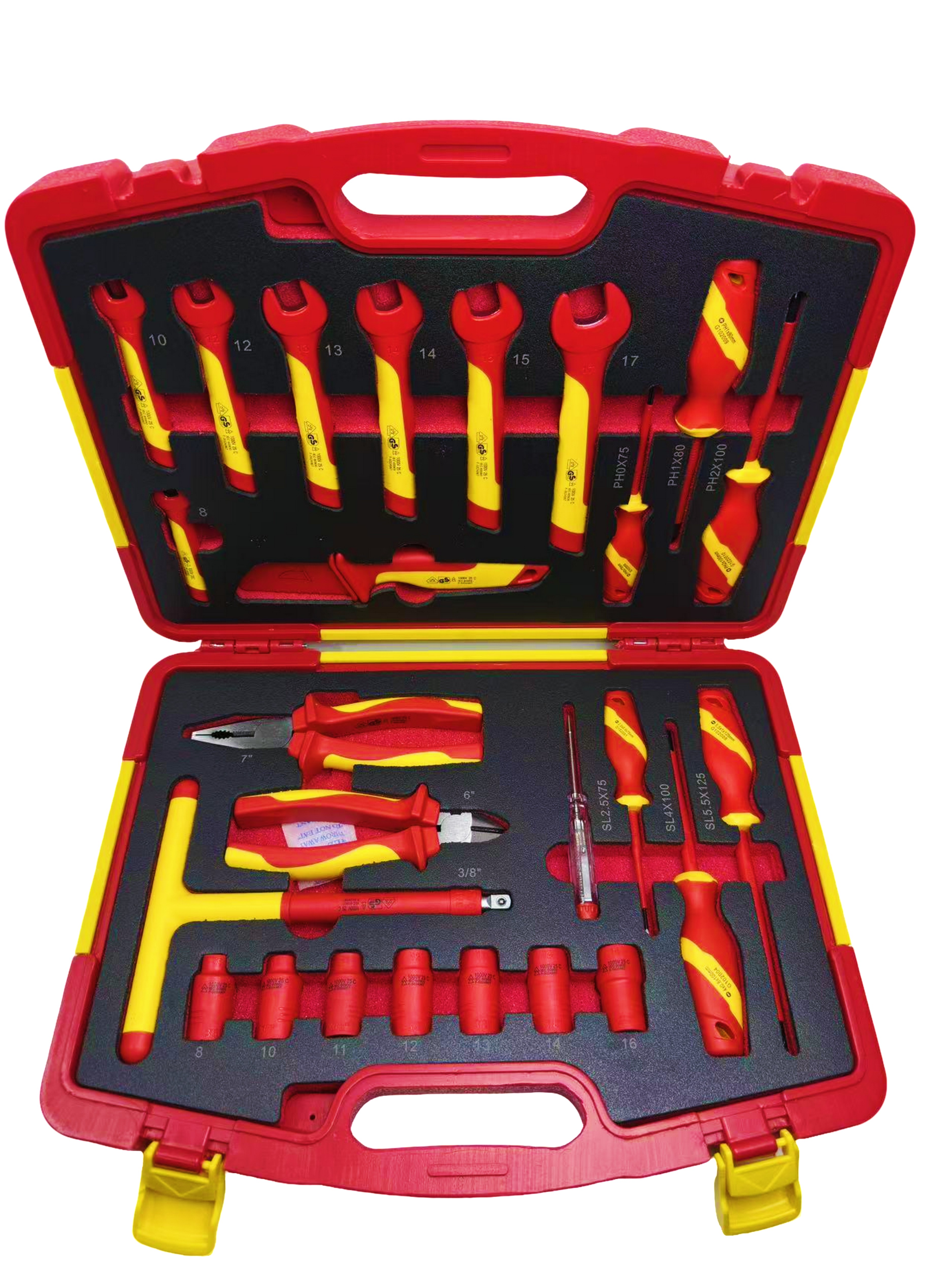
Working on live circuits or in high-voltage environments leaves zero margin for equipment failure; the difference between a safe shift and a fatal arc flash often comes down to tool integrity. The market is flooded with "electrician-style" tools featuring thick rubber grips that offer no verified dielectric protection. Professionals, apprentices, and procurement managers struggle to differentiate between marketing claims and certified, compliant safety equipment. Relying on unverified equipment introduces severe risks to personnel and infrastructure. You need a reliable method to identify gear that actually protects against electrical hazards. This guide provides a technical evaluation framework for selecting a Professional Insulated Tool Set, focusing on certification standards, material durability, ergonomic realities, and long-term maintenance requirements. We will break down the exact specifications required for safe electrical work.
- Certification is Non-Negotiable: True 1000V insulated tools must carry independent third-party testing marks (such as VDE, UL, or CSA) and comply with IEC 60900 or ASTM F1505 standards.
- Double Insulation is the Gold Standard: Look for double-insulated tools featuring multi-colored visual wear indicators to identify critical safety compromises before accidents happen.
- Match the Kit to the Scope: An insulated electrician tool kit should align with specific daily tasks; over-purchasing leads to unused tools degrading in a bag, while under-purchasing encourages dangerous workarounds.
- Manufacturing Method Matters: The choice between injection-molded and dip-coated insulation impacts tool longevity, profile thickness, and replacement frequency.
- Inspection and Lifecycle: Even the highest-tier VDE tool set requires daily visual inspections and proper storage; compromised insulation immediately voids safety ratings.
Defining the Standard: What Makes a Tool Truly Insulated?
Many workers confuse standard electrician hand tools with actual insulated safety gear. A thick plastic or rubber handle designed for ergonomic comfort provides zero guaranteed protection against electrical shock. Manufacturers design comfort grips to reduce hand fatigue, not to stop voltage. Engineered insulated tools use specific dielectric materials tested to block electrical current up to a certified limit.
Double Insulated vs. Single Layer Insulation
The structural difference between a single-layer coating and true double-insulated electrical tools dictates the safety margin on the job. Single-layer tools rely on one thick coat of material. If that material scratches or gouges, the user has no visual warning that the dielectric barrier is failing. Double-insulated tools solve this problem through a mechanical safety warning system. They feature a bright inner layer—usually yellow or orange—covered by a contrasting outer layer, typically red. When the outer layer wears down from friction or sustains a cut, the bright inner color becomes visible. This immediately signals that the tool is compromised and must be removed from service.
Regulatory and Safety Frameworks
You cannot verify tool safety by looking at it. You must look for specific regulatory stamps. IEC 60900 and ASTM F1505 serve as the primary international and US standards for hand tools used up to 1000V AC and 1500V DC. These standards dictate everything from flame resistance to impact strength at extreme temperatures. VDE certification acts as the gold standard in rigorous, independent testing for electrical repair tools. When a tool carries the VDE mark, an independent German testing institute has verified its compliance. Proper tooling directly supports broader workplace electrical safety and arc flash mitigation programs required by NFPA 70E and OSHA.
The 10,000V Dielectric Water Bath Test
Reputable manufacturers do not just test a few samples from a production run. They subject every single tool to a 10,000V dielectric water bath test. The factory submerges the tool in water—a highly conductive medium—and applies 10,000 volts of electricity for a sustained period. If the insulation leaks any current, the tool fails and is destroyed. Passing this 10,000V test allows the manufacturer to rate the tool for 1000V, providing a massive 10-to-1 safety margin for the end user.
| Feature | Standard "Comfort Grip" Tools | Certified Insulated Tools |
| Primary Purpose | Ergonomics and grip strength | Dielectric resistance and life safety |
| Voltage Rating | None (0V guaranteed) | 1000V AC / 1500V DC |
| Testing Standard | General hand tool durability | IEC 60900, ASTM F1505, VDE |
| Visual Wear Indicator | Rarely included | Standard on double-insulated models |
![Professional Insulated Tool Set laid out for inspection]()
Categorizing Insulated Tool Sets by Application
Selecting the right equipment means matching the tool profile to the daily workload. Buying a massive kit for basic residential work wastes money and creates storage problems. Conversely, industrial technicians trying to get by with a basic residential kit will inevitably use the wrong tool for the job, increasing the risk of an accident.
The Essential Starter Kit
An entry-level insulated electrician tool kit covers the most common tasks encountered in residential and light commercial environments. Core components include insulated screwdrivers (Phillips, slotted, and square drive), lineman’s pliers, diagonal cutters, and wire strippers. Apprentices often face a dilemma: buy a complete pre-built starter kit upfront or purchase individual tools piece-by-piece. Buying a complete kit ensures all tools share the same certification standard and fit neatly into a dedicated storage roll, preventing damage. This setup works best for residential electricians, entry-level apprentices, and general facility maintenance personnel.
The Comprehensive Industrial VDE Tool Set
Industrial environments require heavy-duty fastening and specialized cutting capabilities. A comprehensive VDE tool set for industrial use expands significantly beyond basic pliers and screwdrivers. Core components include fully insulated ratchets, extension bars, sockets, T-handle drivers, insulated open-end wrenches, box wrenches, heavy-duty cable shears, and specialized water pump pliers. These sets are built for industrial maintenance, switchgear installation, commercial panel building, and heavy machinery repair.
Specialty Electrical Repair Tools
Emerging technologies demand specific tool profiles. Kits tailored for EV (Electric Vehicle) mechanics, solar/PV installers, and HVAC technicians focus heavily on slim-line profiles. Standard insulated screwdrivers often have thick insulation near the tip, preventing them from reaching deeply recessed screws in modern terminal blocks. Specialty tools feature recessed or flush-machined insulation, allowing the technician to access tight terminal blocks without scraping or stripping the outer dielectric layer against the plastic housing.
- Assess the maximum voltage of the systems you work on daily.
- Identify the specific fastener types (e.g., hex, Torx, slotted) prevalent in your equipment.
- Determine if you need slim-line shafts for recessed terminal blocks.
- Evaluate the need for insulated ratchets and sockets versus standard screwdrivers.
Core Evaluation Dimensions for Procurement
Procurement managers and lead technicians must evaluate tools beyond the basic safety rating. The manufacturing techniques and materials used dictate how long the tool will survive in a harsh job site environment.
Insulation Manufacturing Techniques
Manufacturers generally use two methods to apply insulation: dip-coating and injection molding. Dip-coated tools are submerged repeatedly into liquid insulation. This process easily creates dual-color warning layers, but the resulting insulation can be bulky and inconsistent in thickness. Injection-molded tools have the insulation molded directly onto the steel under high pressure. This method offers tighter tolerances, slimmer profiles for tight spaces, and superior impact resistance, though it may lack the distinct dual-layer visual warning system depending on the brand.
Metallurgy and Machining Quality
The best insulation in the world cannot compensate for cheap steel. Evaluate the underlying metallurgy. High-end 1000V insulated tools utilize chrome-vanadium-molybdenum alloy steel. This specific blend provides the necessary tensile strength to prevent snapping under load. Tip hardness and cam-out resistance in screwdrivers matter immensely; slipping off a fastener inside a live panel can cause a short circuit or an arc flash. Cutting edge retention on insulated pliers, diagonal cutters, and cable shears ensures the tool cuts cleanly through copper and aluminum without requiring excessive force that could lead to slipping.
Ergonomics, Balance, and Grip Geometry
Heavy insulation changes the center of gravity of a hand tool. Assess the handle geometry for maximum torque transfer. Multi-component handles combine hard plastics for structural integrity with softer rubberized zones for grip. Smooth, slip-resistant finishes work better in environments exposed to oil or grease. Poorly balanced tools cause repetitive motion strain during long shifts, leading to fatigue and mistakes.
Brand Landscape and Lifecycle Durability
The professional tool market features a clear hierarchy based on manufacturing origin, trade feedback, and specialized focus areas. Established brands invest heavily in proprietary steel blends and advanced insulation polymers. Budget-tier tools often use inferior plastics that become brittle in cold weather or soft in extreme heat.
Upfront Cost vs. Lifecycle Durability
Purchasing cheap insulated tools leads to rapid insulation degradation. The plastic layers crack, the plier jaws wear down prematurely, and the screwdrivers strip out fasteners. This forces frequent replacement cycles. Investing in high-quality gear ensures the insulation remains pliable and the cutting edges stay sharp, providing reliable service over years of daily use.
Modularity and Replacement Availability
Avoid buying "all-in-one" kits from obscure, unverified brands. If you lose a single 10mm insulated socket or snap a flathead screwdriver, you need to replace that specific piece. Obscure brands rarely sell individual replacements, forcing you to buy an entirely new kit or mix uncertified tools into your set. Evaluate vendor ecosystems to ensure you can easily source individual tool replacements to keep your kit complete and compliant.
Warranty Realities for Electrical Hand Tools
Understand what manufacturers actually cover under their warranties. Most reputable brands cover defects in materials and workmanship. However, insulation damage resulting from drops, cuts, improper use, or chemical exposure is rarely covered under lifetime warranties. The dielectric barrier is a wear item; if you slice it open on a sharp piece of unistrut, you must buy a new tool.
Implementation Risks, Companion Gear, and Maintenance Protocols
Owning certified tools only provides safety if you use and maintain them correctly. Poor job site habits destroy insulation faster than normal wear and tear.
The Risk of False Security
Improper use compromises the dielectric barrier instantly. Using an insulated screwdriver as a chisel, pry bar, or hammer destroys the handle and fractures the insulation shaft. Once the insulation cracks, moisture and dirt penetrate the tool, creating a conductive path straight to your hand.
Essential Companion Equipment
Insulated tools represent only one layer of defense in a comprehensive safety system. You must integrate these tools with proper diagnostic and protective gear. Always verify the absence of voltage using CAT III/IV multimeters or reliable non-contact voltage detectors before beginning work. Wear rated arc-flash PPE, including voltage-rated insulated gloves with leather protectors, and appropriate face shields.
Pre-Use Inspection Framework
You must inspect your tools before every single use. Look for micro-tears, deep gouges, and signs of chemical degradation. If your tools feature dual-layer insulation, check the entire surface area to ensure the bright inner warning layer is not visible. If you see yellow or orange shining through the red outer layer, snap the tool in half or throw it away immediately so no one else can use it.
Storage and Environmental Mitigation
Never throw insulated tools loose into a canvas bag or a metal toolbox alongside standard sharp tools like utility knives, jab saws, or drill bits. The friction and impact during transport will slice the insulation. Use dedicated tool rolls, custom foam inserts, or heavy-duty hard cases to separate and protect the dielectric layers. Keep tools away from temperature extremes and harsh chemicals. Hydraulic fluids, gasoline, and industrial solvents break down the polymers, rendering the insulation useless.
Conclusion
A professional insulated tool set is not a place for budget optimization; it is critical life-safety equipment. Selection must be driven by verified certifications (VDE, IEC, ASTM), appropriate manufacturing methods, and the specific voltage environments of your daily workload. Do not compromise on the gear that stands between you and a fatal electrical incident.
- Conduct an immediate audit of your current electrical repair tools and discard any compromised or uncertified "comfort grip" tools used in live environments.
- Map the required tool profiles, fastener types, and voltage limits to your specific electrical applications before purchasing a new set.
- Invest in dedicated storage solutions, such as foam-lined hard cases or heavy-duty tool rolls, to protect the insulation from physical damage during transport.
- Implement a strict, documented daily visual inspection protocol for all insulated tools before they are used on the job site.
FAQ
Q: What is the difference between VDE and 1000V insulated tools?
A: VDE is a specific independent testing and certification institute based in Germany. A tool can be rated for 1000V by meeting IEC or ASTM standards through various testing labs, but carrying the VDE mark means the tool has specifically passed VDE's exceptionally rigorous third-party testing protocols.
Q: What does "double insulated" mean when referring to hand tools?
A: Double insulated tools feature two distinct layers of dielectric material, usually in contrasting colors. The inner layer acts as a visual warning system. If the outer layer sustains damage and the inner color becomes visible, the tool is unsafe and must be replaced immediately.
Q: Can I re-dip or repair the insulation on my electrician hand tools using liquid electrical tape or heat shrink?
A: No. Repairing insulated tools with liquid electrical tape, standard electrical tape, or heat shrink immediately voids their safety certification. Damaged insulated tools cannot be repaired; they must be permanently removed from service and replaced.
Q: How often should an insulated electrician tool kit be tested or replaced?
A: Hand tools require a strict visual inspection before every use. They do not require periodic factory dielectric testing unless mandated by specific local facility regulations. However, they must be replaced the moment the insulation shows cuts, deep abrasions, or exposes the inner warning layer.
Q: Do I need a fully insulated tool set if I always de-energize the circuit?
A: Yes. Even when strictly following lockout/tagout procedures, insulated tools provide a necessary secondary layer of protection against accidental re-energization, unexpected residual voltage, or accidental contact with adjacent live components inside a crowded panel.
Q: Can standard sockets and ratchets be safely mixed with a VDE-certified tool set?
A: No. Mixing standard, uninsulated metal components with insulated tools completely compromises the dielectric barrier. You must use fully insulated sockets, insulated extension bars, and insulated ratchets together as a complete system to maintain protection.