A Professional Auto Repair Tool Kit directly impacts shop efficiency and technician earning potential. In flat-rate environments, time dictates income. Relying on consumer-grade sets leads to rounded fasteners, diagnostic bottlenecks, and dangerous tool failures. Every minute spent fighting a stripped bolt or waiting to borrow a specialty tool reduces daily output. We will explore a structured framework for assembling a professional-grade kit that balances upfront capital expenditure with long-term durability and warranty support. You need equipment that works as hard as you do, without compromise.
- Foundation Over Filler: A high-ROI kit prioritizes continuous-size, 6-point socket sets and high-tooth-count ratchets over inflated piece counts padded with cheap hex keys or redundant driver bits.
- Material and Precision Matter: Professional environments require Chrome Molybdenum (CR-MO) for impact tools and precisely machined Chrome Vanadium (CR-V) for hand tools to prevent catastrophic failure and fastener damage.
- Warranty Logistics Dictate Value: The true cost of a tool includes the downtime required to replace it; evaluate tool brands based on replacement friction (tool truck vs. retail exchange vs. mail-in).
- Diagnostic Integration is Mandatory: Modern repair requires bi-directional scanning and true-RMS electrical testing as foundational elements, not just mechanical hand tools.
Defining the Standard for a Professional Auto Repair Tool Kit
Professional repair environments demand equipment that survives daily abuse. A DIY setup might see use once a month, but professional tools face hundreds of cycle counts daily. They endure constant exposure to corrosive fluids like brake fluid, synthetic oils, and coolant. They must withstand high-torque applications without flexing or shattering. Success requires metallurgical integrity and precise machining tolerances. When you put a wrench on a rusted suspension bolt, you need absolute confidence it will hold.
The "no-skip" requirement separates professional kits from retail bundles. Retail sets often skip sizes like 15mm, 16mm, or 18mm to keep piece counts high while lowering manufacturing costs. Professional work demands continuous sizing from 8mm through 24mm. Missing a single socket size halts a suspension job completely. You cannot afford work stoppages due to incomplete sets. Modern vehicles mix metric and standard fasteners unpredictably, and having every size guarantees you never have to stop a job to hunt down a single socket.
Ergonomics directly impact technician fatigue. Gripping hard plastic handles for 40 hours a week causes hand strain and long-term joint issues. Professional tools utilize dual-material grips, balanced weight distribution, and optimized handle lengths. Reducing physical fatigue improves focus and decreases the likelihood of workplace injuries. A well-balanced ratchet feels like an extension of your arm, allowing for precise control even when covered in grease.
Core Automotive Hand Tools: The Foundation of the Box
Comprehensive Socket and Wrench Sets
Drive sizes dictate application suitability. A 1/4-inch drive handles interior trim, dashboards, and delicate engine sensors where over-torquing is a risk. The 3/8-inch drive serves as the primary workhorse for general engine bay repairs, offering the best balance of size and strength. Heavy suspension components, subframe bolts, and axle nuts require the leverage of a 1/2-inch drive. A complete socket and wrench set must include all three drive sizes to cover the full spectrum of vehicle repair.
Socket architecture matters immensely. Use 6-point sockets for high-torque breakout. They grip the flats of the fastener, preventing rounding. Reserve 12-point sockets for tight-clearance fastening or specific 12-point hardware like driveline bolts. Access accessories are mandatory. Wobble extensions, locking extensions, universal joints, and drive adapters allow technicians to navigate heavily obstructed modern engine bays where straight-line access is rare.
Wrench variations expand capability. Combination wrenches handle standard access. Ratcheting wrenches, both reversible and flex-head, drastically reduce fastening time in blind spots where you cannot swing a standard ratchet. Flare nut wrenches remain essential for brake lines and fuel system work, preventing damage to soft brass fittings that easily round off with standard open-end wrenches.
| Socket Type | Primary Application | Advantage | Limitation |
| 6-Point Standard | High-torque breakout, rusted bolts | Maximum grip on fastener flats | Requires more rotation to seat |
| 12-Point Standard | Tight clearances, 12-point bolts | Easy seating in blind spots | Higher risk of rounding under heavy load |
| 6-Point Impact (CR-MO) | Use with power tools | Absorbs shock without shattering | Thicker walls limit access in tight spaces |
Ratchets and Breaker Bars
Tooth count determines operational advantage. Modern engine bays offer minimal swing room. A 90-tooth or 120-tooth ratchet requires only a 3-to-4-degree swing arc to engage the next gear. This precision saves hours of frustration when working against firewalls or under intake manifolds. Lower tooth counts require too much arc to function in tight spaces, forcing you to remove components just to turn a bolt.
Leverage tools break seized fasteners safely. Standard ratchets will break under extreme load, destroying the internal gear mechanism. You need dedicated 1/2-inch and 3/4-inch breaker bars. Focus on anvil durability and handle length. A 24-inch handle provides the necessary torque multiplier for rusted suspension bolts, saving your back and your ratchets.
Pliers, Screwdrivers, and Striking Tools
A diverse plier assortment tackles varied tasks. Essential variations include locking pliers, needle-nose, slip-joint, snap-ring, and hose-clamp pliers. Each serves a specific function that cannot be easily substituted. Hose clamp pliers with locking mechanisms are particularly vital for dealing with constant-tension clamps in tight radiator spaces.
Screwdriver specifications require attention. Look for hex-bolstered shanks that allow wrench assistance for stubborn screws. Hardened tips prevent cam-out and stripped heads. Manual impact screwdrivers remain critical for breaking loose seized brake rotor retaining screws without drilling them out.
Striking and prying tools require mass and durability. Dead-blow hammers deliver force without marring surfaces or rebounding dangerously. Ball-peen hammers handle metal shaping and punch driving. Heavy-duty pry bars must feature steel striking caps to transfer hammer blows directly to the tip when separating stubborn ball joints or aligning subframes.
![Professional Auto Repair Tool Kit]()
Garage Equipment, Vehicle Lifting, and Shop Safety
Professional Lifting and Support Systems
Hydraulic floor jacks must balance clearance and capacity. Low-profile, rapid-pump dual-piston floor jacks clear low-stance passenger vehicles while possessing the tonnage to support heavy SUVs and light trucks. Single-piston jacks lift too slowly for professional environments and often lack the reach needed for modern center lift points.
Jack stands demand strict safety protocols. Never rely on basic ratcheting designs alone, as the pawl can slip under sudden shifts in weight. High-capacity, pin-lock, or double-locking jack stands provide mechanical failsafes. Under-car mobility relies on professional-grade creepers. High-clearance designs with chemical-resistant casters roll smoothly over shop debris, zip ties, and withstand fluid spills without degrading.
- Verify the vehicle's gross weight and select a jack rated for at least 75% of that total weight.
- Locate the manufacturer-approved center lift point on the front or rear subframe.
- Pump the dual-piston jack to elevate the vehicle, ensuring the saddle makes solid, centered contact.
- Position double-locking jack stands under the reinforced pinch welds or frame rails.
- Lower the hydraulic jack slowly until the vehicle rests entirely on the mechanical locks of the stands.
Safety Infrastructure and Personal Protective Equipment (PPE)
Primary safety gear is non-negotiable. Mandate ANSI Z87.1-rated impact-resistant eye protection to guard against flying rust, metal shavings, and splashed chemicals. Heavy-duty, puncture-resistant nitrile gloves protect against harsh solvents and sharp metal edges while maintaining tactile sensitivity. Shop safety mitigation requires active planning. Integrate fire-retardant blankets, fluid spill containment kits, and dedicated battery-charging safety enclosures to handle lithium-ion thermal events safely.
Power and Pneumatic Equipment Integration
Evaluating Cordless vs. Pneumatic for a Garage Repair Tool Set
The industry is shifting toward battery power. High-torque brushless lithium-ion tools rival traditional air tools in raw output. Cordless impact wrenches and electric ratchets eliminate air hose trip hazards and compressor noise. A modern garage repair tool set leans heavily on battery platforms for mobility and speed. You can walk from the bay to the parking lot without dragging 50 feet of hose.
Pneumatic holdouts still exist. Air tools dominate specific use cases. Air hammers for suspension work, die grinders for surface prep, and heavy-duty 3/4-inch impact guns require sustained power-to-weight ratios that batteries struggle to maintain continuously without overheating. Compressed air remains a vital utility for blowing out debris and running fluid extractors.
Platform standardization minimizes costs. Standardize on a single cordless battery platform. Mixing brands requires redundant chargers and batteries, cluttering your workstation. Committing to one 12V and 20V/18V ecosystem streamlines charging logistics, saves space, and ensures you always have a fresh battery ready to swap.
Diagnostic and Electrical Testing Gear
Scanners and Multimeters
Diagnostics go far beyond OBD-II code readers. Basic readers only pull generic emissions codes, which is insufficient for modern repair. Professional bi-directional scan tools are necessary. They perform module programming, DPF regeneration, ABS bleeding, and active component testing. You cannot repair modern vehicles without bi-directional control to command relays and solenoids directly from the tablet.
Electrical diagnostics require precision. A professional multimeter must feature True RMS and a minimum 10M Ohm input impedance to protect sensitive computer circuits from voltage spikes. Test lights, back-probe pins, and quality wire strippers round out the electrical testing foundation. Piercing probes should be avoided when possible to prevent moisture intrusion into wiring harnesses; back-probing connectors is the professional standard.
Precision Instruments and Specialty Tools
Torque Application and Measurement
Torque wrenches protect against liability. Over-tightening causes component failure, warped rotors, and snapped studs. Compare click-type, split-beam, and digital angle torque wrenches. Split-beam models hold calibration longer and do not need to be dialed back to zero after use. Digital angle wrenches handle modern torque-to-yield fasteners required on cylinder heads and main bearings. Routine calibration is necessary to ensure accuracy. Quality automotive hand tools include reliable measuring devices.
Clearance and measurement dictate engine health. Include feeler gauges for valve lash adjustments and spark plug gapping. Digital calipers and micrometers verify engine internal tolerances, measure shim thickness, and check brake rotor runout to diagnose pulsation issues accurately.
Extraction and Thread Repair
Broken fasteners are inevitable, especially in rust-belt regions. Mitigating them requires specific tools and patience. Left-hand drill bits often extract snapped bolts during the drilling process by catching the metal and spinning it outward. Spiral flute extractors handle deep breaks. Tap-and-die sets clean cross-threaded holes and restore damaged threads, saving expensive castings from needing replacement.
Adapting for the Field: The Mobile Auto Repair Kit
Field work requires weight versus utility trade-offs. You cannot carry a master set in a service truck without destroying your payload capacity. Pare down to a mobile auto repair kit by focusing on 3/8-inch drive tools, multi-bit screwdrivers, and adjustable wrenches for non-critical fasteners. Leave redundant sizes and heavy 1/2-inch chrome sockets at the main shop.
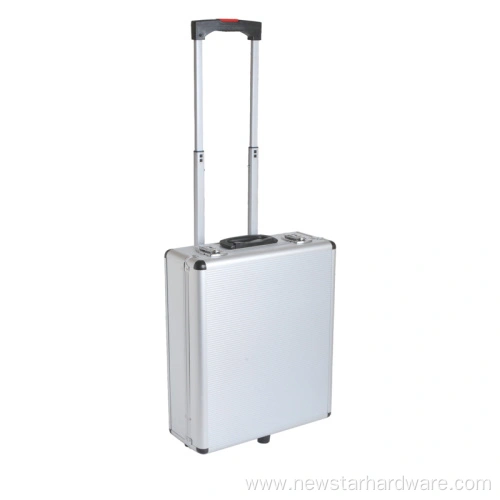
Organization and transport demand durability. Modular, weather-resistant storage solutions, like interlocking resin boxes with O-ring seals, protect tools from rain and dust. They outperform traditional soft bags that tear or heavy steel hand boxes that damage customer property and rust in mobile environments.
Power independence keeps mobile units running. Portable jump starters replace bulky jumper cables and rely on high-output lithium batteries. Cordless lighting with magnetic bases illuminates dark driveways and wheel wells. Battery-powered inverters provide clean AC power for laptops, flash programming equipment, and mobile diagnostics.
Evaluation Dimensions: Pre-Assembled Sets vs. Custom Assembly
The Pre-Packaged Mechanic Tool Kit
Pre-packaged sets offer a starting point. The primary advantage is a lower cost-per-piece. They allow immediate deployment for entry-level technicians who need to start turning wrenches on day one. A unified warranty source simplifies claims. However, they contain a high percentage of filler items. Manufacturers count 1/4-inch driver bits and cheap hex keys as individual tools to inflate the piece count. They often skip sizes and lack professional-grade impact sockets.
A La Carte Assembly (Custom Built)
Custom assembly ensures exact specification matching. You can mix-and-match best-in-class brands for specific categories. You might choose one brand for ratchets due to their tooth count and another for pliers based on jaw steel hardness. The downside is a higher initial capital expenditure. Warranty claims become fragmented across multiple vendors. It also requires extensive storage planning to organize loose tools effectively.
| Evaluation Criteria | Pre-Packaged Sets | A La Carte Assembly |
| Initial Investment | Lower upfront capital required | Higher capital requirement |
| Tool Quality | Mixed; often includes filler items | Consistently high; purpose-selected |
| Size Continuity | Often skips less common sizes | Guaranteed no-skip coverage |
| Warranty Process | Single point of contact | Multiple vendors and processes |
Implementation Risks and Mitigation
Warranty fulfillment realities impact downtime. Mobile tool trucks offer immediate replacement, getting you back to work instantly, but you pay a premium for that service. Online retailers introduce shipping delays that can sideline a job for days. Big-box hardware brands involve in-store friction and inventory shortages. Choose brands that align with your acceptable downtime and shop location.
Tool organization prevents loss. The ROI of EVA foam shadowing, socket rails, and magnetic trays is significant. They prevent lost tools and reduce inventory time at the end of a shift. A quick visual check confirms all tools are returned. If a slot is empty, you know exactly what is missing before a vehicle leaves the bay.
Technological obsolescence threatens diagnostic investments. Over-investing in locked-ecosystem diagnostic tablets carries risk. These units often require expensive annual update subscriptions to function or access newer vehicle gateways. Evaluate open-platform or modular diagnostic systems to mitigate long-term software costs and maintain flexibility.
A professional kit is defined by continuous sizing, metallurgical quality, and warranty accessibility, not by inflated piece counts. Start with a high-quality, no-skip base set of hand tools. Strategically add specialty and power tools as specific shop demands dictate.
- Audit your current tool inventory immediately to identify and replace any skipped socket or wrench sizes.
- Evaluate your primary battery platform to consolidate chargers and plan future cordless tool purchases.
- Establish a dedicated budget for diagnostic upgrades to ensure you can interface with modern secure vehicle gateways.
- Implement a visual organization system, like EVA foam or color-coded rails, to eliminate end-of-day tool loss.
FAQ
Q: What is the difference between a DIY tool kit and a mechanic tool kit?
A: A DIY kit uses lower-grade steel and often skips socket sizes to reduce costs. A professional mechanic tool kit utilizes CR-V and CR-MO steel, features continuous sizing without skips, and carries robust, low-friction warranties designed for daily, high-torque use.
Q: How many pieces should a professional garage repair tool set have?
A: Ignore marketing piece counts. A functional set focuses on completeness within drive sizes rather than total numbers. A 150-piece set with continuous sockets is vastly superior to a 500-piece set padded with cheap driver bits and hex keys.
Q: Do I need 6-point or 12-point sockets for automotive repair?
A: You need both, but 6-point sockets are primary. They grip the flats of the fastener, handling high torque without rounding bolt heads. 12-point sockets are reserved for tight clearances or specific 12-point hardware where a 6-point will not fit.
Q: Are cordless impact wrenches replacing pneumatic tools in professional shops?
A: Yes. Modern brushless lithium-ion impact wrenches achieve torque parity with air tools. They eliminate trip hazards from air hoses and reduce compressor noise, though pneumatics remain necessary for sustained-use tools like air hammers.
Q: What is the minimum drive size required for a mobile auto repair kit?
A: A 3/8-inch drive is the most versatile foundation for mobile work. It balances the strength needed for most engine and chassis fasteners with a lighter weight and smaller profile, making it ideal for portable tool boxes.
Q: How much should a beginner professional auto repair tool kit cost?
A: A realistic baseline for entering the trade ranges widely based on brand selection. Focusing on a high-quality, no-skip base set of hand tools and a reliable multimeter provides a solid foundation without overextending initial capital.