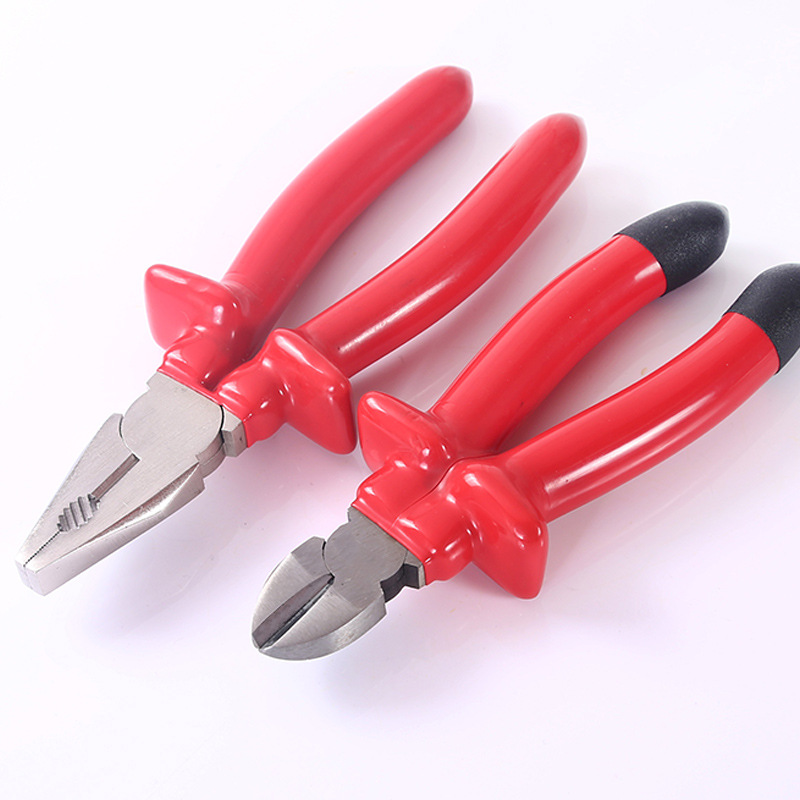
Working near energized circuits requires absolute certainty in equipment; the distinction between standard hand tools and certified VDE hand tools is a critical life-safety boundary. Electricians and technicians must balance the need for high-leverage cutting, precision gripping, and fastener turning with the absolute necessity of dielectric protection against arc flash and electrocution. Evaluating a VDE Pliers Set requires understanding the underlying testing standards, assessing metallurgical quality, and knowing exactly when an insulated tool set is a strict compliance requirement versus an optional upgrade. Relying on uncertified equipment in a live panel is a gamble with fatal consequences. You need tools engineered specifically to isolate your hands from lethal voltage while delivering the mechanical force required to manipulate heavy-gauge copper and stubborn terminal screws.
- Certification Standards: True VDE tools are individually tested at 10,000V AC to guarantee safe operation up to 1,000V AC and 1,500V DC under IEC 60900 standards.
- Core Configuration: While a basic 3-piece electrician pliers kit covers 90% of panel work, advanced 4-piece sets add adjustable water pump pliers for heavy-duty conduit and fastener tasks.
- Material Integrity: Professional-grade sets utilize high-frequency induction-hardened Chrome-Vanadium (Cr-V) steel to ensure cutting edges and jaw alignments outlast the lifespan of the insulation.
- The Single-Set Fallacy: Using VDE tools for daily heavy mechanical tasks accelerates insulation degradation, rendering them unsafe for live electrical environments. Dedicated lifecycle management is essential.
Understanding the VDE Standard and 1000V Insulated Pliers
The IEC 60900 Testing Protocol
The VDE (Verband der Elektrotechnik) institute operates as the primary authority in electrical safety and independent certification. They establish the testing frameworks that separate genuine safety equipment from standard hardware. The IEC 60900 stamp indicates that a tool has passed a rigorous sequence of destructive and non-destructive tests. Manufacturers must subject these tools to a 10,000V water bath submersion test. Water acts as a perfect conductor, revealing any microscopic pinholes or structural weaknesses in the insulation material. If a tool passes this submersion without electrical breakdown, it earns its rating.
Testing extends far beyond voltage resistance. Tools undergo extreme temperature impact testing, chilling them to -40°C and heating them to +70°C before striking them with a heavy weight. This ensures the plastic does not shatter in freezing conditions or deform in extreme heat. Adhesion testing verifies that the insulating material will not pull away from the steel core under heavy pulling force. Flame retardance verification guarantees the handles will not act as an accelerant if exposed to an arc flash. These combined tests validate the 1,000V AC and 1,500V DC safe working rating. They incorporate a strict 10:1 safety factor, meaning the tool withstands ten times its rated capacity during laboratory testing.
VDE Insulation vs. Standard "Dipped" Grips
Many standard tools feature rubberized comfort grips. These grips offer zero guaranteed electrical protection. They are designed solely to reduce hand fatigue and improve mechanical grip. Structurally integrated, multi-component VDE insulation is entirely different. It bonds directly to the steel core through specialized injection molding processes. You cannot simply slide VDE insulation off the handle. The physical design requirements of VDE handles include mandatory slip-guard flanges. These pronounced collars sit at the top of the handle, physically preventing your hands from sliding forward onto the conductive steel during high-force pushing or twisting motions.
Professional 1000V insulated pliers often utilize dual-color multi-layer insulation. A common configuration features a bright yellow inner layer covered by a red outer layer. This serves as an active visual wear-indicator. If you see yellow showing through the red, the dielectric integrity is compromised, and you must discard the tool immediately.
| Feature | Standard Dipped Grips | VDE Certified Insulation |
| Voltage Rating | None (0V guaranteed) | 1,000V AC / 1,500V DC |
| Testing Standard | Manufacturer discretion | IEC 60900 (10,000V water bath) |
| Slip Guards | Rarely included | Mandatory pronounced flanges |
| Wear Indication | Single layer plastic | Dual-layer visual warning system |
| Temperature Rating | Standard ambient | -40°C to +70°C impact tested |
Core Components of a Professional VDE Pliers Set
Combination Pliers
Combination pliers serve as the primary workhorse in any electrical toolkit. Their role includes clamping, bending, pulling, and gripping both flat and round materials. They handle the bulk of general manipulation tasks inside a panel or junction box. When evaluating combination pliers, you must look at the jaw tooth geometry. Precision-ground serrations ensure optimal fastener grip without stripping the material. Many modern designs incorporate integrated crimping profiles specifically for wire ferrules. High-leverage pivot joint stability is crucial. A well-machined joint reduces lateral play, ensuring maximum force transfers directly to the jaws.
Long Nose (Snipe Nose) Pliers
Long nose pliers excel at routing wire, positioning components in deep enclosures, and working within crowded breaker panels. Their extended reach allows technicians to manipulate conductors without placing their hands dangerously close to energized busbars. Evaluation criteria focus heavily on the elasticity of the tips. High-quality tips resist deflection under heavy twisting loads. Precision alignment is mandatory; the tips must meet perfectly with zero daylight visible between them. Half-round, serrated jaw profiles provide the necessary friction to grip slick wire insulation firmly.
Diagonal Cutters (Side Cutters)
Diagonal cutters take on the role of shearing soft, medium, and hard copper or aluminum wire. A high-quality cutter severs the wire cleanly without crushing the conductor, which is vital for maintaining proper termination integrity. You must evaluate the induction-hardened cutting edges. Look for specific HRC (Rockwell Hardness) rating benchmarks, typically above 60 HRC for the cutting edges. Precise bevel angles dictate how cleanly the tool cuts through different wire gauges. High-transmission joint designs shift the pivot point closer to the cutting edge, significantly reducing the manual cutting force required from the user.
Adjustable Joint (Water Pump) Pliers
Adjustable joint pliers handle conduit connectors, tighten cable glands, and grip irregular fasteners. They provide massive leverage for stubborn mechanical connections. Evaluation criteria center on self-locking jaw geometry. The teeth should bite into pipes and nuts so that applying downward pressure automatically tightens the grip. A box-joint design offers high stability by guiding the handle on both sides, preventing the jaws from twisting under load. A slim profile ensures accessibility within tight junction boxes where standard wrenches cannot fit.
![Professional VDE Pliers Set]()
Evaluation Dimensions: Choosing the Right Electrician Pliers Kit
Base Metallurgy, Edge Retention, and Manufacturing Quality
The foundation of any reliable electrician pliers kit is its base metallurgy. Oil-hardened, heat-treated Chrome-Vanadium (Cr-V) steel is necessary for long-term mechanical durability. Cr-V steel provides the optimal balance of hardness for cutting and toughness for twisting. Precision-ground steel directly impacts the grip, cutting efficiency, and jaw alignment of electrical repair pliers over time. Poor machining leads to dull edges and slipping jaws. Rigorous quality control defines VDE tools. Compliance testing often results in tighter manufacturing tolerances than standard non-insulated tools because any structural failure during testing results in a complete batch rejection.
- Verify the steel composition is explicitly listed as Chrome-Vanadium or high-carbon tool steel.
- Check the HRC rating of the cutting edges; anything below 60 HRC will dull quickly on hard wire.
- Inspect the pivot joint for lateral play; tight tolerances prevent jaw misalignment under heavy torque.
- Examine the jaw serrations for sharp, uniform machining that guarantees a secure bite on fasteners.
Ergonomics vs. Accessibility Trade-offs
Users face an inherent design trade-off with insulated tools. The thick, multi-component insulation required for safety inherently increases the tool's bulk. This added thickness can make accessing deeply recessed screws or tightly packed terminal blocks difficult. You must assess handle designs for torque transfer and wet/dry slip resistance. The grip material should provide high friction even when hands are sweaty. Maneuverability in tight DIN-rail spaces and narrow distribution boards requires a careful balance. Some manufacturers now offer slim-line VDE tools that maintain the 1000V rating while reducing the insulation profile near the working end.
Durability Realities: VDE vs. Non-VDE Tools
The industry frequently debates the longevity of VDE tools compared to their non-insulated counterparts. Mechanically, the steel cores often share identical specifications. However, the thick protective coating protects the steel from rust and moisture better than bare metal. The trade-off is that this plastic coating introduces a vulnerable failure point. Insulation gouging, tearing, or chemical degradation ruins the tool's safety rating long before the steel wears out. Dropping a VDE tool on sharp concrete or exposing it to harsh solvents can destroy its dielectric properties instantly.
When is an Insulated Tool Set Strictly Required?
Compliance and Workplace Safety Regulations
Working on or near energized equipment is strictly governed by safety standards. OSHA (29 CFR 1910.335) and NFPA 70E mandate the use of insulated tools when working within the Limited Approach Boundary of exposed energized parts. You cannot rely on standard tools wrapped in electrical tape. Utilizing non-certified or self-insulated tools in restricted electrical zones carries severe liability, compliance, and insurance implications. If an arc flash incident occurs and investigators find uncertified tools on site, the resulting fines and denied insurance claims can devastate a contracting business. An insulated tool set is a mandatory compliance requirement, not a suggestion.
The "Dedicated Set" vs. "One Set to Rule Them All" Strategy
Technicians often debate whether to buy one VDE set for all daily work or maintain separate tool bags. The "one-set" approach carries significant risks. Everyday mechanical wear compromises the dielectric properties of the VDE insulation. Scraping against sharp metal boxes, exposure to grease, solvents, and abrasive dust degrades the plastic. Using your VDE pliers to pry off a stubborn mechanical bracket risks gouging the handle. The operational logic of maintaining two separate tool sets is sound. Keep standard hand tools for heavy mechanical tasks, demolition, and rough-in work. Reserve a dedicated set of VDE hand tools exclusively for final terminations and live-panel electrical environments.
Implementation Risks and Maintenance Protocols
Pre-Use Inspection Criteria
Safety relies on constant vigilance. Establish a strict visual and tactile inspection protocol before every live-line work session. Run your fingers along the handles to feel for cuts or abrasions. Identify critical failure signs immediately. Look for micro-tears, exposed steel, or compromised slip guards. If you utilize dual-layer handles, check carefully for any yellow showing through the red outer wear-indicator layer. If a tool fails this inspection, remove it from the job site immediately to prevent accidental use.
Storage, Cleaning, and Lifecycle Management
Proper storage extends the life of your equipment. Store tools to prevent UV degradation, extreme temperature fluctuations, and physical puncturing from other sharp tools. Do not throw VDE tools loose into a bag with utility knives and bare hacksaw blades. Use dedicated pouches or tool rolls. Follow approved cleaning procedures. Avoid solvents and chemical degreasers that can strip or embrittle the plastic insulation. Utilize mild soap and water instead, and dry the tools thoroughly. Establish clear guidelines on when to permanently retire and replace compromised tools. When the insulation is breached, destroy the tool or permanently mark it as non-insulated to avoid fatal mix-ups.
| Maintenance Action | Approved Method | Prohibited Action |
| Cleaning | Mild soap and warm water | Brake cleaner, acetone, harsh degreasers |
| Storage | Dedicated tool roll or isolated pouch | Loose in a bag with sharp metal tools |
| Inspection | Daily visual and tactile check | Assuming safety based on brand name |
| Retirement | Destroy or permanently deface insulation | Wrapping damaged areas in electrical tape |
Conclusion
- Audit your current tool bags immediately to separate standard mechanical tools from certified electrical safety gear.
- Inspect all existing insulated handles for micro-tears, chemical degradation, or exposed inner wear-indicator layers, and discard compromised units.
- Procure a dedicated, IEC 60900 certified pliers set specifically reserved for live-panel work and final terminations.
- Implement a strict daily pre-use tactile inspection routine for all insulated equipment before crossing the Limited Approach Boundary.
FAQ
Q: What is the difference between VDE and standard 1000V insulated pliers?
A: VDE refers to the specific German testing institute (Verband der Elektrotechnik) that certifies the tools. While a tool can be rated for 1000V by the manufacturer, the VDE stamp guarantees it has passed independent, rigorous third-party testing under IEC 60900 standards.
Q: Can I use electrical tape to insulate my standard pliers?
A: No. Wrapping standard tools in electrical tape provides zero guaranteed dielectric protection and violates OSHA and NFPA 70E safety regulations. Tape easily tears, degrades, and offers no structural slip protection.
Q: How often should I inspect my insulated tools?
A: You must perform a visual and tactile inspection before every single use. Look for cuts, deep scratches, chemical degradation, or any exposed inner insulation layers.
Q: Can I clean my VDE tools with brake cleaner or degreaser?
A: Avoid harsh chemicals, solvents, and degreasers. These substances can embrittle, soften, or degrade the plastic insulation, compromising its electrical resistance. Use mild soap and water instead.
Q: What does the dual-color handle on some VDE tools mean?
A: Dual-color handles act as a visual safety indicator. Usually, a red outer layer covers a yellow inner layer. If the yellow layer becomes visible, the insulation is compromised, and the tool must be replaced.