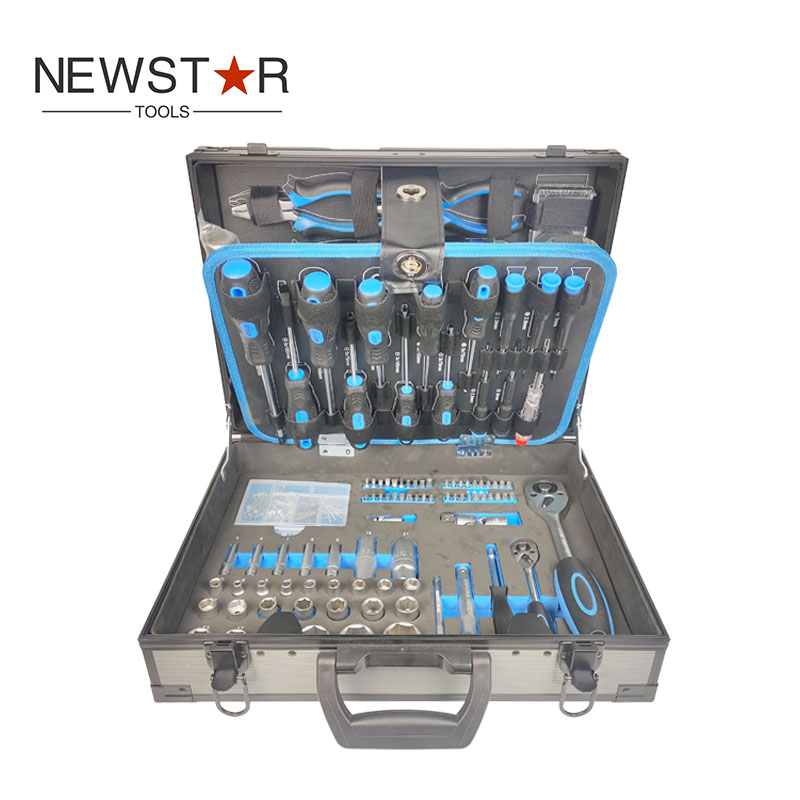
High-value diagnostic equipment and precision mechanical instruments represent a significant capital investment that degrades rapidly without proper transit and storage protocols. Professionals face continuous threats to their equipment during daily operations. Kinetic impact, moisture ingress, chemical exposure, and electromagnetic interference constantly assault sensitive gear on job sites. These environmental hazards lead to premature tool failure, calibration loss, and frequent replacement cycles. Evaluating the protective housing is as critical as evaluating the tools themselves. A high-quality enclosure acts as the first line of defense against job site destruction. This analysis breaks down the material science, structural engineering, and environmental shielding properties that make an aluminum case the industry standard for securing a Professional Tool Set.
Kinetic Mitigation: Aluminum’s high strength-to-weight ratio, combined with precision-cut foam inserts and molded designs, absorbs transit shocks and prevents tool-on-tool abrasion.
Environmental & Chemical Defense: Natural oxidation and anodized finishes provide a highly effective barrier against rust, workshop chemicals, and extreme temperature fluctuations.
Electromagnetic Shielding: Engineered aluminum enclosures offer baseline Faraday cage properties, protecting sensitive digital diagnostic tools from RF interference and electromagnetic spikes far better than DIY solutions.
Defining the Success Criteria for Protecting a Professional Tool Set
Establishing the baseline threats a professional-grade enclosure must mitigate requires looking at daily industrial and field use. Technicians transport gear across uneven terrain, up scaffolding, and through harsh weather conditions. The primary success criterion for any protective case is its ability to isolate internal assets from external destructive forces without hindering the technician's workflow. We see this daily in aviation hangars, mobile diesel repair units, and heavy machinery yards where equipment is constantly exposed to the elements.
Impact resistance must be balanced against strict weight constraints. Surviving drop impacts from tailgates or workbenches is a non-negotiable requirement. Crush loads occur frequently when heavy materials are stacked on top of gear during transit in work trucks. The enclosure must withstand these forces without adding prohibitive weight to the technician's loadout. Heavy cases cause ergonomic strain and slow down deployment times on large job sites, forcing technicians to make multiple trips or leave critical gear behind.
Environmental vulnerabilities pose a silent but constant threat. High humidity environments accelerate rust on raw steel components. Particulate ingress, specifically fine dust and airborne metal shavings from fabrication processes, ruins ratcheting mechanisms and clogs precision threads. Corrosive workshop fluids, including hydraulic oil, brake cleaner, and aviation solvents, rapidly degrade inferior case materials and standard foam padding. A case must act as an impenetrable barrier against these specific chemical and particulate threats.
The rise of sensitive equipment has fundamentally changed storage requirements. A modern multifunction hand tool set frequently includes digital calipers, laser levels, multimeters, and RFID-enabled diagnostic gear. These instruments require specialized protection beyond mere physical shielding. They demand isolation from static discharge, magnetic fields, and extreme temperature shifts to maintain calibration accuracy. A basic fabric bag or thin plastic box fails to meet the technical requirements of modern diagnostic hardware.
Surface rust on steel tools, short circuits in diagnostic tablets
Structural Integrity: The Core Defense of an Aluminum Case Tool Set
Analyzing the mechanical properties of aluminum reveals why it excels as a housing material for heavy-duty applications. Aluminum alloys offer an exceptional strength-to-weight ratio. This allows manufacturers to build large, high-capacity enclosures that remain manageable for a single operator. The structural defense relies on a combination of material physics and specific architectural reinforcements designed to distribute kinetic energy away from the internal payload.
Tensile strength and deformation mechanics separate aluminum from rigid polymers. Aluminum absorbs kinetic energy through localized deformation. When dropped, the metal dents. This denting process dissipates the shockwave, preventing the kinetic energy from transferring to the delicate instruments inside. Rigid plastics often shatter or crack under high-velocity impacts, especially in sub-zero temperatures where polymers become brittle. A cracked plastic case instantly loses its environmental seal. A dented aluminum case typically remains fully functional and sealed.
Reinforcement architecture prevents the enclosure from twisting under heavy loads. High-quality cases utilize extruded aluminum frames to provide rigid skeletal support. Reinforced steel or heavy-duty alloy corners absorb corner-drop impacts. These corners take the brunt of the abuse when a case falls off a truck bed. Continuous piano hinges distribute the stress of opening and closing heavy lids across the entire length of the case. Standard segmented hinges often tear out of their mountings when the lid is forced backward or overloaded.
Mobility mechanics dictate the engineering requirements for a rolling tool set. Transporting hundreds of hand tools creates massive internal weight. The aluminum chassis must support these heavy internal loads over uneven terrain like gravel, grating, and cracked concrete. The wheel housings are typically integrated directly into the extruded frame to prevent axle failure. Telescoping handles require thick-walled aluminum tubing to resist bending when the fully loaded case is tilted and pulled over obstacles.
Extruded Frames: Provide the primary skeletal rigidity, preventing the case from twisting when loaded with heavy steel tools.
Reinforced Corners: Act as sacrificial impact zones, absorbing the kinetic energy of drops before it reaches the main panels.
Continuous Piano Hinges: Run the full length of the lid, eliminating the weak points found in traditional two-point hinges.
Recessed Latches: Sit flush with the case exterior to prevent snagging on equipment or breaking off during transit.
Environmental and Chemical Shielding Capabilities
Mapping the material properties of aluminum to specific environmental survival outcomes demonstrates its superiority in harsh industrial settings. Metal cases must survive exposure to elements that quickly destroy fabric and degrade injection-molded resins. The defense mechanisms rely on surface treatments and engineered mechanical seals that block contaminants at the microscopic level.
Corrosion resistance is a natural property of aluminum, enhanced significantly through manufacturing processes. Bare aluminum naturally forms a microscopic oxide layer when exposed to air, preventing further oxidation. Anodization thickens this protective layer through an electrochemical process. Anodized coatings provide a highly effective barrier against moisture and petrochemicals. Unlike steel cases that rust rapidly when scratched, an anodized aluminum surface isolates the damage. It prevents rust from spreading beneath the coating. This makes it highly resistant to hydraulic fluids, cutting oils, and aggressive cleaning solvents found in automotive and aviation shops.
Ingress protection relies on precise mechanical mating surfaces. High-end enclosures achieve specific IP ratings through engineered closures. Tongue-and-groove valances create a physical labyrinth that blocks direct paths for dust and water. Elastomeric O-ring seals, typically made from EPDM or silicone, compress within these valances when the latches are engaged. This compression creates a watertight and dust-tight barrier. It ensures that fine metal shavings and driving rain cannot reach the internal payload, even during transport in open truck beds.
Thermal conductivity and stability provide a distinct advantage over polymer alternatives. Aluminum dissipates heat rapidly. When a case is left in direct sunlight on a tarmac or construction site, an aluminum shell transfers heat away from the interior faster than an insulated plastic box. More importantly, aluminum maintains its structural stability across extreme temperature ranges. It does not warp in extreme heat or become brittle in freezing conditions. Polymer cases frequently warp under high heat, misaligning the O-ring seals and permanently destroying their watertight integrity.
IP Rating
Solid Protection Level
Liquid Protection Level
Field Application Suitability
IP54
Dust protected (limited ingress)
Protected against splashing water
General indoor workshop use, light outdoor exposure.
IP65
Dust tight (no ingress)
Protected against water jets
Outdoor construction sites, heavy rain exposure.
IP67
Dust tight (no ingress)
Protected against temporary submersion
Marine environments, extreme weather field service.
Electromagnetic (EMF) Protection for Diagnostic Instruments
Protecting electronic components and delicate gear within the tool set requires addressing invisible threats. Modern technicians rely heavily on microprocessors, Bluetooth-enabled torque wrenches, CAN bus diagnostic scanners, and sensitive multimeters. These devices are highly susceptible to electromagnetic interference (EMI) and radio frequency (RF) spikes common in industrial environments, power plants, and aviation hangars.
The Faraday cage effect provides the necessary shielding. A continuous conductive metal enclosure redistributes electromagnetic charges along its exterior surface. This redistribution prevents external static and RF fields from penetrating the interior space. When a diagnostic tablet or calibration instrument is secured inside a closed aluminum case, it is isolated from external electromagnetic spikes. This isolation prevents data corruption, memory erasure, and permanent damage to sensitive microcontrollers that control modern diagnostic equipment.
Industry testing consistently debunks the aluminum foil myth. Many technicians attempt to protect sensitive gear by wrapping devices in household foil or using cheap DIY methods. Foil tears easily, creating gaps in the conductive shield. It also lacks proper grounding and structural support. Wrapping devices in foil fails to provide full RF protection compared to an engineered enclosure. DIY methods offer a false sense of security. They often lead to destroyed equipment when exposed to high-voltage environments or strong magnetic fields near industrial generators.
Engineering requirements for true shielding go beyond simply using metal walls. A functional Faraday box requires continuous conductivity across all seams. High-quality cases utilize conductive elastomeric seals or tightly toleranced metal-to-metal overlapping lips to eliminate seam gaps. Any gap larger than a fraction of the wavelength of the interfering signal allows EMF to penetrate. Proper grounding principles and minimal seam gaps prevent data corruption in RFID-enabled tools and ensure calibration equipment remains accurate.
Verify Seam Integrity: Ensure the lid and base meet flush without visible gaps that could allow RF leakage.
Check Seal Material: Look for cases utilizing wire-mesh embedded elastomers if high-level military-grade EMF shielding is required.
Maintain Grounding: Keep the interior metal surfaces clean and free of heavy non-conductive paints if internal grounding is necessary for specific diagnostic gear.
Internal Organization: Shock Absorption and Tool Retention
The interior engineering must complement the exterior shell to protect delicate gear. A rugged exterior is useless if the internal components violently collide during transit. Internal organization dictates the scalability, usability, and ultimate survival rate of the instruments housed inside an aluminum case tool set.
Custom foam inserts and molded designs offer vastly superior protection compared to standard plastic dividers. High-density EVA (Ethylene-Vinyl Acetate) foam routing provides exact-fit cavities for each specific instrument. EVA foam is closed-cell, meaning it resists absorbing oils and water, unlike cheap open-cell polyurethane foam. Rigid molded interior panels offer similar benefits, locking heavier items like socket wrenches and hammers into precise locations. These systems minimize kinetic damage by eliminating free space and preventing tools from shifting.
Preventing tool-on-tool abrasion preserves the lifespan of the equipment. When tools rattle against each other, cutting edges dull rapidly. Precision measuring faces on micrometers become scratched, destroying their accuracy. Exact-fit cutouts ensure tools remain securely positioned regardless of how the case is oriented or dropped. The foam absorbs the secondary shockwaves that penetrate the exterior shell. It cushions the instruments against high-frequency vibrations common in vehicle transport over rough terrain.
Inventory management represents a critical secondary benefit of structured interiors. Shadow-boarding, or visual inventory control, uses contrasting foam colors. A bright red or yellow base layer sits beneath a black top layer. When a tool is removed, the bright color is instantly visible. This allows technicians to perform a rapid visual sweep before leaving a job site. It reduces the risk of leaving expensive components behind and prevents Foreign Object Debris (FOD) incidents in sensitive environments like aviation maintenance.
Evaluating the Trade-Offs: Aluminum vs. Polymer and Fabric
Buyers weighing different case materials must navigate a series of objective trade-offs. No single material is perfect for every application. Understanding the specific advantages and limitations of aluminum, injection-molded polymers, and heavy-duty fabrics ensures the selected housing matches the operational environment.
Asset protection drives the primary decision when selecting a housing material. Aluminum cases provide superior impact resistance, chemical shielding, and EMF protection compared to fabric bags or thin blow-molded plastics. Protecting a single high-end diagnostic scanner from a drop impact often justifies the selection of a premium metal enclosure. The rigid structure prevents crushing forces from reaching the tools, a common failure point in soft-sided bags that offer zero structural support.
Implementation risks and maintenance realities must be addressed. The primary drawback of aluminum is its susceptibility to cosmetic denting and scratching. While denting absorbs kinetic energy, it permanently alters the appearance of the case. Technicians must learn to evaluate when a dent compromises the environmental seal versus when it is purely aesthetic. A dent in the center of a panel is harmless. A severe deformation along the tongue-and-groove valance may require mechanical realignment to restore watertight integrity.
Weight considerations play a major role in mobility. Empty aluminum cases generally weigh less than heavy-duty, thick-walled injection-molded resin cases of the exact same dimensions. However, they weigh significantly more than fabric bags. When the total payload exceeds ergonomic carrying limits, opting for a wheeled configuration mitigates physical strain. The rigid nature of the metal chassis makes it highly suitable for heavy rolling configurations, supporting axles and telescoping handles far better than flexible plastics.
Material Type
Impact Resistance Mechanics
Chemical & Environmental Defense
EMF Shielding Capabilities
Weight Profile
Engineered Aluminum
Deforms and dents to absorb kinetic energy; resists shattering in extreme cold.
High resistance to petrochemicals; anodized layers prevent rust; stable in extreme heat.
Excellent. Provides baseline Faraday cage properties when properly sealed.
Moderate. Lighter than thick resins, heavier than fabric.
Injection-Molded Polymer
Flexes under light impact; risk of cracking or shattering under high-velocity strikes.
Waterproof with O-rings; susceptible to melting or warping under extreme thermal loads.
None. Radio frequencies and magnetic fields pass directly through the shell.
Heavy. Requires thick walls to achieve structural rigidity.
Heavy-Duty Fabric (Nylon/Canvas)
Minimal. Offers scratch protection but transfers kinetic energy directly to tools.
Absorbs fluids; difficult to decontaminate; offers no rigid barrier against crushing.
None. Offers zero protection against electromagnetic interference.
Lightest. Ideal for low-risk, highly mobile hand-carry applications.
Conclusion
Audit your current equipment inventory to identify highly sensitive electronics, RFID-enabled gear, or high-calibration instruments that require EMF shielding.
Inspect your existing storage solutions for signs of chemical degradation, warped seals, or compromised latches that leave tools vulnerable to moisture ingress.
Evaluate your mobility requirements to determine if the total payload weight necessitates upgrading to a reinforced rolling chassis.
Assess the specific environmental hazards of your primary work sites, prioritizing IP-rated seals if dust, metal shavings, or driving rain are frequent threats.
FAQ
Q: Does an aluminum tool case block RFID and EMF signals better than DIY foil methods?
A: Yes. Engineered aluminum enclosures offer baseline Faraday cage properties. They feature continuous conductive surfaces and tight elastomeric seals that block electromagnetic spikes and RF interference. Household foil tears easily, lacks proper grounding, and contains micro-gaps, making it entirely insufficient for professional-grade protection of sensitive diagnostic equipment.
Q: Are aluminum tool cases completely waterproof?
A: It depends on the specific engineering of the closure system. Standard aluminum cases are water-resistant. However, cases equipped with tongue-and-groove valances and compressed elastomeric O-ring seals achieve specific IP ratings, making them watertight and capable of blocking driving rain and total submersion.
Q: How does the weight of an aluminum case compare to hard plastic?
A: Aluminum offers a superior strength-to-weight ratio. An aluminum case is generally lighter than a heavy-duty, thick-walled injection-molded polymer case of the exact same internal volume. Polymers require massive wall thickness to achieve the same structural rigidity that thin extruded aluminum provides.
Q: Can a dented aluminum tool case be repaired?
A: Yes, minor dents can often be hammered out using a rubber mallet and a backing block. Because aluminum deforms rather than shatters, a dent rarely compromises the case's structural integrity. However, severe metal fatigue along the sealing valance may permanently destroy the watertight seal.
Q: Why do multifunction hand tool sets use EVA foam or molded designs instead of standard padding?
A: Closed-cell EVA foam and rigid molded cavities offer superior chemical resistance and shock absorption. Unlike open-cell polyurethane foam, EVA does not absorb oil or moisture. Exact-fit cavities lock tools in place, preventing tool-on-tool abrasion and minimizing movement during rough transit.
Q: Is an aluminum rolling tool set suitable for airline travel?
A: Yes, provided it meets ATA (Air Transport Association) specifications. High-quality aluminum cases feature recessed latches, reinforced steel corners, and heavy-duty continuous hinges designed specifically to withstand the severe impacts and crushing forces common in automated baggage handling systems.