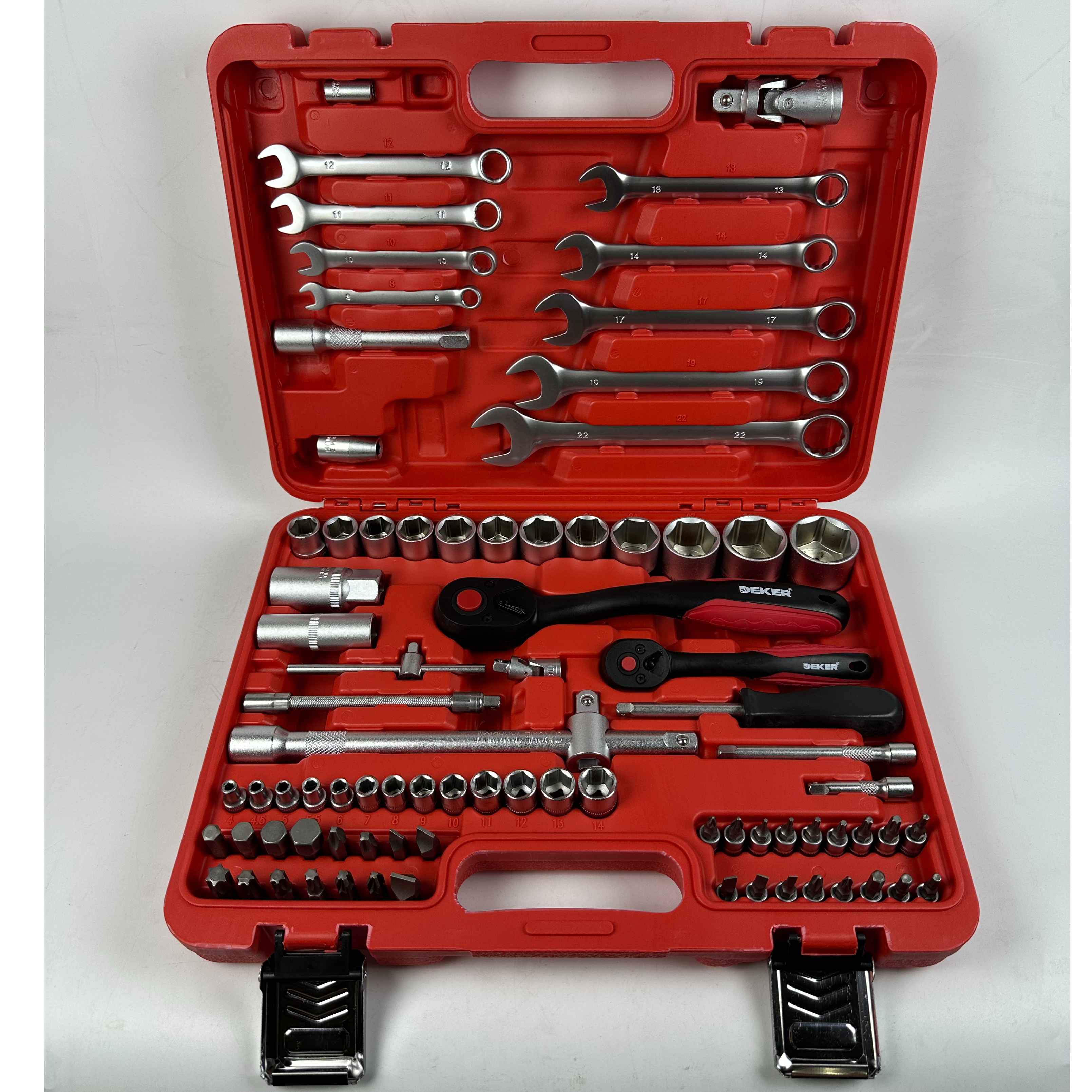
Mismatched tools carry a hidden operational cost. Poor manufacturing tolerances and rounded fasteners destroy shop efficiency. Modern vehicles utilize an increasingly complex mix of metric, SAE, Torx, and specialty fasteners. Lacking the exact tool specification leads to damaged bolt heads, broken extractors, delayed repair times, and lost billable hours. The "close-enough" pitfall is a severe liability. Using a 1/2" socket for a 13mm fastener risks catastrophic component failure. Precision sizing prevents these expensive mistakes. You must evaluate, select, and configure a professional Auto Repair Tool Kit carefully. It must provide comprehensive fastener coverage, minimize redundant overlap, and withstand harsh professional shop environments.
- Prioritize 6-point sockets over 12-point variants for high-torque applications to minimize the risk of fastener round-off.
- A comprehensive mechanic tool set must bridge the gap between standard Metric/SAE sizes and modern specialty fasteners (e.g., E-Torx, triple square) to service contemporary fleets.
- Drive size standardization (1/4", 3/8", 1/2") dictates both accessibility in tight engine bays and maximum torque limits.
- Precision tool-to-fastener matching eliminates the time and material costs of extracting sheared or rounded bolts.
- Tool organization and portability directly impact ROI by reducing time-spent-searching and mitigating tool loss during mobile or cross-shop repairs.
Defining Success Criteria for Fastener Management
Matching the tool exactly to the fastener profile is non-negotiable. Operational efficiency relies on minimizing tool-swapping time. Mechanics need fewer physical trips to the main tool chest when they have the right gear at the bay. The danger of "almost right" tolerances is severe. Using close-enough size cross-overs under load causes physical damage. A 10mm socket is not a 3/8" socket. A 19mm wrench is not a 3/4" wrench. Forcing these fits destroys hardware. Precise tool tolerances prevent stripping rusted or seized bolts. They protect over-torqued fasteners from further degradation. Accessibility is another critical factor. Tools must reach obstructed fasteners in modern, compact engine bays. You should not have to remove excessive components just to turn a single bolt.
When working on heavy-duty suspension components or exhaust manifolds, the heat cycling and environmental exposure cause fasteners to seize. If you apply a poorly toleranced socket to a rusted exhaust manifold nut, the corners will shear off immediately. This turns a five-minute removal into a two-hour extraction process involving torches, drill bits, and thread taps. The financial impact of this scenario is massive when multiplied across a busy shop floor. Technicians lose flat-rate hours, and the shop loses bay turnover capacity. A high-quality tool kit prevents this by gripping the fastener securely on its flats, transferring maximum torque without slipping.
Furthermore, modern engine bays are packed with electronics, emissions equipment, and plumbing. Clearance is minimal. A standard socket and ratchet might not fit between the firewall and the cylinder head. Technicians need low-profile sockets, flex-head ratchets, and wobble extensions to navigate these tight spaces. Success in fastener management means having the exact combination of drive size, socket depth, and extension length to reach the bolt squarely. Any off-angle engagement increases the risk of rounding the fastener head.
Core Components of a Fastener-Optimized Auto Repair Tool Kit
Comprehensive fastener handling requires specific essential modules. Breaking down these solution categories ensures you build a highly capable mechanic tool set that can handle everything from delicate interior trim screws to seized axle nuts.
The Portable Socket Set: Drive Sizes, Point Configurations, and Fastener Geometries
Drive size applications dictate functionality. Use 1/4" drive for interior, electrical, and low-torque applications like hose clamps and sensor housings. The 3/8" drive serves as the primary standard for general engine work, brake calipers, and light chassis components. Step up to 1/2" drive for heavy suspension, drivetrain, and lug nut applications where high breakaway torque is required. Engagement realities matter. A 6-point socket handles high torque through flat-surface contact. A 12-point socket offers convenience but relies on corner-edge contact, making it unsuitable for heavily rusted or over-torqued bolts.
Shape versatility is crucial. A reliable portable socket set engages varied fastener geometries. It handles spline, square, hex, and partially rounded heads. European vehicles heavily utilize E-Torx (external Torx) and triple-square fasteners, requiring dedicated socket sets to prevent stripping. Portability requires case durability. Look for metal latch mechanisms and secure socket retention systems. These features survive mobile and field environments where tools are frequently transported in service trucks or across uneven shop floors.
- Identify the primary drive size needed for the specific repair task to avoid over-torquing delicate fasteners.
- Select a 6-point socket for any bolt exposed to weather, heat, or heavy load.
- Reserve 12-point sockets for 12-point fasteners or low-torque applications in tight spaces where engagement angles are limited.
- Inspect the socket for internal wear or flaking chrome before applying heavy force.
The Ratchet Wrench Set: Tooth Count, Swing Arc, and Access Engineering
Mechanism evaluation directly impacts clearance. A 72-tooth mechanism requires a 5-degree swing arc. A 90-tooth mechanism needs only a 4-degree arc. This small difference matters in low-clearance areas like serpentine belt tensioners or bell housing bolts. Wrench variations expand your capabilities. Integrate combination wrenches and ratcheting gear wrenches. Add specialized offset ring spanners to reach deeply recessed bolts. Selection criteria require balance. You must weigh a ratchet wrench set head thickness against its maximum torque yield limits.
Ratcheting wrenches have revolutionized flat-rate mechanics, but they have limitations. The ratcheting box end is typically wider than a standard box end, which can prevent it from fitting into recessed bolt holes. Additionally, the internal pawl mechanism can fail if subjected to extreme breakaway torque. Technicians should use a standard combination wrench or a breaker bar to crack a tight bolt loose, then switch to the ratcheting wrench for rapid removal.
The Torque Wrench Set: Precision, Calibration, and Joint Integrity
Compliance and precision are absolute necessities. Accurate torque application protects modern aluminum engine blocks. It secures cylinder heads and sensitive suspension components. Over-torquing a steel bolt in an aluminum block will pull the threads out, requiring a time-consuming Helicoil or Time-Sert repair. Under-torquing a suspension component can lead to catastrophic failure on the road. Technology types vary. Click-type wrenches offer mechanical feedback and high durability for shop environments. Digital electronic wrenches provide real-time angle measurement and data logging, which is essential for torque-to-yield (TTY) fasteners common in modern head gaskets.
Maintenance ensures accuracy. Establish a baseline calibration schedule for any professional torque wrench set. Calibrate them every 5,000 cycles or annually to maintain safety compliance. Always store click-type torque wrenches at their lowest setting to prevent the internal spring from taking a set, which destroys the tool's accuracy.
High-Torque Supplements: Breaker Bars and Impact Tools
Leverage protects delicate mechanisms. Utilize 1/2" drive breaker bars for high breakaway torque. They free seized fasteners and protect high-tooth-count ratchets from internal gear failure. Material distinction is critical. Hand-tool chrome vanadium (Cr-V) sockets are brittle under shock. Impact-rated chrome molybdenum (Cr-Mo) sockets absorb heavy blows. Never use Cr-V sockets on pneumatic or cordless impact loads to prevent catastrophic shattering, which poses a severe safety risk to the technician.
![Professional mechanic using an auto repair tool kit in a garage]()
Metric vs. SAE (Imperial): Navigating Modern Fleet Requirements
The industry has shifted overwhelmingly to metric fasteners. Modern domestic, import, and commercial automotive manufacturing rely on metric standards. However, legacy and aftermarket overlap still exists. Full SAE coverage is necessary for classic vehicles and heavy agricultural equipment. Specific domestic aftermarket modifications also use imperial sizes. Global standards impact cross-border fleet realities. International technicians working on mixed-import machinery often require imperial capabilities. Kit optimization avoids unnecessary weight. Tailor the Metric/SAE ratio to your primary service demographic to reduce bulk and redundant expense.
Using a metric socket on an SAE fastener, or vice versa, is a common cause of rounded bolts. While a 13mm socket might feel like it fits a 1/2" bolt head, the slight dimensional difference means the socket will only contact the very corners of the fastener. Under high torque, those corners will shear. Technicians must maintain strict discipline in identifying the fastener standard before applying force. Thread pitch gauges and digital calipers are useful tools for verifying fastener dimensions when visual identification is difficult.
| Fastener Standard | Primary Applications | Tool Kit Priority |
| Metric (mm) | Modern domestic, Asian, European vehicles | High - Essential for daily operations |
| SAE (Imperial) | Classic cars, agricultural equipment, older domestic trucks | Medium - Required based on specific shop demographics |
| Specialty (Torx, E-Torx) | Modern engine bays, interior trims, European chassis | High - Growing necessity for late-model repairs |
| Triple Square (XZN) | German vehicle drivetrains, door latches, cylinder heads | High - Mandatory for European specialty shops |
Evaluating Tool Quality: Features-to-Outcomes and Conceptual Trade-offs
Manufacturing tolerances define tool longevity. Advanced flank-drive designs prevent rounding. They apply force to the flat sides of the fastener rather than the vulnerable corners. Material composition involves trade-offs. Thick tool walls provide structural strength under heavy load. Thin-walled socket designs offer better accessibility for tight, recessed clearances, such as spark plug tubes or deeply recessed alloy wheel lug nuts. Finish and corrosion resistance impact daily use. Fully polished chrome is easy to clean and offers superior chemical resistance against brake fluid and oil. Matte industrial phosphate finishes provide better grip. They prevent slippage in oily conditions but require regular oiling to prevent surface rust.
When evaluating wrenches, look for minimal deflection under load. A cheap wrench will spread open when high torque is applied to the open end, rounding the fastener and potentially causing the technician's knuckles to smash into surrounding components. High-quality wrenches maintain their dimensional stability even under extreme force. The broaching process used to cut the internal splines of a box-end wrench or socket must be precise; sloppy broaching leads to a loose fit and inevitable fastener damage.
Implementation Risks: Organization, Portability, and Tool Retention
The cost of disorganization is high. Missing sockets create operational drag. They cause lost billable hours and frequent replacement expenses. Storage solutions mitigate these losses. High-impact blow-molded cases offer maximum portability and environmental protection for mobile mechanics. Precision-cut EVA foam trays provide visual inventory control. They allow rapid size identification for stationary toolboxes. Implement strict tool-control protocols. Standardize kit layouts to ensure high-loss fastener sizes like 10mm, 13mm, and 1/2" are instantly accounted for at the end of every shift.
A disorganized toolbox forces a technician to spend minutes searching for the right socket for every bolt. Over an eight-hour shift, this wasted time adds up to significant lost revenue. Shadowing toolboxes with EVA foam not only speeds up tool retrieval but also provides an immediate visual cue if a tool is left under a customer's hood. Leaving a tool in an engine bay is not just a financial loss; it is a severe safety liability if that tool jams a cooling fan or shorts an electrical connection.
Conclusion
An effective tool kit is not defined by the sheer number of pieces. It is defined by precision, metallurgy, and specific fastener coverage. Base purchasing decisions on primary vehicle types serviced. Evaluate baseline drive size requirements and the need for low-clearance access tools.
- Audit current tool inventories immediately to identify critical size gaps or structural wear.
- Establish a rigid, documented calibration schedule for all precision torque instruments.
- Invest in modular, high-tolerance tool configurations tailored to your specific daily repair volume.
- Transition to high-visibility EVA foam storage to eliminate time wasted searching for lost sockets.
FAQ
Q: What is the technical difference between 6-point and 12-point sockets?
A: A 6-point socket contacts the flat sides of a fastener, allowing for high-torque application without rounding the bolt head. A 12-point socket contacts the corners, offering easier engagement in tight spaces but risking damage under heavy loads.
Q: Can I use a metric socket on an SAE fastener if the fit feels close enough?
A: No. Using a close-enough size creates improper tolerances. Applying torque will strip the fastener corners, making it extremely difficult to remove and requiring expensive extraction methods.
Q: What are offset ring spanners, and when are they required over standard combination wrenches?
A: Offset ring spanners feature a deeply angled head. They are required to reach recessed bolts or fasteners obstructed by surrounding engine components where a flat combination wrench cannot physically fit.
Q: Do I need both Metric and SAE tools in a modern mechanic tool set?
A: It depends on your workload. Modern vehicles are predominantly metric. However, if you service classic cars, heavy agricultural machinery, or certain aftermarket parts, SAE tools remain necessary.
Q: Which drive size (1/4", 3/8", or 1/2") is most common for daily automotive repair?
A: The 3/8" drive is the most common and versatile size for general engine and chassis work. It offers the best balance of torque capacity and physical accessibility.
Q: How often should a professional torque wrench set be calibrated?
A: Professional torque wrenches should be calibrated every 5,000 cycles or at least once annually. Dropping the wrench or storing it under tension also requires immediate recalibration to ensure accuracy.
Q: Can I use standard chrome sockets on an cordless or pneumatic impact wrench?
A: Never use chrome vanadium (Cr-V) hand sockets on impact tools. The brittle metal can shatter under rapid impact loads. Always use black chrome molybdenum (Cr-Mo) impact-rated sockets.