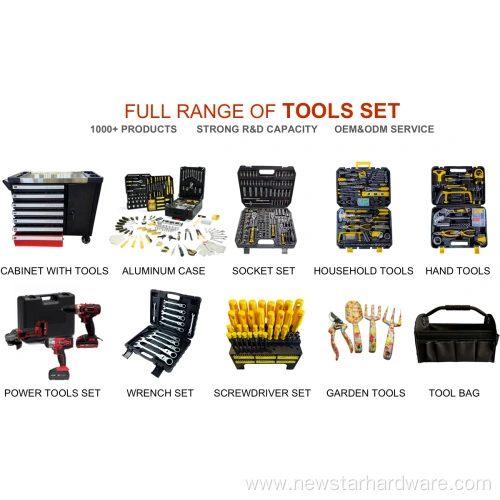
Pre-packaged, 100-piece starter toolkits look appealing on store shelves. However, these bulky cases often contain low-grade filler pieces. They strip screws, damage surfaces, and ultimately fail during critical emergency repairs. Building a truly reliable collection of Hand Tools yields better long-term results. We skip the generic fluff in this guide. You need exact specifications and evaluation criteria for a durable household maintenance arsenal.
We will show you how to transition from reactive, frustrating repair attempts to efficient, single-person jobs. You will discover the contractor-trusted gear needed to tackle common household problems. Say goodbye to stripped bolts and dropped screws. Get ready to build a toolkit you can depend on for years to come.
Key Takeaways
- Prioritize Spec Over Brand: Look for specific features like 3/4-inch locking tapes, rip-claw hammers, and magnetic bit holders rather than buying exclusively on brand name.
- Efficiency Multipliers are Crucial: Tools designed for solo work—like one-handed bar clamps and headlamps—drastically reduce repair time.
- Safety Demands Verification: Electrical and plumbing work requires specific evaluation lenses, such as verifying voltage testers on known live circuits before proceeding.
- Buy Once, Cry Once: Investing in individual, high-grade basic hand tools is ultimately more cost-effective than replacing stripped or broken tools from cheap bundled kits.
The Evaluation Framework: Selecting High-ROI Household Tools
Many homeowners fall into the "cheap kit" trap. Pre-assembled kits usually inflate their piece counts using cheap hex keys and flimsy driver bits. These inferior items round off easily. Evaluating your purchases individually ensures every piece serves a high-frequency need. You save space and avoid endless frustration.
Standardization offers another massive advantage. You will often bridge manual tasks to power assistance. For example, you might use a cordless drill for repetitive driving tasks. Standardize your accessories to maximize the utility of your manual household tools. Buy impact-rated bits and socket wrench adapters. They fit both your manual drivers and your power tools interchangeably.
Ergonomics and material composition matter significantly. Always look for drop-forged steel when buying striking and prying tools. Drop-forged steel resists bending under extreme pressure. Furthermore, seek out dual-material grips for high-torque applications. A rubberized grip over a solid core prevents slippage when your hands are sweaty or greasy.
- Best Practice: Always check the metal finish. High-quality carbon steel or chrome vanadium resists rust better than unplated alloys.
- Common Mistake: Buying proprietary tool systems. Stick to standard 1/4-inch hex shanks to ensure universal compatibility.
Core Fastening and Striking: Essential Basic Hand Tools
Every home requires reliable fastening and striking tools. We must move beyond generic designs. Precision matters even for basic hammering and screwing.
Hammers: The Rip-Claw Advantage
You need a smooth-face, 16-to-20-ounce straight/rip-claw hammer. The smooth face prevents accidental drywall damage. More importantly, the straight claw doubles as a demolition wedge. Standard curved-claw designs pull nails well but fail at prying apart lumber. A rip-claw hammer serves both functions perfectly.
Screwdrivers: Multi-Bit vs. Fixed
A premium 15-in-1 multi-bit screwdriver reduces toolbox clutter. Look for models featuring internal storage in the handle. Ensure it includes standard #0 and #2 Phillips, alongside 1/8-inch and 3/16-inch slotted bits. Avoid non-magnetic bits entirely. Dropping small screws behind heavy appliances creates unnecessary delays. Magnetic tips keep fasteners securely attached.
Measuring and Leveling
Measuring alone presents unique challenges. A 25-foot tape measure must feature at least a 3/4-inch blade width. This width provides sufficient "standout." Standout refers to how far the tape extends before collapsing. Pair your tape measure with a reliable 9-inch magnetic torpedo level. Add a robust box level for larger installations like hanging cabinets.
Tool Selection Matrix: Striking & Fastening | Tool Category | Recommended Specification | Primary Benefit |
| Hammer | 16-20 oz, Smooth Face, Rip-Claw | Prevents surface damage; aids demolition. |
| Screwdriver | 15-in-1, Magnetic Tip, Handle Storage | Reduces clutter; prevents dropped hardware. |
| Tape Measure | 25-foot length, 3/4-inch blade minimum | High standout for solo measuring tasks. |
| Leveling | 9-inch Magnetic Torpedo Level | Holds itself onto metal pipes and studs. |
![Home Repair Hand Tools]()
Gripping, Cutting, and Prying: High-Torque DIY Tools
When stubborn materials refuse to budge, you need high-torque DIY tools. Using the wrong grip damages fasteners permanently.
Pliers and Wrenches: Preventing Fastener Damage
Skip the generic slip-joint pliers. They slip easily and strip bolt heads. Instead, invest in high-quality water-pump pliers. Look for push-button adjustment mechanisms. These lock onto pipes and rusted bolts firmly. Pair them with standard needle-nose pliers for maneuvering wires inside tight electrical boxes. Finally, add an 8-inch adjustable wrench for plumbing fittings.
- Press the adjustment button on your water-pump pliers.
- Slide the jaw to precisely match the bolt diameter.
- Release the button to lock the jaws safely in place.
Utility Knives: Prioritizing Safety
Select folding utility knives featuring one-handed opening mechanisms. Tool-free blade changes are also mandatory. Single-handed operation is a critical safety feature. You often need your other hand to hold materials steady on a ladder. Fumbling to open a stiff knife blade leads to severe accidents.
Prybars and Extractors
The "Cat's paw" nail puller is a hidden gem in home repair. This mini prybar offers precision extraction. It causes minimal surface damage compared to using a bulky hammer claw. Drive the pointed tip under a buried nail head. Then rock it back to extract the fastener cleanly.
Specialized Home Repair Tools for Plumbing and Electrical
Plumbing and electrical tasks carry significant risks. Having purpose-built home repair tools is non-negotiable for personal safety and property protection.
Electrical Safety Gear: The Verification Protocol
A non-contact voltage tester acts as your first line of defense. It detects live currents without touching exposed wires. However, you must follow a strict verification protocol.
- Step 1: Always test the pen on a known live wire first.
- Step 2: Shut off the circuit breaker.
- Step 3: Test the target wire to ensure no current flows.
- Step 4: Verify again with a digital multimeter for total certainty.
Furthermore, use self-adjusting wire strippers. Manual stripping often scores the underlying copper wire. Damaged copper creates weak points. These weak points can cause dangerous electrical arcing or shorts hidden behind your walls.
Plumbing Crisis Management
You must differentiate between plunger types. Flat cup plungers only work on sinks and bathtubs. Flange plungers feature an extended rubber lip designed specifically for toilets. Plungers aren't just for clogs, either. They serve as critical first-response tools for backing-up basement drains. Additionally, buy a basin wrench. This specialized tool reaches vertical nuts under tight sink cabinets. Standard adjustable wrenches simply cannot maneuver in these cramped scenarios.
Solo Work "Efficiency Multipliers"
Most household DIY involves a single person. You rarely have an assistant to hold a flashlight or stabilize a board. You must invest in gear that multiplies your efficiency.
Hands-Free Lighting
Flashlights require a hand. This severely limits your dexterity. A rechargeable LED headlamp changes everything. Aim for a model producing 1,000+ lumens. It frees both hands for manipulating wiring or soldering pipes in dark crawlspaces.
One-Handed Bar Clamps
One-handed quick-release clamps act as a mechanical "third hand." You can squeeze the trigger to tighten the clamp while holding pieces together. Use them for holding lumber, gluing cabinet joints, or stabilizing light fixtures during installation.
The 5-in-1 Painter's Tool
This simple piece of metal offers incredible versatility. It cleans wet paint rollers, scrapes loose paint, opens cans, and acts as a minor pry tool. It is the ultimate low-cost, high-value addition to your tool bag.
Socket Wrench Drill Adapters
Bridging manual tasks with power tools saves immense time. Socket adapters allow you to drive your manual socket set using a 12V cordless drill. This dramatically reduces physical fatigue on repetitive tasks. Assembling flat-pack furniture takes minutes instead of hours.
Efficiency Multiplier Chart
| Tool Name | Primary Solo Benefit | Best Application |
| Headlamp (1000+ lumens) | Frees both hands entirely | Crawlspaces, under sinks, attics |
| One-Handed Bar Clamp | Acts as an assistant's grip | Woodworking, holding heavy trims |
| 5-in-1 Painter’s Tool | Replaces 5 separate tools | Prep work, scraping, prying |
| Socket Drill Adapter | Turns manual sockets to power | Furniture assembly, lag bolts |
Containment, Cleanup, and Storage Realities
Completing the repair is only half the battle. Cleanup and storage determine how quickly you can tackle the next emergency. Proper containment protects your home's interior.
Wet/Dry Shop Vacuums: The Unsung Hero
Do not use your household vacuum for DIY messes. Fine drywall dust destroys normal vacuum motors rapidly. Wet debris creates immediate mold hazards inside standard bags. You need a dedicated 6-to-9 gallon wet/dry shop vacuum. Ensure it features a HEPA filter. This setup is mandatory for safe post-project cleanup. It also serves as an emergency water extraction tool during minor plumbing leaks.
Organization: Bags vs. Boxes
Hard-shell toolboxes look organized but become heavy buried chests over time. You dig endlessly to find a single wrench. A 16-inch open-mouth contractor tool bag provides superior organization. It offers faster access for frequent indoor repairs. You can see all your gear at a glance. Pockets along the exterior hold your most-used hand tools securely.
Access Equipment
Navigating stairs and uneven floors makes reaching high places dangerous. Skip the traditional single-use ladders. An articulating, multi-position 6-to-8 foot ladder solves this problem. It configures into an A-frame, an extension ladder, or a staircase platform. It serves 95% of interior homeowner needs safely and efficiently.
Conclusion
Building a reliable cache of repair equipment is not about buying the largest kit available. It requires a deliberate selection of high-quality, durable instruments. Tailor your choices to solo-DIY realities and specific maintenance tasks. Precision and material strength matter more than inflated piece counts.
Take action today by auditing your current tools. Discard stripped bits, rusted screwdrivers, and poorly gripping pliers immediately. Begin upgrading your kit category by category. Start by securing a premium multi-bit screwdriver, a rip-claw hammer, and dependable water-pump pliers. A focused, highly capable toolkit transforms stressful breakdowns into manageable afternoon projects.
FAQ
Q: What are the absolute basic hand tools every beginner should own?
A: A straight-claw hammer, a magnetic multi-bit screwdriver, a 25-foot tape measure, an adjustable wrench, needle-nose pliers, and a reliable utility knife. These handle the vast majority of routine household fixes.
Q: Is it better to buy a comprehensive tool kit or individual pieces?
A: Individual pieces yield higher quality. Large kits often include filler items with inferior metallurgy that strip screws and break under torque. Curating individual items ensures you only pay for reliable, frequently used gear.
Q: What is the difference between a claw hammer and a rip-claw hammer?
A: A standard claw hammer has a severe curve for pulling nails. A rip-claw has a straighter profile, making it much more effective for prying apart wood and light demolition work without sacrificing nail-pulling ability.
Q: How do I choose the right tools for basic electrical work?
A: Prioritize safety. Start with a reliable non-contact voltage tester, a digital multimeter, insulated screwdrivers, and self-adjusting wire strippers to ensure safe, damage-free wire handling.